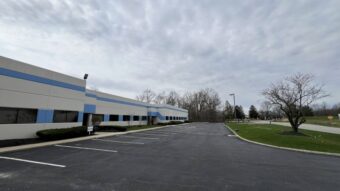
Even as developers have delivered a wave of new speculative modern bulk facilities across the Indianapolis market, the feared ripple effect on older industrial product hasn’t materialized. Instead, the market continues to show a surprising level of resilience, according to the fourth quarter 2025 Indianapolis industrial market report recently released by Colliers.
Vacancy in legacy industrial space remains tight, underscoring the depth of demand across nearly every corner of the market. Traditional distribution buildings are posting vacancy of just 2.6%, while light industrial and medium-distribution properties sit at a still-healthy 4.0%, Colliers reported.
Manufacturing space is even tighter, with vacancy hovering at 2.4%. Strip out modern bulk product altogether and the story becomes even clearer: The overall industrial vacancy rate in Indianapolis would fall to a low 2.8%, according to Colliers’ research.
Those numbers suggest that while new bulk facilities have captured headlines, they haven’t meaningfully disrupted occupancy in older buildings. Tenants continue to absorb well-located, functional space, particularly in properties that offer proximity to labor, established infrastructure, and flexible layouts. For many users, older product still checks the right boxes—often at rents that remain more palatable than those commanded by newly delivered bulk facilities.
The flex industrial segment has been resilient, too, with its vacancy rate remaining near historic lows for more than three years, staying consistently below 4.25% since mid-2021, Colliers said. That sustained tightness has translated directly into rent growth. Starting rents continue to climb, with annual escalations now averaging 4.26%. That represents a significant jump from the 2.69% average seen in 2020, a 157-basis-point increase that reflects both strong demand and limited new supply.
Asking rents for available flex space now routinely exceed $10.00 per square foot on a triple-net basis, and the gap between asking and achieved rents has narrowed considerably. For developers, that dynamic is changing the math. In select submarkets and for certain product types, speculative flex development is beginning to look feasible again, something that would have been a tougher sell not long ago.
Still, activity on the construction front remains muted. New flex development is extremely limited, keeping supply in check and reinforcing landlords’ pricing power. For now, Indianapolis’ industrial market remains defined less by oversupply concerns and more by a persistent imbalance between tenant demand and available space, particularly outside the modern bulk segment.