Picture a high school football field, softball stadium or track. What do you see? Lonely metal bleachers, a card table covered with candy bars and rows of portable toilets?
That might have been true at one time, but a growing number of high schools are rethinking athletic facilities as more than fields and bleachers. They’re turning them instead into community gateways that focus on safety and accessibility while offering modern amenities.
Just consider much of the work that Minneapolis-based Wold Architects and Engineers has done on high school athletic facilities, including a recent job performed for Richmond-Burton Community High School District #157 in .
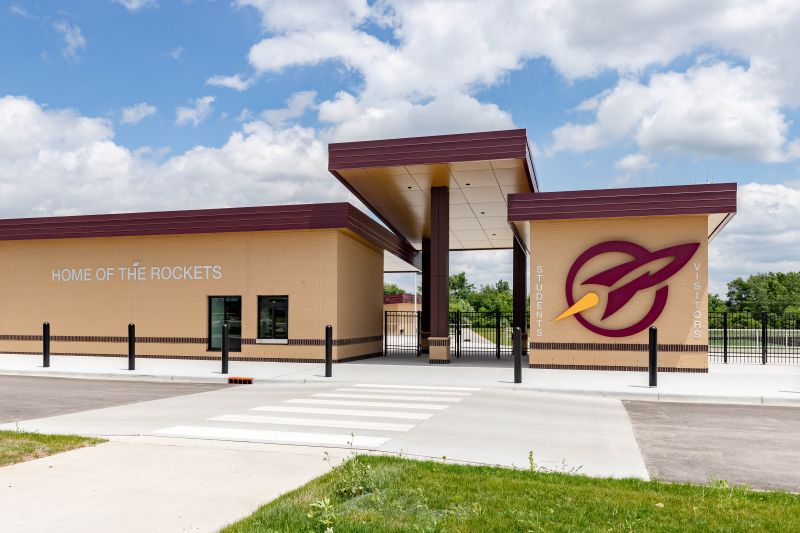
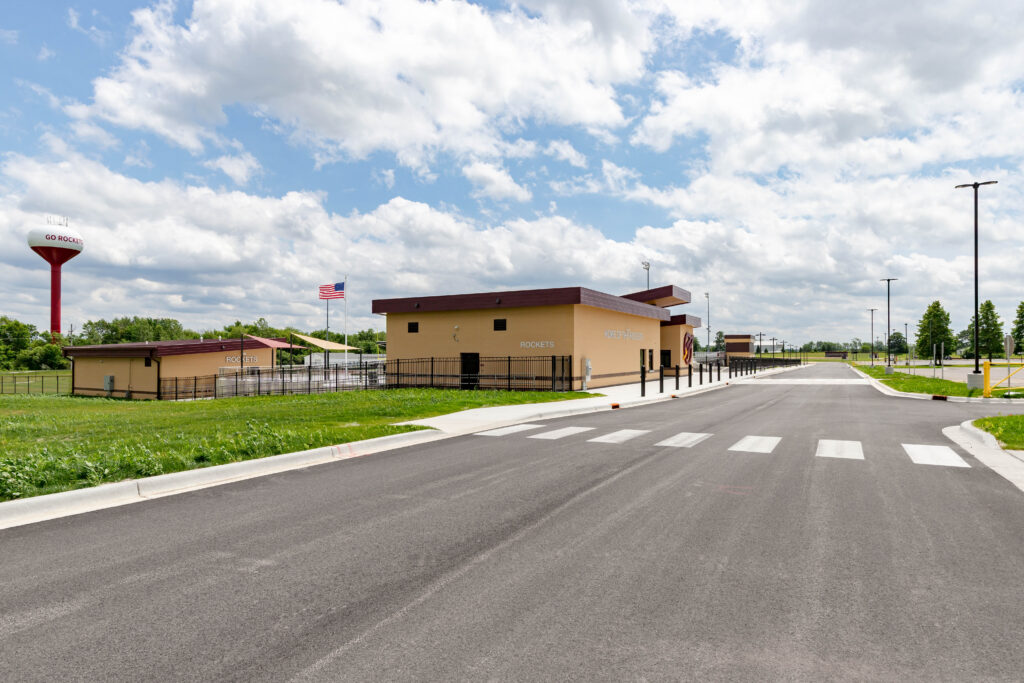
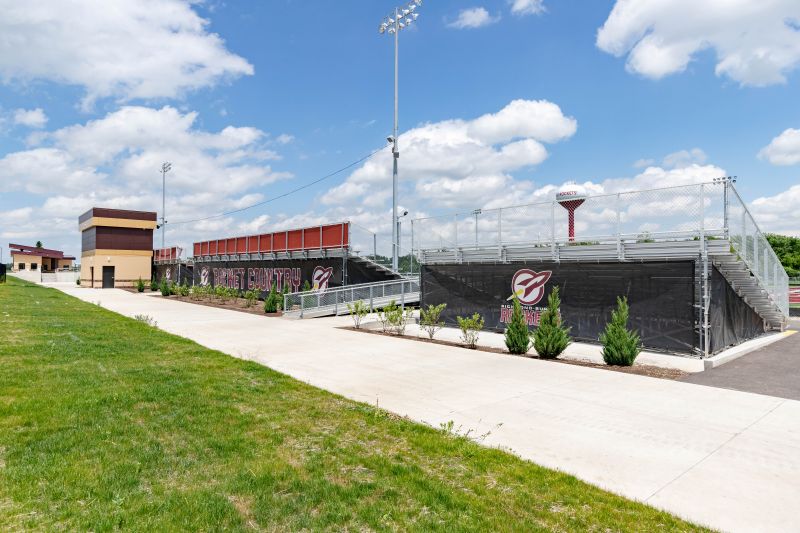
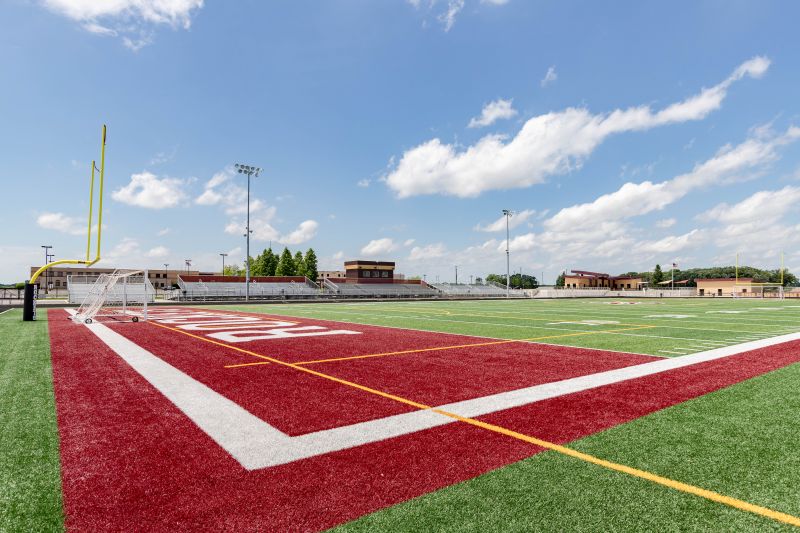
Richmond-Burton Community High School District #157 in Richmond, Illinois, recently unveiled a new entrance for their outdoor athletic stadium. Designed by Wold Architects and Engineers, the project adds clear and secure entry points, larger restrooms, improved concessions and a new press box to the facility.
Midwest Real Estate News spoke with Alison Andrews, education practice leader with Wold, about the new expectations high school officials have when ordering upgrades to their school athletic facilities.
Here is some of what she had to say.
Why are we seeing so many school districts investing in their athletic facilities today?
Alison Andrews: Richmond-Burton is one of those communities that is still so engaged with the whole Friday Night Lights atmosphere of high school sports. The community shows up for basketball or football games. During football season, if there’s a home game, everyone in town is there. This is not a new trend. There are always those communities with that culture. That is one of the drivers leading to school districts transforming their athletic facilities so that they make more of a statement about what the community is all about.
How much work needed to be done to the Richmond-Burton athletic facility to transform it?
Andrews: They had a traditional outdoor athletic facility. It could’ve been built by someone in the community. It had an old restroom that hardly worked. The pipes would freeze in the winter. They also didn’t have a good space to sell concessions or merchandise. They were carting out a pop-up tent instead.
We changed that. We designed a new entrance to the stadium that acts as a gathering point for the high school. We also added new restrooms and a concession space. We transformed that space and made it more of a central hub for the building.
We also wanted to look at what is unique to Richmond-Burton. What makes this school different? At Richmond-Burton, they have a group of people who without fail show up, bring their own chairs and sit on a berm to watch the game. They don’t sit in the bleachers. The school didn’t want to lose that. That is part of the school culture.
When working through the design, we had to develop around a significant grade. We had to manage this change of elevation anyway, so we decided to place the stadium amenities on this raised platform area. We created this plaza area. If people bring their own chairs, they can sit there and watch the game from there instead of going into the bleachers. That is something unique to this stadium.
The new entrance to the stadium was designed to serve as a gathering place and plaza before the games. How important is that central-plaza space becoming to high school districts?
Andrews: It is something we are seeing more districts want. We are working with another school district, the Kaneland School District in Kane County, Illinois. They are enhancing their outdoor stadium experience. The work will include a new turf field, the outbuildings, concessions, restrooms and a new press box.
Part of our conversation with Kaneland focused on the sequencing. How are we going to bring the spectators in and out of the stadium? Where does everyone go after the game, including the parents and friends who want to welcome the team as the team members come out after the game? That gathering space has become important. School districts don’t want people hanging out in the parking lots. They want an intentional space designed for people who want to hang out at the stadium.
These spots can also be used during the school day. Districts can, say, bring the entire freshman class together in these spaces if they wanted.
I know no one likes to talk about restrooms, but adding modern bathroom facilities is key, too, right?
Andrews: It does feel like having cleaner, modern bathrooms has become an expectation. When a high school approves a new stadium, turf field or running track, the decisionmakers don’t want a line of porta-potties. They don’t want a line that is an hour long because there aren’t enough bathroom facilities. There has been a shift in what the expectations are for parents or grandparents who are watching a meet. It’s not just about the high school kids, but about the spectators, too.
Are permanent concession facilities also something that you are seeing?
Andrews: It is. They might sell the same items – nachos, pizza, candies and sodas – but they want a permanent facility that offers protection from the elements. We also see a lot of schools running grilling stations, a place where you can get a hot dog, brat or burger. That is another piece of the puzzle. If everyone is out there on that Friday night, that becomes dinner for a lot of fans. So you want a facility that makes the people running those stations comfortable.
These games are usually run by volunteers, the people collecting the tickets, the parents running the concession stand and the people manning the grill. A lot of what we design are facilities and spaces designed to protect them. In Richmond-Burton, that was a big catalyst for the project. They were selling tickets on the side of the road. Once people parked, it was a free-for-all for them to get into the stadium. The guy who was grilling might be standing in the rain. Schools now want a built space where you are selling tickets and selling concessions. They want a nice booth for the volunteers running these spaces.
The Richmond-Burton athletic facility is now open. What has the feedback been?
Andrews: The school principal recently gave an update to the board of education. He mentioned all the compliments they’ve gotten about the new stadium, all the excitement in the community about the new space. The students, athletes and band members are all excited about it. The parents appreciate the attention to detail.
We are now in the design phase with the Kaneland School District. We took officials with the district on a field trip to some of the stadiums that we designed. Richmond-Burton was one of the ones we took them to. We like to show them what is possible.