Medical technology companies continue to flock to both the St. Paul and Minneapolis region and to the Rochester, Minnesota, market, home to the famed Mayo Clinic. This boom in life sciences demand is creating an opportunity for developers in and around the Twin Cities area.
And in good news? The demand for life sciences development throughout the United States is showing no sign of lessening. Pharmaceutical, medical research and biotech firms are looking for new locations. Many want to build their own headquarters space.
We spoke with Chris Lyles, director of life science and technology with Minneapolis’ Knutson Construction, about the boom in life sciences construction and what it means for the commercial construction industry. Here is what he had to say.
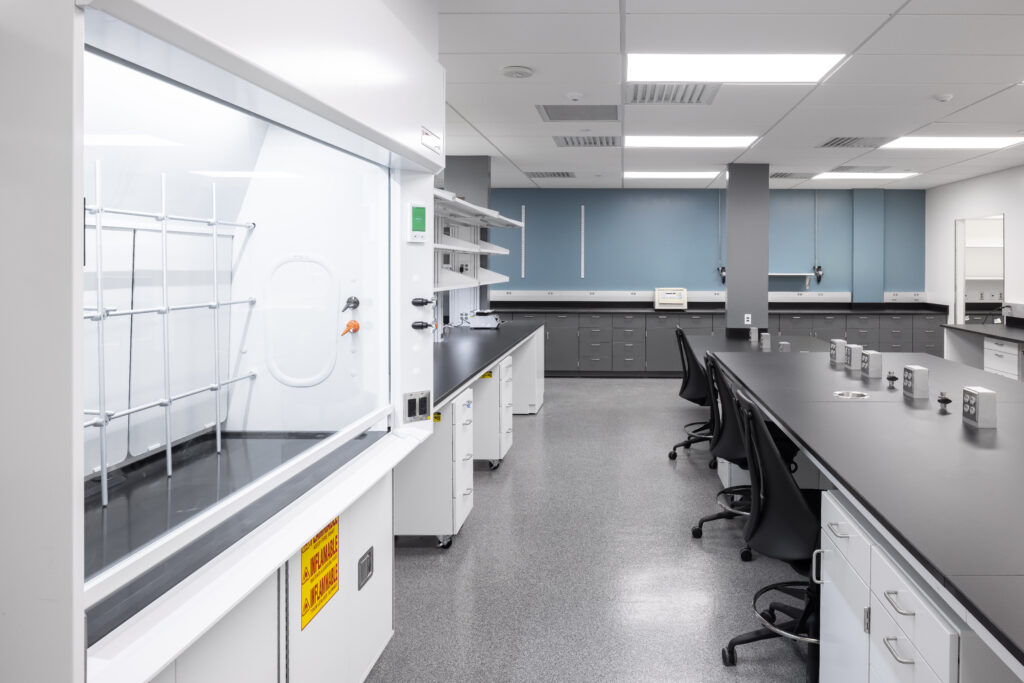
Photo courtesy of Farm Kid Studios, Inc.
Why is there so much demand for life sciences space in the Twin Cities and Rochester areas today?
Chris Lyles: We are seeing strong demand mostly from the medical technology sector as opposed to pharmaceutical companies, which are concentrated more in other geographic areas of the country. But we do have our own medical alley here, from St. Paul to Rochester. It’s a hub for medical device companies looking to start up and relocate. The Mayo Clinic, of course, is a draw for many of these companies.
In my opinion, Minneapolis-St. Paul offers the best of all worlds for these companies. We have a highly educated workforce. We have strong contractors that are well-versed in this industry. And when companies get away from the coasts, from the traditional pharmaceutical hubs like Boston, San Diego and other areas, the cost-per-square-foot to build and lease is significantly less. We are a solid economic choice and we have a strong workforce.
How strong is the demand from medical device companies in the Twin Cities and Rochester areas?
Lyles: Medtronic, Boston Scientific and others are strong anchors here. Bost Scientific is moving ahead with a massive expansion project in Maple Grove. The success of these companies shows just how strong our market is.
I’d say we are the first or second choice in the country when it comes to medical device companies looking for new homes or to expand. We are generally in competition with some of the areas in California.
We are seeing some demand from pharmaceutical companies, too, but we are nowhere near the power of Raleigh or the Boston-Cambridge area. We do, though, get some pharmaceutical companies looking for space here.
What about Knutson? Is your company seeing a steady stream of life sciences construction work?
Lyles: We have done well in this market sector. Now we are ready to continue growing it. There is a little more complexity to it. We’ve done well with that. We have a long history in the healthcare field. There are some parallels between healthcare and life sciences when it comes to the complexity.
We are working now with two new clients, one in the pharmaceutical and the other in the medical device field. Their projects are just getting ready to kick off. They aren’t huge jobs, but they are significant ones. We are also working with a larger global conglomerate in Chaska. We’re excited about that.
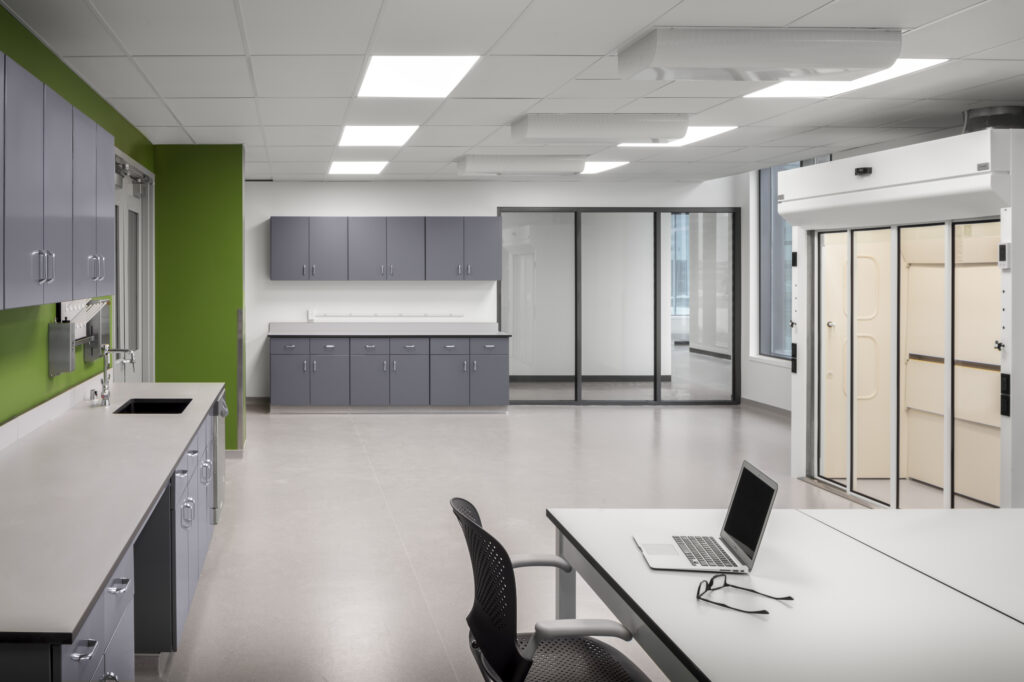
Photo courtesy of AJ Brown Imaging.
What are some of the factors that make life science construction so much more complex?
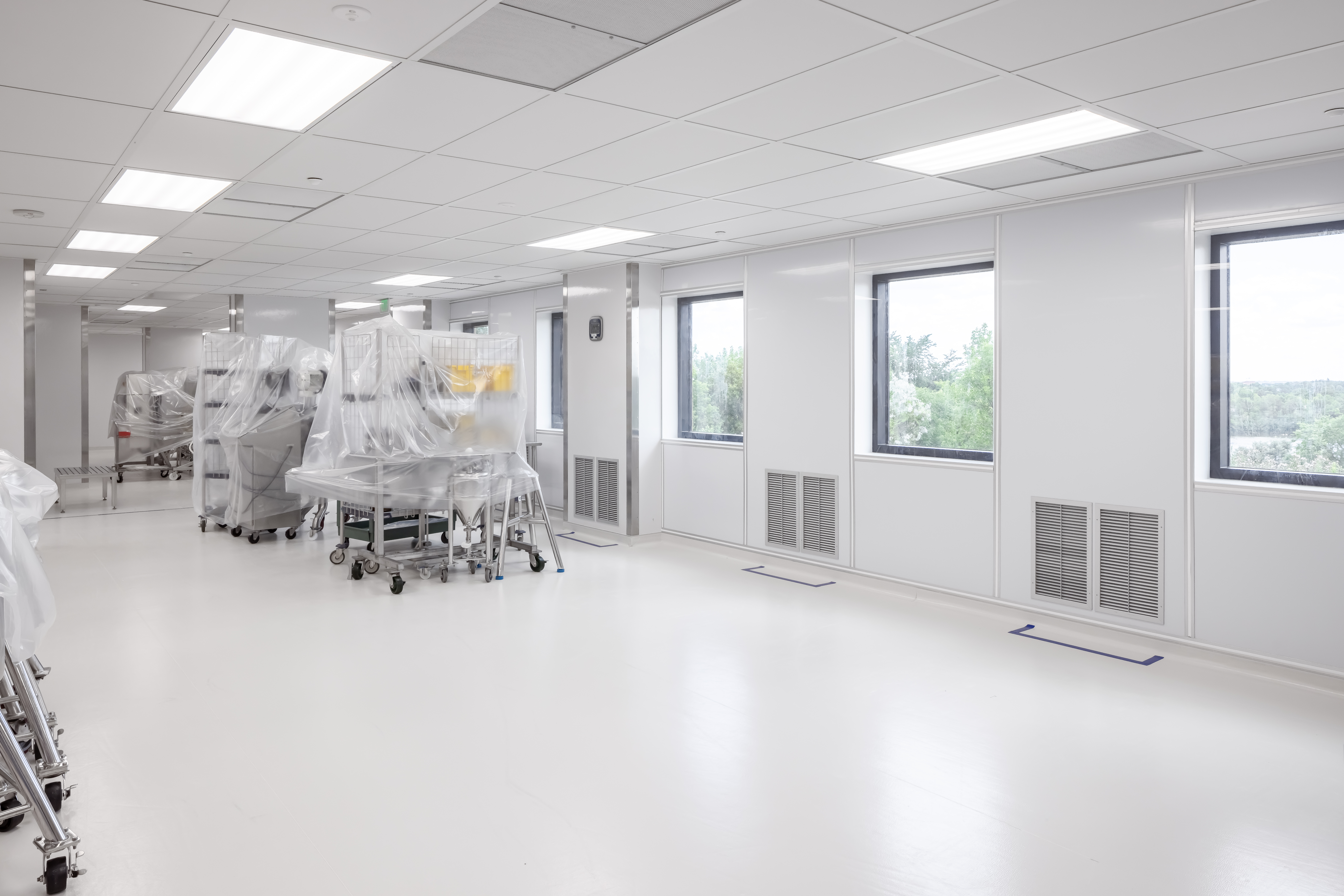
Lyles: When you get into cleanroom sites, everything gets more complicated. It’s all about purity. It requires a different kind of welding process. You might use exotic plastics for purity when it comes to the water supply. It requires an understanding of how those systems come together. It’s about knowing how to work with trade partners on the mechanical and electrical side to find the quality that must be there in this type of construction.
Is it challenging for end users to find sites for their life sciences projects in the Twin Cities or Rochester areas?
Lyles: I do talk to people on the real estate side. We have not overblown the market with construction. We focus more on specific build-to-suit projects. On the coasts, they have a big glut of square footage available. We have done a good job of not just building massive amounts of square footage.
It might be a little tougher for end users to find sites, but they are available. When Boston Scientific moves from its Minnetonka location, I think that area will open for other users. It’s some good real estate for this type of construction.
What submarkets in the Twin Cities area are seeing especially strong demand from life science users?
Lyles: This might be anecdotal, but it seems like Chaska is attracting a lot of this type of construction. Roseville is seeing some activity. Overall, though, the whole area in general from Minneapolis-St. Paul to Rochester is open to this type of construction.
You were recently named director of life science and technology with Knutson. What do you enjoy about working in this sector?
Lyles: This is my 23rd year with Knutson. I’ve worked in several market segments. Working in this one happened organically about eight or nine years. I had a client that I started working with that worked in life sciences. I like complex mechanical systems. Once I started learning about these companies, my interest in the work they did continued to growth and I picked up more clients in the medical device and pharmaceutical industries.
I enjoy the complexity and the coordination that comes with these projects. And when you work in this field, you hope that you are making a positive impact, that you are working with a company that might develop something that could extend a person’s life.
Do you think that the demand for life science space will continue to rise in the Minneapolis-St. Paul area in the future?
Lyles: I think so. With the anchors we have here, and after looking at the research on how much spending is expected to take place in life sciences, I do expect to see more of this kind of construction here. I do speak a lot with design firms. They are all very busy. I think this sector will remain steady in this area.