Physical retail is on a hot streak, with consumers returning to brick-and-mortar stores as an alternative to endlessly scrolling on their smartphones.
But not all physical retail is performing equally well. Open-air shopping centers and districts continue to thrive, especially if they boast the right mix of restaurants, retail and experiential real estate, outperforming their indoor counterparts.
Think Chicago’s Magnificent Mile in the city’s downtown; Eastown Center in Columbus, Ohio; Massachusetts Avenue in Indianapolis; and the Third Ward in Milwaukee.
These busy outdoor shopping districts continue to attract investment dollars, new tenants and a steady stream of shoppers.
What’s behind the success of these open-air shopping destinations? Lyle Stern, co-founder of Miami Beach, Florida-based boutique real estate firm Vertical Real Estate, and a veteran of the retail real estate sector, said that having the right tenant mix, attracting retailers that are committed to the district and bringing in both local and national retailers are key components of successful open-air shopping districts and malls.
“The best retail streets have never been entirely one thing,” Stern said. “National brands bring recognition and consistency, while local and emerging concepts create discovery and give a district more personality.”
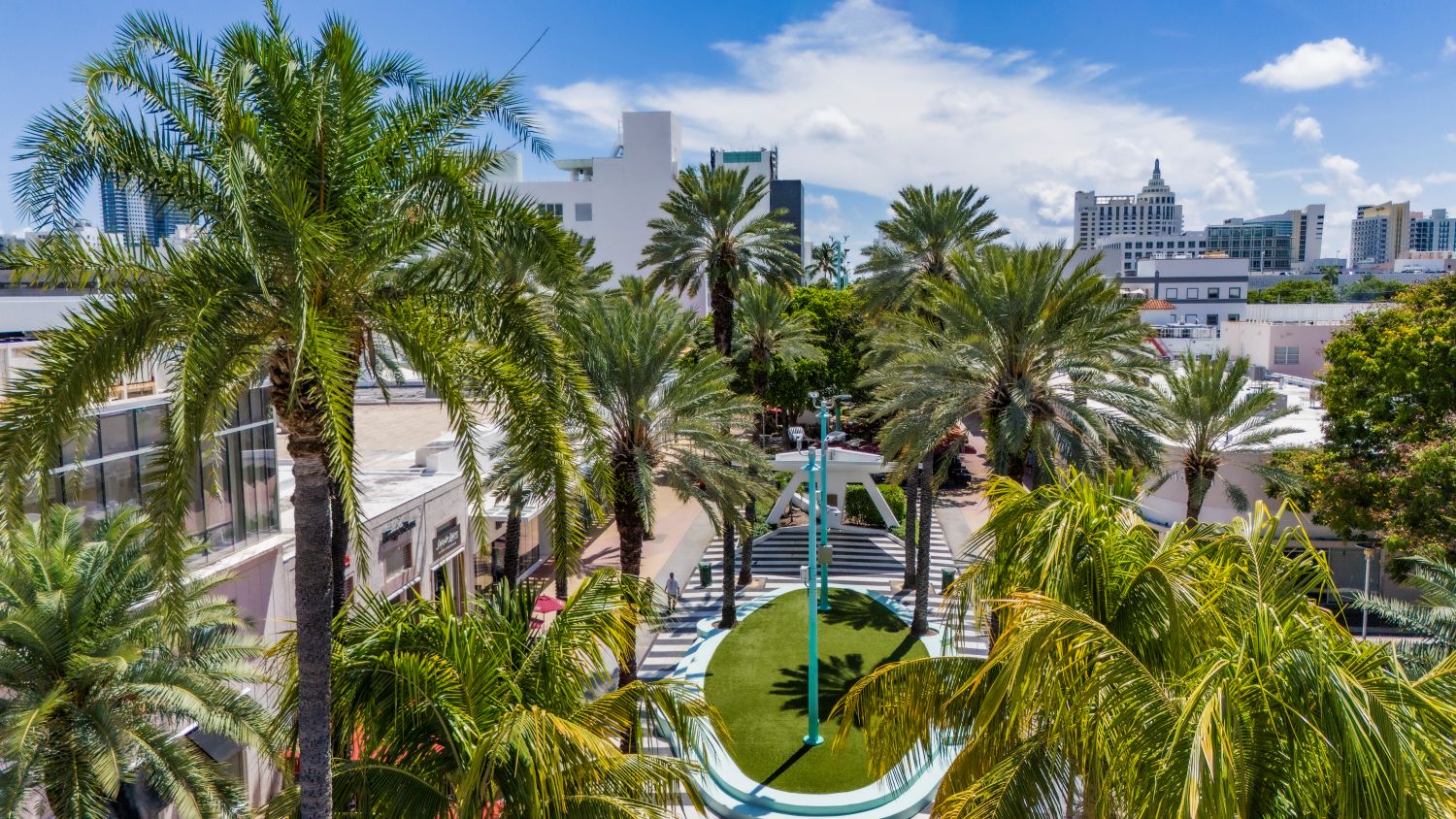
Stern points to Lincoln Road in Miami Beach, a diverse, thriving shopping district in Stern’s own community of Miami Beach. The district features established names including Zara, Nike, Lululemon, Victoria’s Secret, Hoka and Sephora, newer additions such as Uniqlo and more local concepts like Habitat Hyett.
Many of these brands are not only maintaining their existing footprint but are also reinvesting in the Lincoln Road district. Zara is developing a larger, reimagined flagship, Hoka is moving into a larger space, and GUESS has been working on a new flagship concept.
That reinvestment is a key, too, for outdoor shopping destinations, Stern said.
“That kind of commitment is important because it shows retailers still see value in physical presence when the location and customer base make sense,” Stern said.
Stern, though, said that the most successful districts don’t rely only on major brands. The key is to also bring in international retailers, independent operators, restaurants and first-to-market concepts.
That variety gives people more reasons to explore and come back, Stern said, and creates a stronger destination than one built around a single category of tenant.

Lyle Stern, Vertical Real Estate (Photo courtesy of Vertical Real Estate.)
Experiential retail matters
Another key component of successful outdoor shopping districts? Experiences.
Shoppers today expect some type of experiential retail in malls and busy shopping districts. This might mean indoor miniature golf, high-end movie theaters, indoor skydiving or massive arcades and bowling centers.
These experiences give shoppers something that they can’t get online, and help keep traffic coming back to shopping district.
“Experiential retail has become a major part of the equation because people aren’t necessarily making a trip today just to complete a transaction,” Stern said. “They can do that from their phone. What physical retail can offer is everything around the transaction.”
Dining remains a key experience, Stern said. But so are fitness, wellness, entertainment, public art and events.
“At Lincoln Road, we think of the street as a retail destination, but it’s also a public amenity for Miami Beach,” Stern said. “People may come for dinner, a concert at New World Symphony, an art installation, yoga on Sunday morning or simply to walk around and people-watch. Retail benefits from all that activity.”
Online burnout?
Stern said that he isn’t surprised that shoppers continue to embrace physical retail even as online shopping options continue to grow. While online shopping is convenient, it’s not necessarily fun.
Visiting a shopping district, going to the movies, bowling a round or having a drink with friends? That is fun
“I think the social and discovery components are especially important,” Stern said. “Shopping has historically been a social activity. People like walking into a store, seeing merchandise, trying something on and discovering something they weren’t necessarily looking for.”
Stern agreed that online shopping is a useful tool for shoppers who know exactly what they want. But physical retail creates opportunities for discovery and interaction. There’s also an immediacy to physical retail that shoppers can’t get from scrolling through a store’s Website, he said.
The open-air advantage
Of course, some physical retailers continue to struggle, as do many indoor malls across the Midwest and country.
Stern said that open-air shopping has certain advantages over indoor malls. The first of these? Geography.
As Stern says, the best open-air shopping districts are woven into the places where shoppers already want to be. Stern points to Lincoln Road in Miami Beach, Worth Avenue in Palm Beach and Pearl Street in Boulder.
“These districts benefit from the surrounding neighborhood, restaurants, hotels, cultural venues, offices and residential uses in a way that can be difficult to replicate in a more isolated retail environment,” Stern said.
These outdoor shopping districts also give people more flexibility in how they experience the destination. Shoppers can walk a few blocks, sit outside, have coffee, shop, meet someone for dinner, attend an event or simply spend time in the public realm, Stern said.
“The experience does not begin and end at the storefront,” Stern said. “Particularly as consumers place more value on walkability, outdoor space and wellness, that broader environment has become increasingly important.”
Open-air districts also benefit from activity that is not generated by retail alone. Shoppers might be coming from a nearby baseball game, the beach, a nearby park or an event at a central convention center.
“That crossover between hospitality, culture, dining and retail creates a level of foot traffic and spontaneity that is much harder to manufacture within a self-contained shopping environment,” Stern said.
Stern’s final point? All retail must compete with more distractions today. The more reasons districts can give consumers to shop at their stores, restaurants or attractions? The more likely they are to succeed.
“I think the lesson for more traditional shopping centers is that retail today has to compete for people’s time, not just their spending,” Stern said. “The strongest destinations are the ones that understand their geography, keep the tenant mix relevant and invest in the spaces between the stores just as much as the stores themselves. If people enjoy being there, the retail benefits naturally.”