Many investors approach a 1031 exchange focused on one thing: deferring taxes. And while tax deferral is certainly an important benefit, it isn’t the only measure of success. A truly successful exchange should also support a broader investment strategy.
Over time, I’ve noticed a pattern. Investors who get the most value from a 1031 exchange don’t treat it as a last-minute decision or a standalone transaction. They approach it as part of a longer-term plan for building and managing their real estate portfolio. That longer-term perspective shapes how investors prepare, make decisions, and navigate a 1031 exchange.
Here are five principles to keep in mind along the way.
1. Start planning before the sale
One of the most common challenges is timing. An investor goes under contract, and only then starts exploring whether a 1031 exchange might make sense. At that point, the planning window has narrowed.
A better approach is to ask:
- What role does this property play in my portfolio today?
- What would I want to replace it with?
- Does a 1031 exchange support where I’m trying to go next?
When those questions are answered early, everything that follows becomes more manageable.
2. Let the investment strategy lead
A 1031 exchange is a tool, not a strategy. The most successful investors are clear about what they are trying to accomplish, whether that means improving cash flow, consolidating or diversifying holdings, reducing management demands, repositioning into different real estate asset types, or planning for long-term wealth transfer.
For example, an investor looking to reduce day-to-day property management may evaluate very different replacement opportunities than one focused on increasing cash flow.
When the strategy is clear, the exchange becomes a way to execute that strategy more efficiently. Without that clarity, it’s easy to make reactive decisions under time pressure.
3. Make replacement property a process, not a scramble
The 45-day identification window gets a lot of attention, and for good reason. But the real issue is not the timeline itself, it is whether the investor is prepared before the timeline begins.
You will move through the identification period with far more confidence when you do the following:
- Define your criteria
- Explore potential options
- Identify backup properties
The goal is to enter the identification period with a plan, not begin searching for one under pressure. Investors who wait until closing to begin searching for replacement property often feel rushed, and that’s when compromises happen.
4. Build the right team early
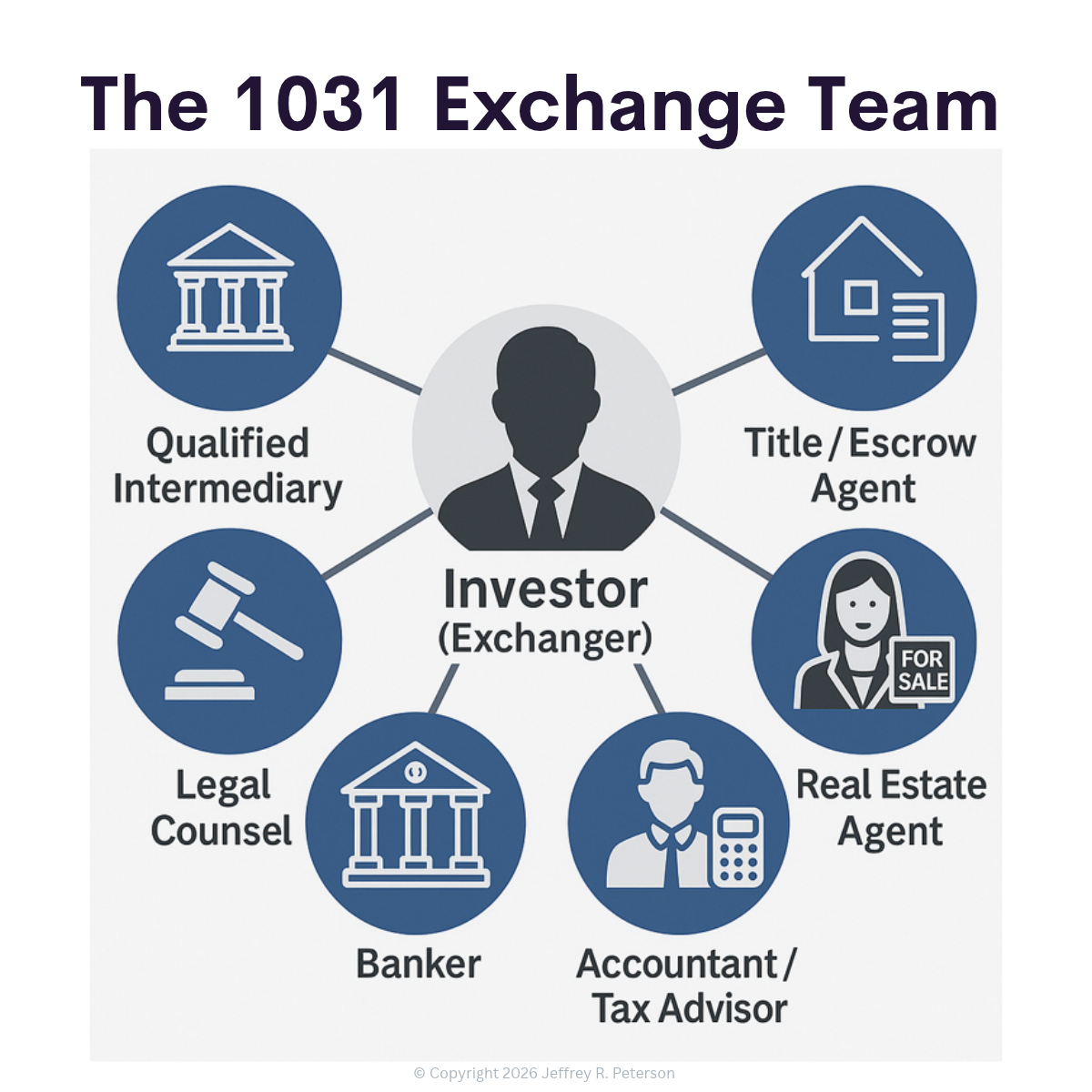
A 1031 exchange involves a coordinated team of professionals, including a qualified intermediary, legal counsel, banker, accountant or tax advisor, real estate agent, and title or escrow agent. Each plays a different role, and not everyone is involved at the same stage. When responsibilities are understood and communication is clear, the process tends to move more smoothly.
Problems often arise when everyone assumes someone else is handling a critical detail. Small gaps can quickly become bigger issues, especially under tight timelines. The right team does not eliminate complexity, but it makes the process far more manageable.
5. Choose clarity over speed
There’s often a sense of urgency around 1031 exchanges. But moving quickly isn’t the same as moving confidently. Investors are better positioned when they understand the rules at a high level, know who to rely on for guidance, and have a clear plan before key decisions are required.
Clarity also means knowing when not to force an exchange. Purchasing a replacement property simply to meet a deadline can undermine the investment strategy the exchange was intended to support.
Final Thought: Plan for the portfolio, not just the exchange
For many investors, the first 1031 exchange is the hardest. But with the right planning and support, the process becomes more familiar and can evolve into an important part of a long-term investment strategy. Tax deferral helps keep more capital working, but that’s only part of the opportunity. The greater value comes from using each exchange to make intentional decisions about what to own next and how to position a portfolio for the future.
If you are considering a sale and wondering whether a 1031 exchange fits into your broader plan, start that conversation early, before timelines begin to narrow your options.
Jeff Peterson is a Minnesota attorney and former adjunct professor of tax law. He serves as President of Commercial Partners Exchange Company, LLC, where he facilitates forward, reverse, and build-to-suit 1031 exchanges nationwide. Jeff regularly collaborates with attorneys, accountants, and real estate professionals on exchange strategies. Reach him at 612-643-1031 or [email protected] or on the web at www.cpec1031.com.