Developers are increasingly transforming struggling office space into multifamily developments. And usually, developers target offices with old bones for this process.
Think vintage office towers, historic masonry facades and obsolete floor plans from the 1920s and 1930s. Developers view these buildings as natural fits for multifamily conversions because of the history behind the properties and the often stunning architecture that they boast.
That doesn’t mean, though, that only vintage office buildings are good targets for multifamily conversion. In fact, the next wave of these conversions might focus on office buildings built in more modern times. Think the more utilitarian but still functional office towers of the ‘80s and ‘90s.
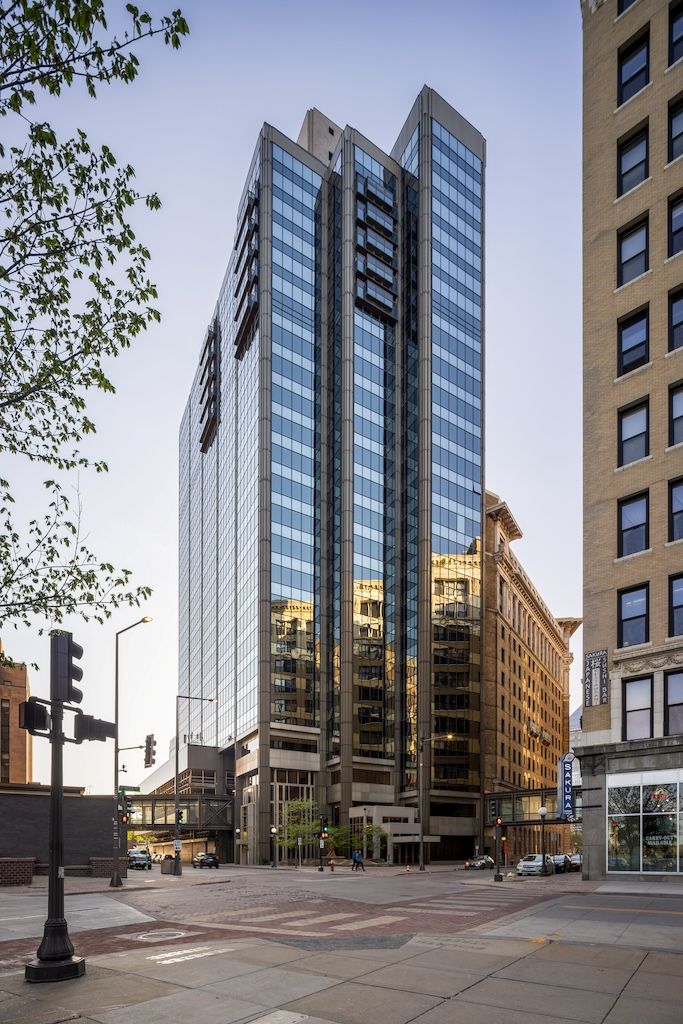
Landmark Tower in downtown St. Paul, Minnesota, is a good example. Built in 1983 as the 25-story Amhoist Tower, the modernist office building spent decades as a fixture of the St. Paul skyline. But as office demand changed and COVID-19 pandemic fueled the rise of work-from-from and hybrid in-office schedules, the Amhoist Tower saw its vacancy rate skyrocket.
But today? The building at 345 St. Peter St. is enjoying new life as a modern multifamily property.
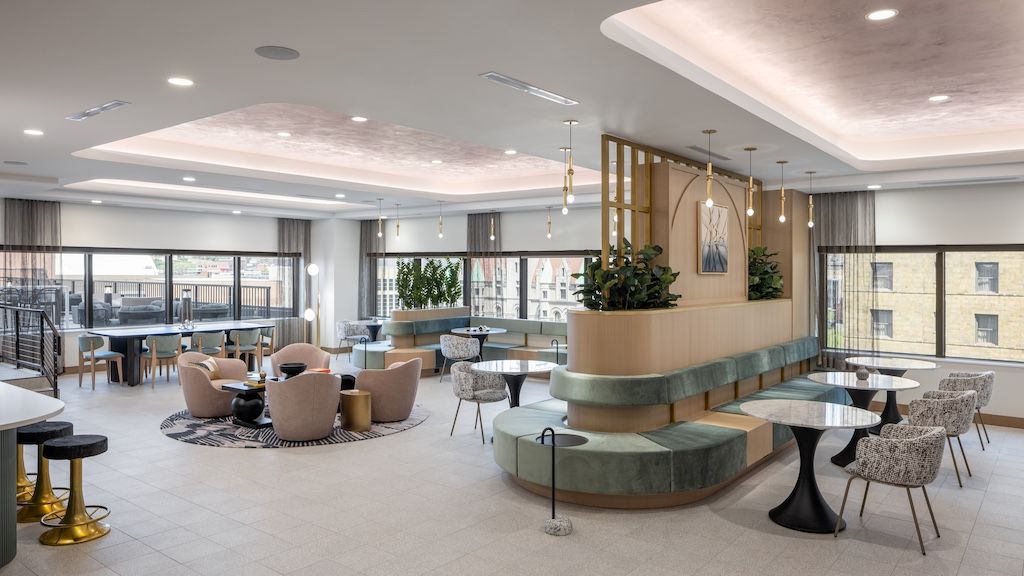
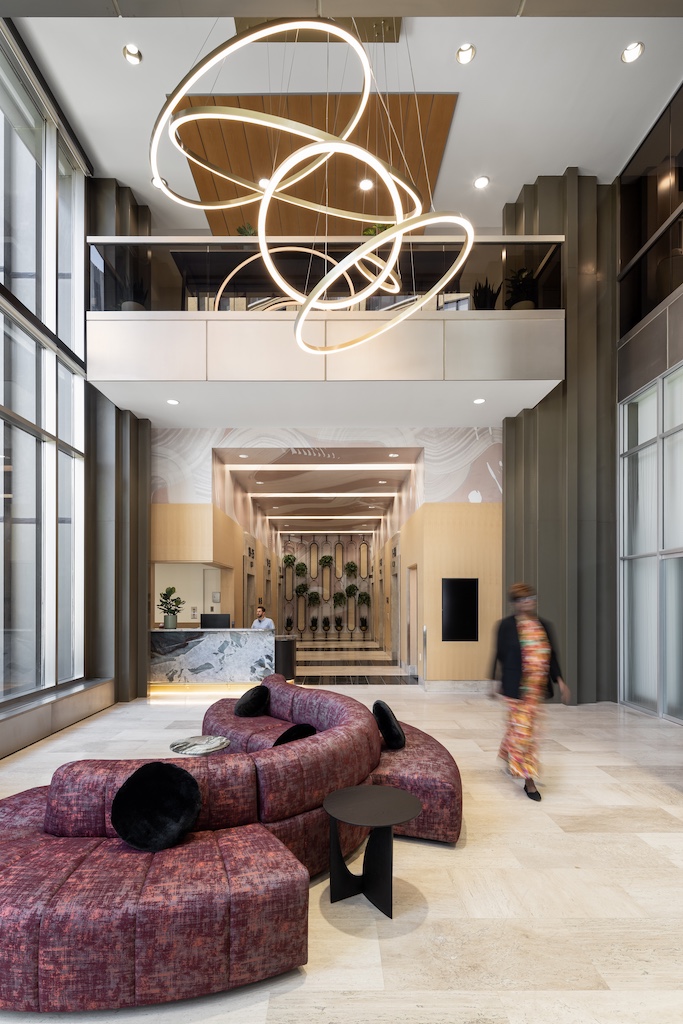
Working with developer Sherman Associates, BKV Group developed a plan to convert most of the tower into 187 apartments. The $97 million rehabilitation was completed more than a year ago, transforming a largely vacant office building into a bustling residential property with amenities that refer back to the property’s past use as an office tower.
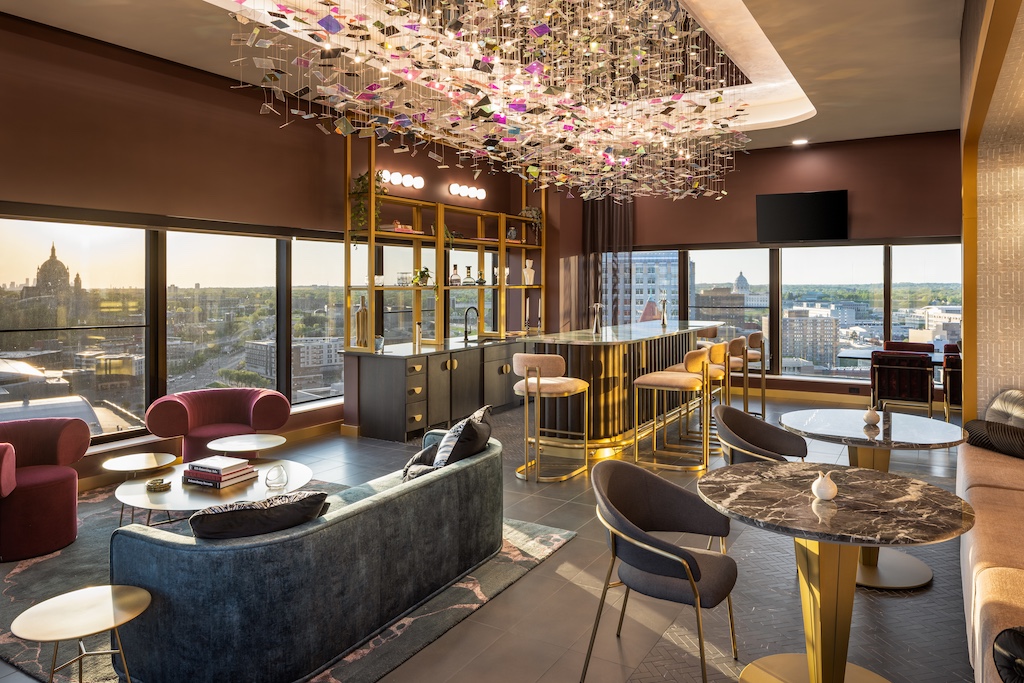
These amenities include the property’s Business Lounge, which provides coworking space, and its C-Suite, located on the 18th level, which serves as a bar and lounge.
For Michael Krych, partner at BKV Group’s Minneapolis office, Landmark Tower demonstrates why developers and architects shouldn’t limit their conversion searches to century-old office buildings.
“There are plenty of office buildings of different eras and vintages that can work for this housing shortage we have,” Krych said.
That doesn’t mean every modern office tower is a good fit for conversion. Conversions can be expensive. To work, the economics, building systems, floor plates and location of an office property must combine to provide the right fit.
Landmark Tower had several advantages from the start, Krych said. First, there’s its location. The tower sits in the heart of downtown St. Paul, overlooking Rice Park and offering 360-degree views of the city and the Mississippi River. Then there is its architecture, another feature that also helped make the conversion possible.
The building’s curtain-wall design rises 25 stories above a footprint formed by three staggered rectangular prisms. Those steps created an unusual floor plate and, ultimately, a collection of apartments with prominent corners and expansive views.
“The building footprint was important for it to be successful,” Krych said. “A lot of projects don’t have that amount of stepping.”
That configuration helped BKV Group create corner residences with distinctive layouts and views, giving the apartments a selling point beyond its location in a converted office building.
The building’s history also proved important to the redevelopment. In 2022, Landmark Tower was added to the National Register of Historic Places. The designation wasn’t based solely on architectural significance. The tower’s connection to American Hoist and Derrick Co., a St. Paul company with more than a century of history. helped establish its historical importance, Krych said.
The company manufactured cranes and hoists used on major projects around the world, including the Panama Canal and Mount Rushmore. Eventually, the company built the tower that now bears the Landmark name, though financial problems ultimately contributed to its downfall.
The historic designation brought something else that mattered enormously: access to federal and state historic tax credits.
” If that wasn’t in place for Landmark Tower, it would not have gotten done,” Krych said. “Without those credits, the price would have been too steep to make it work.”
That point gets to the heart of the office-conversion debate. The question isn’t necessarily whether a building can physically be transformed into apartments. The question is whether the numbers work.
BKV Group has spent considerable time studying that issue. During the post-COVID slowdown, the firm evaluated more than 20 vacant or underused buildings in Minneapolis and another 12 to 15 in St. Paul, examining their locations, floor plans and potential residential layouts.
“Not every building works,” Krych said. “But there are plenty that do. I do think we will see a lot more of these younger buildings converted into multifamily space.”
What makes an office building a good fit for conversion to apartments? Parking, trash collection and ease-of-access for maintenance vehicles are important factors. Then there are the physical characteristics of the building: column spacing, window sizes, stair locations, structural systems and the location of the core.
Mechanical systems can pose another major hurdle. Landmark Tower’s post-tensioned concrete construction, for instance, meant BKV Group couldn’t simply drill through the floors wherever it wanted.
“We had to X-ray the floors to understand and know where the tendons were,” Krych said.
The building’s curtain wall presented its own challenges, including areas where the exterior enclosure had begun to fail.
BKV Group is tackling additional conversions of more modern buildings to apartment developments, Krych said. A good example is in St. Louis. Here, the firm is working on another conversion involving a 1960s International Style complex overlooking the famous Gateway Arch. The southernmost tower is being converted to affordable housing, while another tower retains its ownership/condominium use and a separate developer is converting the middle building to housing.
That project, too, is relying on historic and state tax credits, along with low-income housing tax credits.
The takeaway? Downtown residential conversions don’t necessarily require historic office buildings to work. The key instead is for developers to find buildings of any age that they can convert economically and neighborhoods that attract residents.
For Landmark Tower, that neighborhood is downtown St. Paul. Krych said that downtown living is still attracting a steady stream of residents who want to live in busy, vibrant neighborhoods.
“Urban city dwelling and living is pretty cool,” Krych said. “It’s so different and unique and fun than what you experience beyond the city limits. The key is offering people a place that has a real ‘there’ to it.”