Challenging sites can bring creativity in the hospitality sector. That’s the case with the newly opened Motto by Hilton Nashville Downtown, a micro hotel located just three blocks south of the Tennessee city’s entertainment district.
What is a micro hotel? It’s one that features smaller, but purposefully designed, rooms. While standard hotel rooms might boast 350 square feet of space, the rooms in the new Motto by Hilton in Nashville are 150 to 180 square feet.
That might sound cramped, but it’s not. When designing the new Motto at 311 3rd Ave. S, Nashville-based design firm ESa focused on flexibility, using available space smartly and designing a building that feels more spacious than it is.
The micro hotel also targets a different type of traveler, one looking for lower-priced accommodations — micro hotels charge lower room rates than standard hospitality properties — and shorter stays. These travelers would rather spend their dollars on the food, music and attractions that Nashville offers than on a hotel room that they’ll mostly use for sleep.
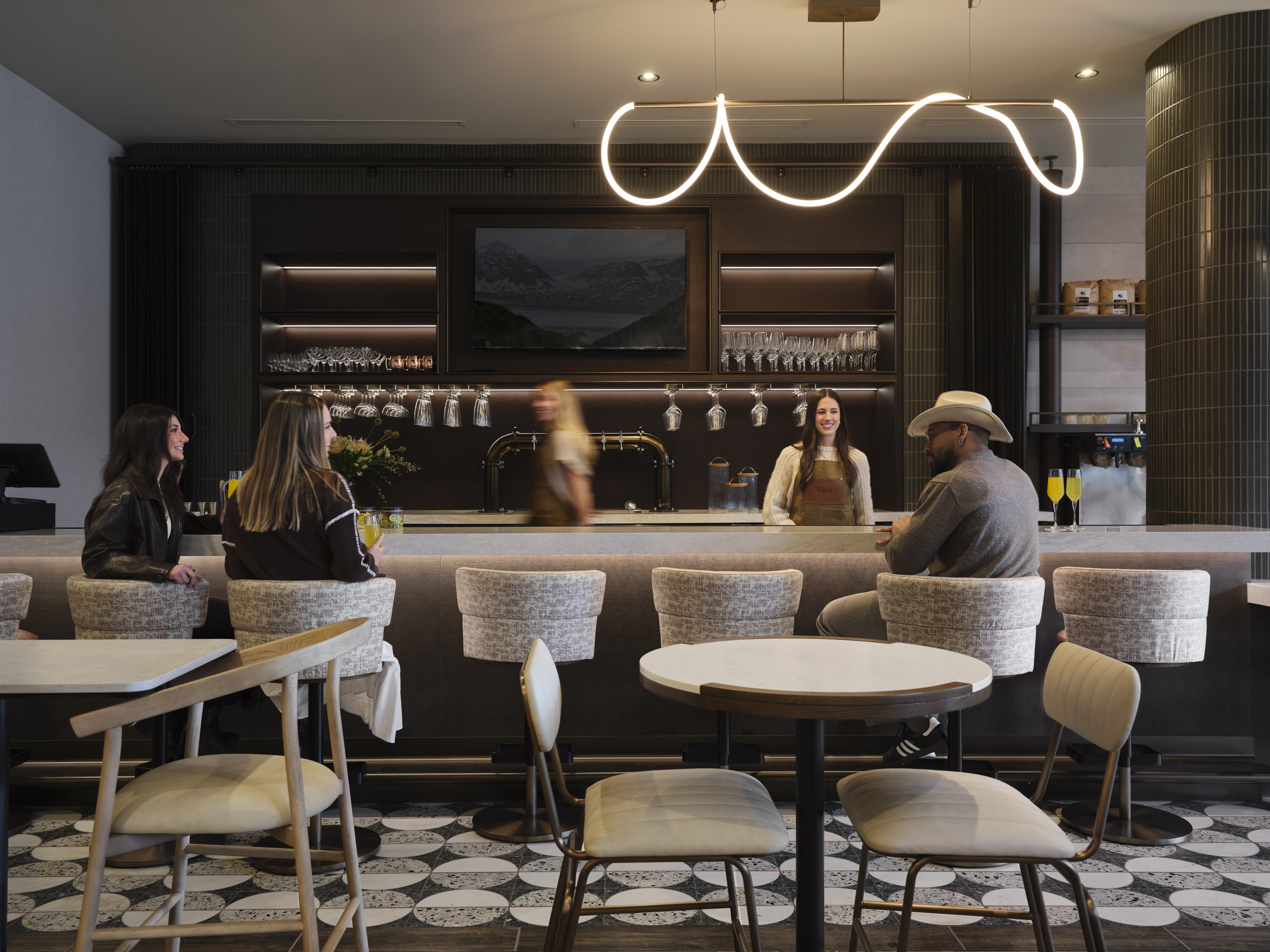
“This is about reaching a dollar figure that is more attainable for a larger group of travelers while still providing everything that you’d need in a hotel,” said Lee Davis, principal and senior design manager at ESa. “You can still go downstairs to grab food or have a drink in the lobby bar. But the property is designed in a way that asks ‘What is unnecessary? What unnecessary costs are passed onto travelers that we can avoid?’ We are giving travelers another option to explore Nashville.”
As Davis said, a micro hotel such as Motto won’t cost travelers $500 a night. Instead, travelers can rent a room for a fraction of that price.
“That’s a huge differentiator, especially when you consider the kind of tourist destination that Nashville is,” Davis said. “You might only be here for a night or two. How much time will you spend in a hotel room? You might spend the evening watching a Predators game or visiting a honky tonk. You can be saving $300 on your nightly rate for a room that you aren’t spending much time in anyway.”
The concept of connecting
What sets Motto apart, though, is its aggressive use of connecting rooms.
Most hotels offer connecting rooms that families can use if parents want to sleep in one room while their kids sleep in the one next door. An interior door separating the two rooms can be opened to keep the family members connected but also give everyone extra space.
The Nashville Motto offers this concept but in a bigger way. Davis said that travelers can rent a series of connecting rooms so that everyone has his or her own space while still being connected to each other. This makes the hotel’s smaller rooms seem more spacious than they are.
Davis gives this example: Maybe several families or a group of friends are traveling together. They can rent six connecting rooms. When the interior doors are open, the space these friends or family members are sharing seems larger. When they are closed, guests get their privacy.
“If you are traveling with five of your best friends, you want that sense of connection,” Davis said. “The idea that everyone needs to be forced out of their hotel rooms and into common-area spaces to hang out together is a little tired. This project answers the question of how you make your living and sleeping space more hospitable in a micro hotel. We do it by being aggressive with the connecting rooms. It’s a differentiator for Motto.”
A challenging space
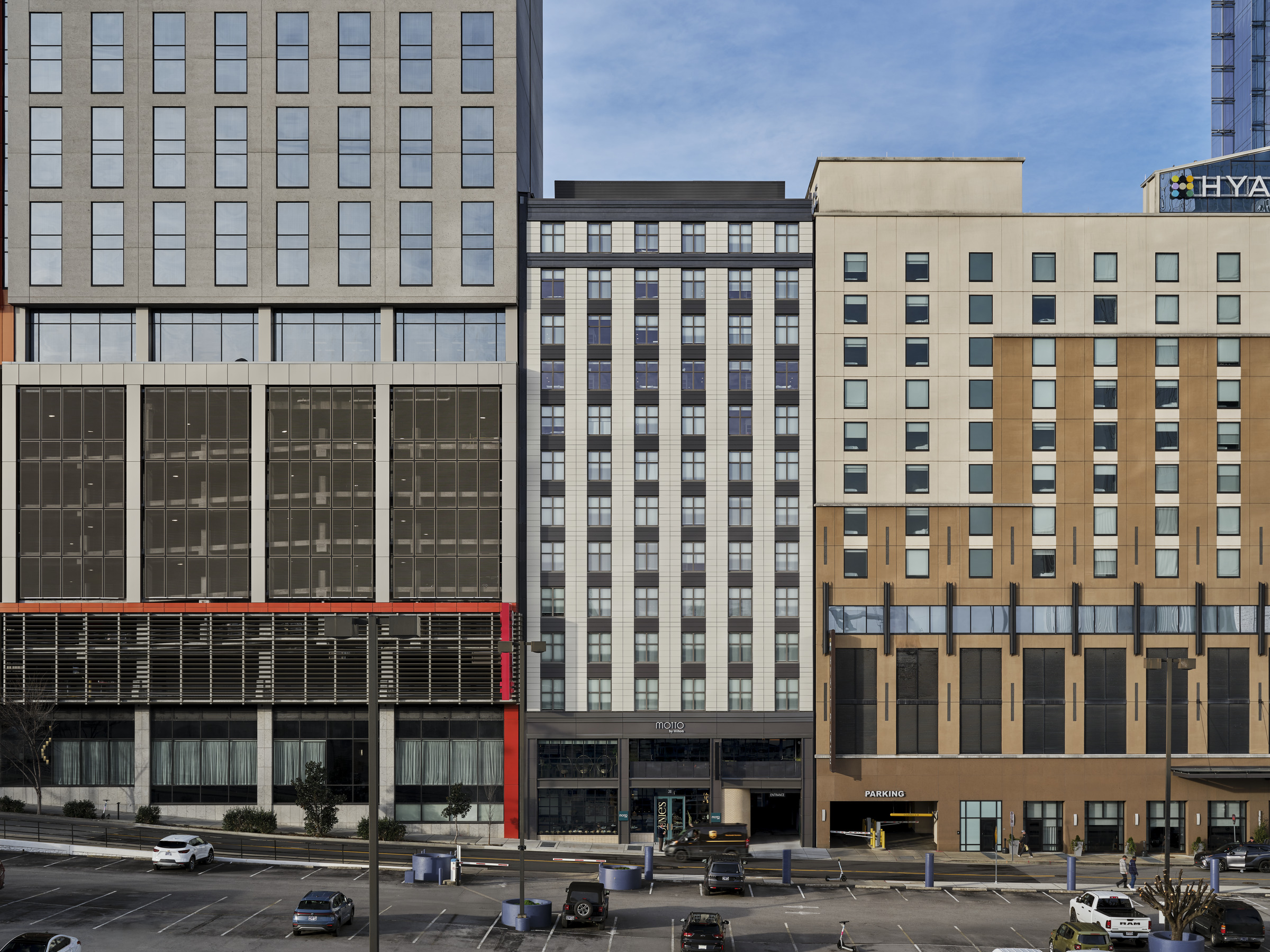
Nashville’s Motto features 260 rooms in a 13-story 93,754-square-foot building.
The challenge for designers started with the site itself. At just 60 feet wide, the footprint left little room for inefficiency. ESa responded by carefully planning circulation, maximizing usable space and creating a guest flow that begins the moment guests arrive.
“This is a forgotten piece of property,” Davis said. “It’s a great location. It was only available because people couldn’t get their heads around how to design a hotel to fit into such a small space between two existing buildings.”
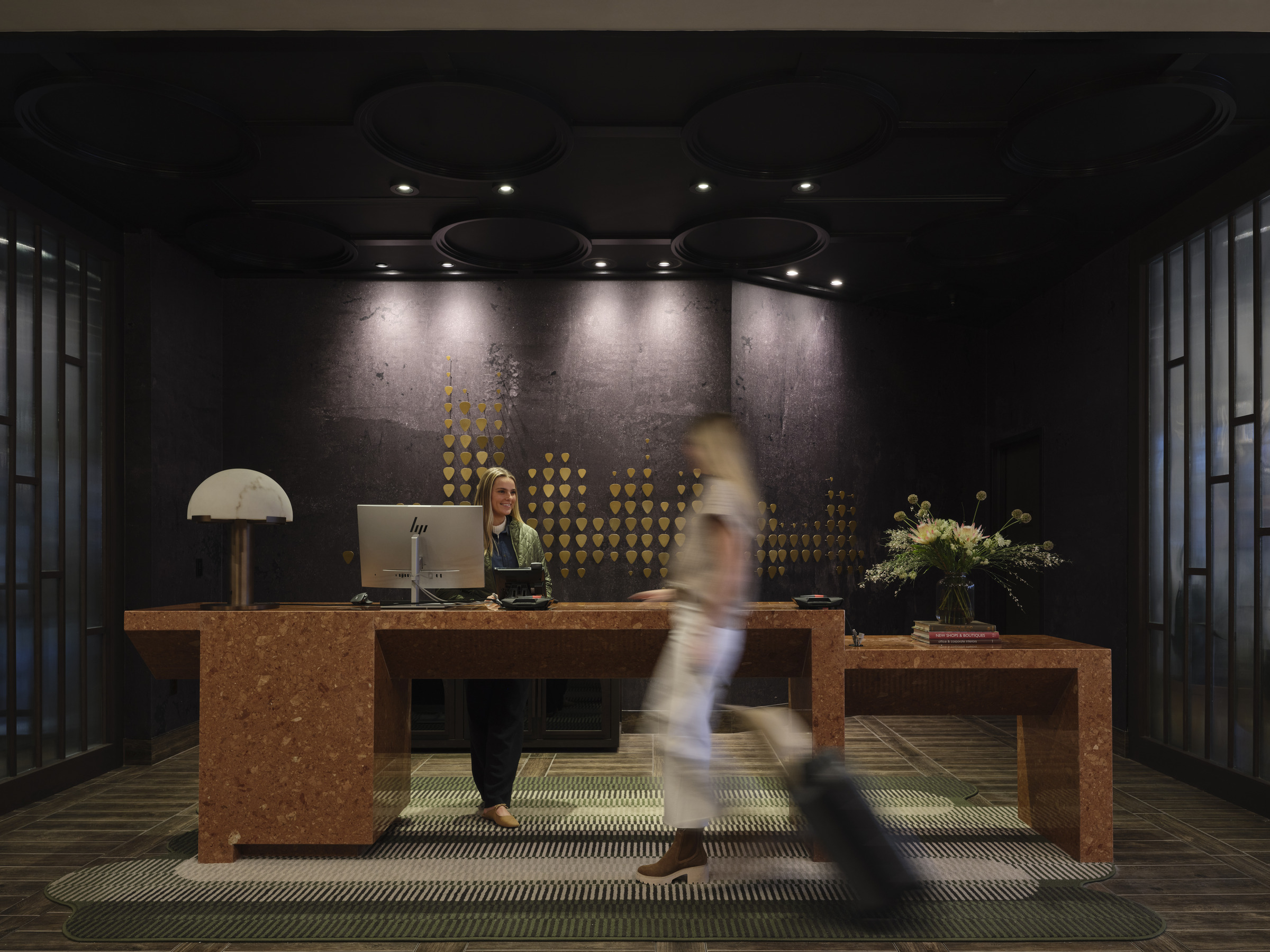
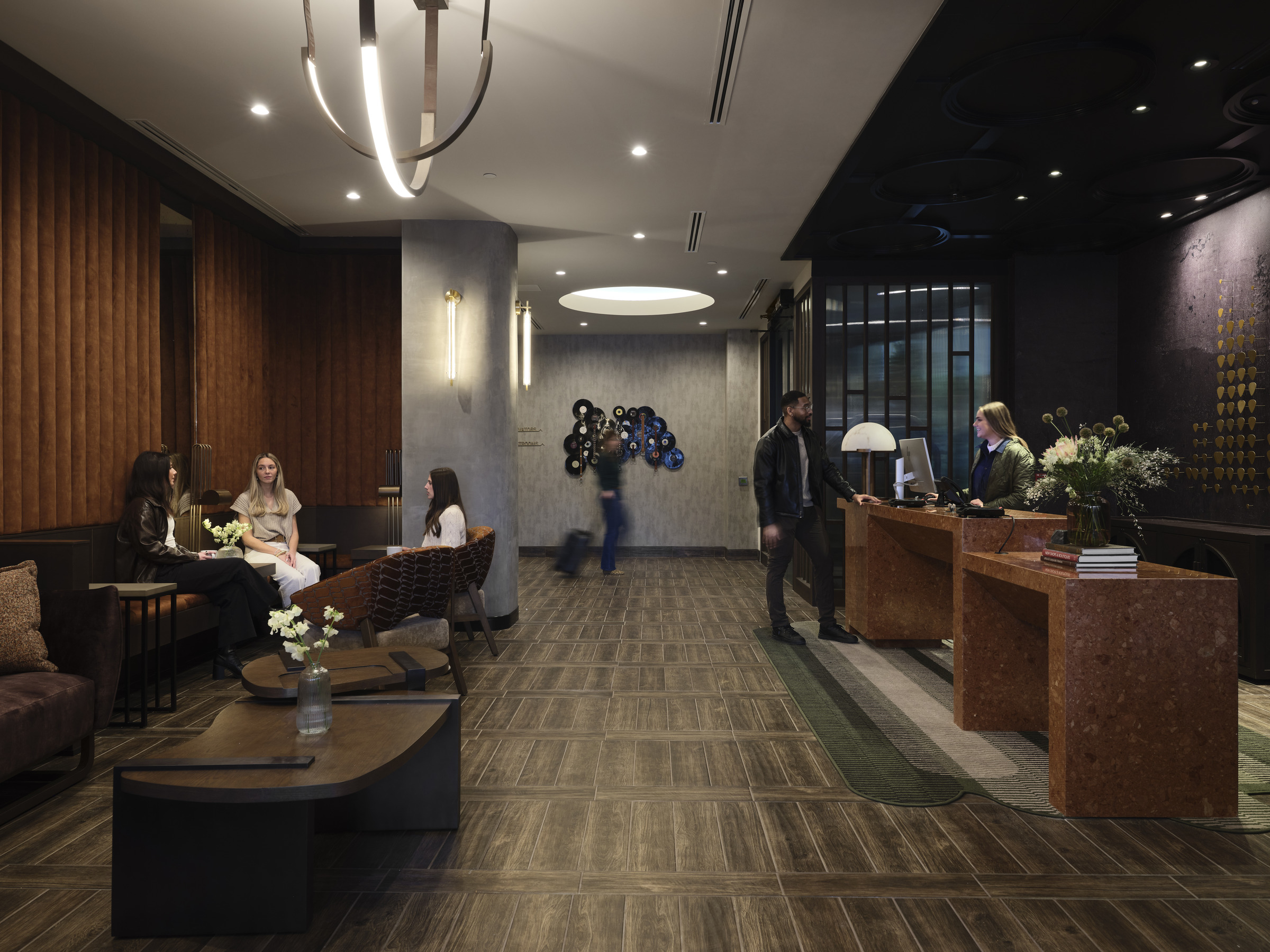
Unlike many urban hotels, the property offers two distinct entries. One draws guests through a lower-level restaurant along 3rd Avenue, while the other leads through a more secluded courtyard drop-off. Inside, a two-story lobby opens the space, anchored by a staircase that connects to a second-floor bar and patio.
And while the rooms are smaller, Motto doesn’t skimp on the common-area amenities. The property includes meeting space, a fitness center, laundry facilities, an outdoor patio and about 3,000 square feet of retail and restaurant space.
About 30% of the hotel’s rooms can connect to adjoining units. In some configurations, as many as six rooms can link together. Some rooms also include bunk beds, a perk for younger travelers and group stays.
Hannah Terry, design manager with ESa, in a written statement said that the goal when designing Motto was to not sacrifice a sense of place while focusing on efficiency. Architectural details, including a curved and recessed entry, draw inspiration from the Victorian and Italianate storefronts that define much of downtown Nashville’s historic character.
The team behind Motto includes Apple Hospitality REIT, which owns the hotel, and Chartwell Hospitality, which serves as its operator. Mortenson Development, Inc. led the development, with M.A. Mortenson Co. handling construction. ESa oversaw both architecture and interiors, working alongside Wild Muse Interiors, while KVD and Barge Civil Associates provided landscape architecture and civil engineering.
Davis said that he expects more micro hotels to pop up across the country. It gives operators a chance to capture a new market, travelers more interested in spending their time and money on experiences in the places they visit rather than on unnecessary space in a hotel room they’re rarely in.
“When you think about a hotel, what are you renting out for the night?” Davis asked. “It’s a bed, shower, toilet and sink. A window. That is what you are leasing for the day. A micro hotel is about challenging what part of a room is unnecessary.”
The biggest challenge? It might be convincing travelers that a lower-cost micro hotel can offer them everything they need in a stay.
“Some people still have a distaste for this concept. They think they’re going to be sleeping in a closet,” Davis said. “Once people understand that this gives them everything they need in a hotel, and that it won’t be a bad experience for a guest, I think you’ll see more of these kinds of hotels.”