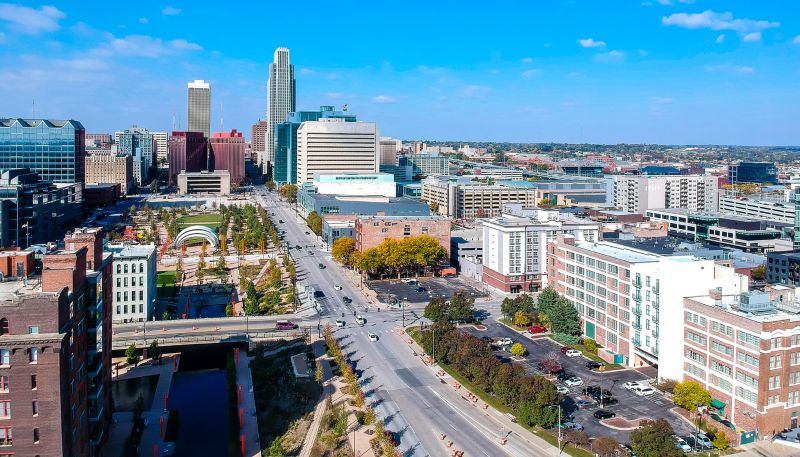
Omaha’s commercial real estate market has long been a consistent, resilient one. That hasn’t changed, even as 2025 has brought a host of economic challenges and uncertainty.
The professionals working in this market don’t expect this to change, with many of them predicting an even stronger 2026 when it comes to new construction and leasing activity in Omaha’s CRE market.
Just ask Jon Blumenthal, an attorney with Omaha’s McGrath|North, who says that new commercial development continues to boost both the city’s urban core and its surrounding areas.
“We are still seeing strong demand for new commercial real estate development in all parts of Omaha and its surrounding cities,” Blumethal said. “Omaha‘s strong partnerships between government, business and philanthropy continue to drive progress.”
As an example? Blumenthal points to the new Mutual of Omaha tower headquarters in downtown Omaha, which will be the tallest building between Denver and Chicago once it is complete.
“Continued growth like this downtown, coupled with the Omaha streetcar project currently under construction, will keep Omaha moving forward,” Blumenthal said.
Mandi Backhaus Barr, associate broker with Omaha’s The Lerner Company, said that surpassing 1 million in population has shifted the way companies and businesses look at the Omaha market.
“It’s interesting to see the box this now checks for numerous developers, businesses and retailers as they shift their focus to Omaha over other markets,” Backhaus Barr said. “Omaha continues to be a great place for people to live affordably and raise a family. That is the reason we are seeing strategic investments into suburban growth in Eklhorn, Bennington, Gretna and Papillion. As the population continues to grow and people have more disposable income, commercial will naturally follow and thrive.”
Demand for new construction not waning
Jeanette Weber, broker with Omaha’s Investors Realty, says that she still sees demand for new commercial construction in the Omaha market. That demand, though, is not equally strong for all sectors.
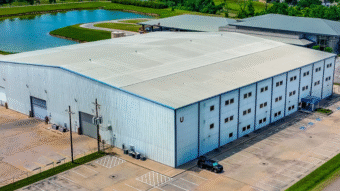
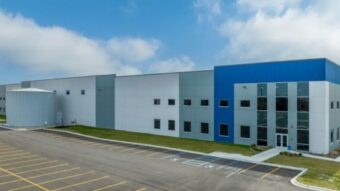
“Demand is sector-specific,” Weber said. “Industrial and logistics remain exceptionally strong, with historically low vacancy, steady absorption and continued construction activity, much of it pre-leased.”
Demand for new office space in the market is more mixed, Weber said. Even though office vacancy rates here, as they are across the country, are elevated, about 1 million to 1.6 million square feet of office remains under construction in the Omaha market, Weber said.
“That shows that high-quality, well-located office projects are still feasible,” Weber said.
And in the multifamily sector? Weber said that demand for new apartment construction has softened, with rising vacancy and slower leasing velocity for this product type.
Big developments still happening
Even though demand for new commercial properties might be slower than in the past, the Omaha market is still home to several big developments that are either in the planning or development stage.
One such project is the development of a professional soccer stadium and mixed-use district in north downtown Omaha. Union Omaha Soccer is partnering with the city of Omaha on the development of the stadium. If approved, the project would break ground in 2026 with the stadium’s opening planned for 2028. The new stadium would serve as an anchor for a new transit-oriented neighborhood.
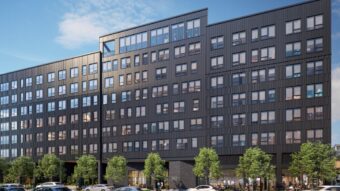
That’s just one big project. Mutual of Omaha’s new headquarters tower continues to energize downtown redevelopment, Weber said. At the same time, the Mercantile Project lead by Hines has been a positive for Omaha’s historic Old Market district. This project features Brickline at the Mercantile, a luxury apartment complex with retail space and a parking garage. Future plans call for the conversion of the old Conagra campus call for more apartment units, offices and a boutique hotel.
Michael Sands, partner with Omaha law firm Baird Holm, said that he has been fortunate to work on several marquee projects in the Omaha market. Those keeping him busy include the Crossroads redevelopment project and the Union Omaha stadium district project.
“Each will bring their own unique and exciting contributions to Omaha and the CRE market,” Sands said. “I’m a big believer of growing a city by investing in its urban core, and these are great examples of that.”
Development activity has been strong in the center of Omaha, too, something that has brought a steady stream of activity to downtown and its surrounding neighborhoods. Backhaus Barr said that the investment in Omaha’s urban core continues to pay off.
“It’s thrilling to see the revitalization of the urban core, with the Gene Leahy Mall and Riverfront completed, Mutual of Omaha’s new headquarters well underway and already reshaping our skyline, new restaurants opening and other projects in the works,” she said. “Omaha is a very philanthropic community, so it’s refreshing to see people giving back to the community in ways that allow Omaha to continue to grow in positive ways.”
Blumenthal said that he is particularly excited about the new Omaha North high school football stadium. He said that this partnership between The Lozier Foundation, Omaha Public Schools and the Omaha YMCA, with NewStreet Properties taking the lead as the developer, is creating an opportunity in North Omaha, a traditionally underserved segment of the community.
“Additionally, I remain excited about the growing industrial sector,” Blumenthal said. “There is still warehouse and industrial need. One outgrowth of data center demand is that those users will need additional warehouse space to store equipment.”
Weber said that Omaha continues to push for new developments to enhance the area’s quality of life.
“Airport improvements, planning by the Omaha Inland Port Authority and north Omaha business park initiatives are positioning the region for expanded industrial, logistics and advanced manufacturing activity,” Weber said. “Collectively, these projects reflect strong public–private investment and ongoing confidence in the market.”
Spencer Secor, senior associate and office specialist with Omaha’s The Lund Company, says that the development activity in Omaha is inspiring, and points to a strong future for the area’s commercial real estate market.
“Even being in the real estate business, it amazes me when I drive around town and see the amount of development happening,” Secor said. “From the river to Elkhorn, there are numerous projects under construction with many more slated to start in the next six to 18 months.”
Secor says that this development activity isn’t likely to slow, either. Omaha and its surrounding areas still suffer from a lack of housing, industrial space and high-quality retail.
This lack of supply is helping to drive new development, Secor said.
“I don’t anticipate the development slowing down any time soon because of the growth and need our city provides,” he said.
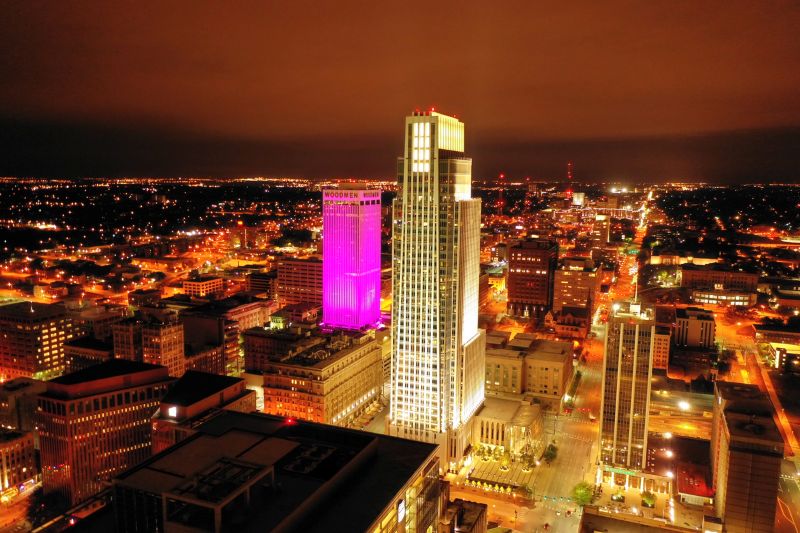
Photo credit: Odell Ford
Conservative or pragmatic?
Why has demand for new commercial space remained solid in the Omaha market, even during challenging times? And why has leasing activity remained consistent here while vacancy rates stay relatively low?
Weber said that it’s all about the discipline shown by developers and city officials.
“A measured, disciplined development approach has helped Omaha avoid the boom-and-bust cycles seen in more volatile markets,” she said. “Developers and lenders typically resist oversupply, which stabilizes vacancy and rent levels during downturns.”
Secor says that Omaha has long boasted a steady commercial real estate market.
“We are not a boom or bust city like some on the coasts that hurt when challenging economic times present,” Secor said. “We still feel the pain but it is not as severe as some of the larger cities that are more aggressive by nature. This has helped us stay steady and level when the economy isn’t firing on all cylinders.”
Another benefit of working in Omaha’s commercial real estate market? Secor pointed to the area’s low unemployment and lower office building vacancies compared to other markets, which he says is another effect of the area’s conservative nature. Omaha hasn’t suffered much overbuilding, even when the area’s commercial real estate market is strong.
Blumenthal agrees.
“Omaha has a reputation as a conservative CRE market, which doesn’t give enough credit to the number of active developers we have creating a better city,” Blumenthal said. “I like to think that Omaha’s developers are ‘pragmatic’ rather than conservative. Developers here avoid unnecessary risk and are thoughtful about what they each do best.”
Sands said that Omaha’s fiscal conservatism has insulated the commercial real estate industry from the lowest of lows endured in other parts of the country.
“I think what makes Omaha a resilient market is the right mix of that mindset with the type of forward thinking and risk tolerance that is necessary,” Sands said. “The credit goes to both developers and the city’s elected officials and administration. It takes a shared vision and willingness on both sides to execute these projects.”
Another positive is Omaha’s diverse employer base, one that includes insurance, healthcare, logistics, defense, tech and corporate services. Such a diverse employment base provides resilience, reducing the local market’s dependence on any single industry.
When one industry might be struggling, others are doing well. That provides Omaha with a cushion to survive economic downturns.
This doesn’t mean that all commercial sectors are performing equally well in the Omaha market. Weber said taht industrial, logistics and distribution continue to be the strongest-performing sectors, supported by Omaha’s central location, limited availability of modern industrial space, supply-chain shifts and increased public and private investment in infrastructure.
Weber said, too, that some office activity, particularly build-to-suit and headquarters projects, remains healthy. Healthcare, medical office and institutional facilities also show steady demand, driven by the region’s major health systems and universities.
Weber said that multifamily has shown signs of cooling, with higher vacancy levels and slower leasing activity than in previous years. Certain traditional retail categories, especially non-experiential strip centers in weaker trade areas, are facing challenges as consumer habits evolve, Weber said. And older office products continue to see high vacancy rates.
Weber, though, said that she expects the commercial real estate market in the Omaha area to remain strong. The city just offers too many positives to see a major slowdown in activity.
“Omaha offers a combination of lower operating costs, a business-friendly climate and a central U.S. location that is ideal for distribution, logistics and regional operations,” Weber said. “The market also benefits from a strong, stable talent pipeline supported by local universities and major employers. Omaha’s affordability, safety and overall quality of life make it attractive for both companies and employees, encouraging relocations and expansions.”
Weber said that she expects the market’s industrial market to remain strong in 2026. She even expects to see carefully planned speculative construction in this sector. She added that downtown catalysts such as the proposed soccer stadium, new Mutual of Omaha tower and airport upgrades might spur additional mixed-use, retail and hospitality projects.
The retail sector has been strong, too, Backhaus Barr said. This sector boasts a low vacancy rate, especially in Class-A product. At the same time, base rents have increased year-over-year on certain retail spaces thanks to high demand from tenants.
“Retailers continue to think outside the box and be creative just to plant their brick-and-mortar flag in the Omaha MSA,” Backhaus Barr said.
Backhaus Barr said that institutional groups are focusing on the Omaha market, too. An example? Federal Realty acquired Village Pointe Shopping Center for $153.3 million.
“From the retail side of things, we may see some inevitable bankruptcies and closures from certain retailers, but if their real estate positioning is desirable enough, it will not take long for those spaces to be backfilled due to such a strong demand from other groups eager to plant their flag in the Omaha MSA,” Backhaus Barr said.
The office sector, of course, continues to ebb and flow. Backhaus Barr said that both landlords and tenants are getting more creative in how they are using office space, a positive for this sector.
Multifamily remains hot in the Omaha market, with developers building more apartment projects than single-family homes here during the past decade. And across the river in Iowa, demand for multifamily projects in Council Bluffs continues to ramp up, Backhaus Barr said.
Bullish on Omaha’s future
Pat Regan, president of brokerage, and Andy Kutilek, president of property management, with Omaha’s OMNE Partners, said that they are both bullish on the future of Omaha’s CRE market, partly because the market is growing so quickly.
Regan and Kutilek pointed to the population of the Omaha market. In 2004, it surged past 1 million resident. This means that was once primarily a local investment community has attracted increasing interest from national developers across all asset classes.
Kutilek and Regan said that the most significant populaton growth in the Omaha market is occurring in suburban communities such as Gretna, Elkhorn and Papillion. Strong municipal leadership in these areas has fostered robust infrastructure, enabling continued development. Additionally, projections that Omaha could exhaust its supply of developable land by 2050 have driven notable asset appreciation in these suburban markets, the two said.
This growth hasn’t occurred at the expense of downtown Omaha, though. Both Regan and Kutilek said that Omaha’s core continues to thrive, supported by a philanthropic community and strong local leadership.
Like others, Kutilek and Regan are excited about Mutual of Omaha’s 44-story tower, under construction now in Omaha’s downtown. This project will redefine the city’s skyline.
But Regan and Kutilek say that the Riverfront redevelopment is also paying dividends in bringing more people to the center of Omaha. This development features the Heartland of America Park, nestled between the Gene Leahy Mall and Lewis and Clark Landing along the Missouri River.
There’s also the Heartwood Preserve development that continues to attract national interest from retailers and office users.
What’s behind Omaha’s long-term stability? Regan and Kutilek point to several factors, including the presence of Offutt Air Force Base in nearby Bellevue, Nebraska, home to U.S. Strategic Command and the 55th Wing. The base employs more than 7,000 personnel, providing an economic foundation on the southern edge of the metro area.
Additionally, the presence of Creighton University and the University of Nebraska Medical Center further strengthen the urban core, fostering innovation and talent development.
Omaha is fortunate, too, in that most of its commercial sectors continue to show resilience. As Regan and Kutilek say, this is largely because the market has avoided overbuilding.
Kutilek and Regan say that they expect the local commercial real estate market to remain steady and resilient. Omaha’s growing population and strong universities are creating a pipeline of young and skilled talent, they say. Omaha, the state’s largest city, offers graduates a busy metropolitan area with plenty of career opportunities, cultural amenities and a vibrant social scene, they say.
Omaha’s growing population and strong universities create a pipeline of young, skilled talent. As Nebraska’s largest city, Omaha offers graduates a dynamic metropolitan area with abundant career opportunities, cultural amenities, and a vibrant social scene.
Blumenthal also credits the workforce from which companies can pull when they are doing business in Omaha.
“Companies are drawn to Omaha because of the strong work ethic of its labor force, affordable cost of living and excellent public-school districts,” Blumenthal said. “Omaha remains a great, affordable place to raise a family and live, work and play.”
It helps, too, that Omaha remains a nice place to live.
“It’s a bit cliché, but quality of life matters,” Sands said. “Omaha is a nice place to live and work. Nebraska doesn’t have some of the tax advantages and bottom-line incentives that other states and cities use to attract corporations. But what it has in spades is stability and quality of living.”
And the future? Blumenthal said that it remains bright.
“Omaha will continue to thrive in the years ahead,” he said. “Our business and philanthropic communities are smart, active and work together with a supportive local government to move projects forward. We have so many good developers. They bring out the best in each other.”
Omaha isn’t immune to the challenges posed by larger economic issues. But Sands said that the region is poised to see a busy 2026.
“If private lending follows the lead of the Fed’s decreasing rate benchmarks, I would expect to see transaction growth in 2026,” he said. “With a number of marquee projects and the street car in the pipeline, I anticipate a continued interest and emphasis on mixed-use development in the urban core.”