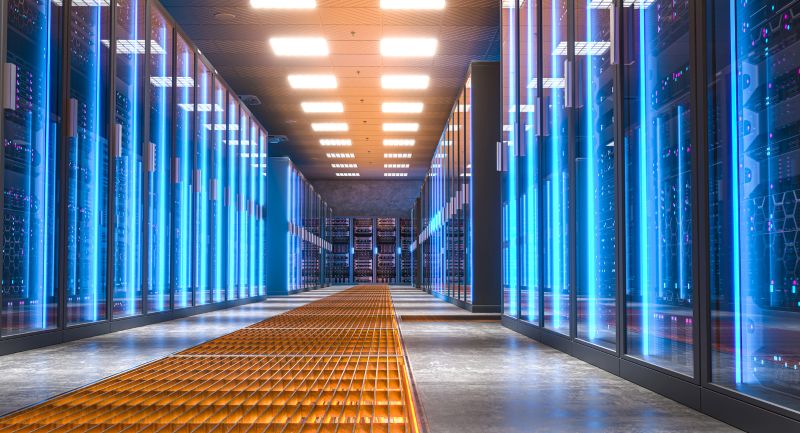
The demand for data center space only continues to rise across the United States. And in key states such as Texas? That demand is even stronger.
We recently spoke with Kirsten Kempf, senior research analyst in the Houston office of Newmark, about the ever-growing need for more data center space in Texas and the results of Newmark’s recent data center outlook report. Here is what she had to say.
Why is the demand for data center space so high in the state of Texas? Do you expect this demand to continue to increase?
Kirsten Kempf: Texas is attractive because it offers scale and flexibility: Developers can find lower-cost power, large development sites, and a deep base of energy, manufacturing, and logistics occupancy, making it one of the most supportive places in the country to build and operate large data centers.
Demand is likely to keep growing in this “powered industries ecosystem” given rapid AI adoption, while power constraints and equipment bottlenecks remain the main limitations to even faster growth.
Can you explain what a powered industries ecosystem is and why markets featuring this type of ecosystem are seeing so much demand for data center space?
Kempf: A “powered industries ecosystem” refers to a market where digital infrastructure, power generation, advanced manufacturing, and supply chain/logistics activity reinforce each other. In Texas, that loop is driving strong industrial demand: Data centers are driving development of new gas plants, and an expansion of the upstream supply chain such as electrical equipment and advanced component manufacturing facilities, which in turn boost freight, warehousing, and related industrial space needs.

Kirsten Kempf, senior research analyst, Newmark
The halo effect of data center demand has been difficult to quantify because the impact of data center expansion is spread across many kinds of industrial users across the value chain. Our analysis had to connect industrial leasing, trade flows, and data center deliveries to put a number on it.
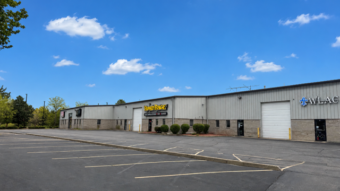
To measure the halo effect, we need to know who is using industrial space and for what purpose. Space leased by manufacturers, equipment suppliers, logistics firms, and contractors may not immediately read as data center supportive, and data center operators and hyperscalers also participate in the halo effect, too. Google’s industrial footprint in Dallas illustrates this dynamic: Beyond operating data centers, the company also occupies substantial warehouse space used to store data center equipment.
What do you consider to be some of the most important findings of Newmark’s recent data center outlook report? Is there anything in the report that surprised you?
Kempf: The biggest takeaway from Newmark’s data center outlook report is that data center growth requires massive production and flow of advanced goods and is already translating into measurable industrial demand at scale. Each operating data center in the state of Texas is associated with about 531,000 square feet of supporting industrial space, which was surprising once actually quantified.
Another important finding is that data-center-related industrial leasing in Texas reached nearly 14 million square feet in 2025, a record high and more than doubling over five years, while current projects could generate more than 24 million square feet of additional industrial leasing over time.
What are some of the biggest challenges communities in Texas are facing when it comes to meeting the demand for data center space? What restrictions or concerns are keeping companies from developing even more data center space at a faster pace?
Kempf: The biggest constraint is power. Grid connections can take years, and data centers make up a large share of the load waiting in line, so many developers are increasingly turning to behind-the-meter natural gas generation because the grid cannot absorb demand fast enough.
Other constraints include turbine and transformer backlogs, permitting delays, limited developable land in some submarkets, and rising community concerns around water use, electricity prices, and local infrastructure strain. On top of that, Texas SB6 has increased the cost and complexity of large-load interconnections, which can slow or reshape project economics.
In some communities, residents are fighting against data center development. Is that something Newmark is seeing in a growing number of communities? And how have developers and community officials fought back against this trend? |
Kempf: Yes, community backlash is becoming more common. We note in our report that at least 25 U.S. projects were canceled in 2025 after local resistance, and at least 99 projects nationwide are now facing opposition, with water use cited as the most visible flashpoint.
In response, operators are adopting more water-efficient cooling systems, making public commitments to reduce water intensity, refining site selection, working more closely with local officials on power and water management and promoting the economic benefits the projects bring. In El Paso, for example, Meta worked closely with city officials to develop its $1.5 billion data center using a closed-loop cooling system that would recycle water rather than put pressure on local resources.