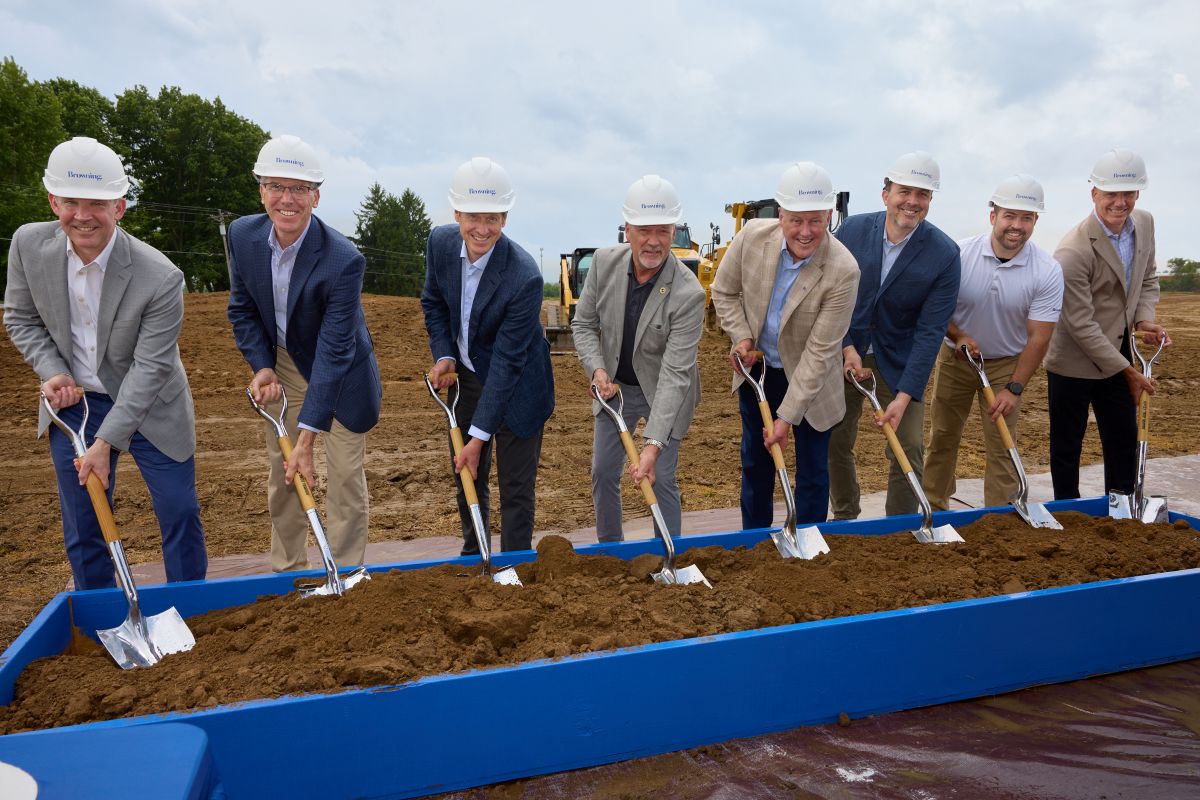
For Indianapolis-based developer Browning, entering a new industrial market isn’t something the company does without first conducting extensive research on whether that market is a good fit.
The process isn’t a simple one: Browning officials study a market carefully, gaining a deep understanding of its logistics and demographic fundamentals and establishing local relationships before committing to breaking ground in the region.
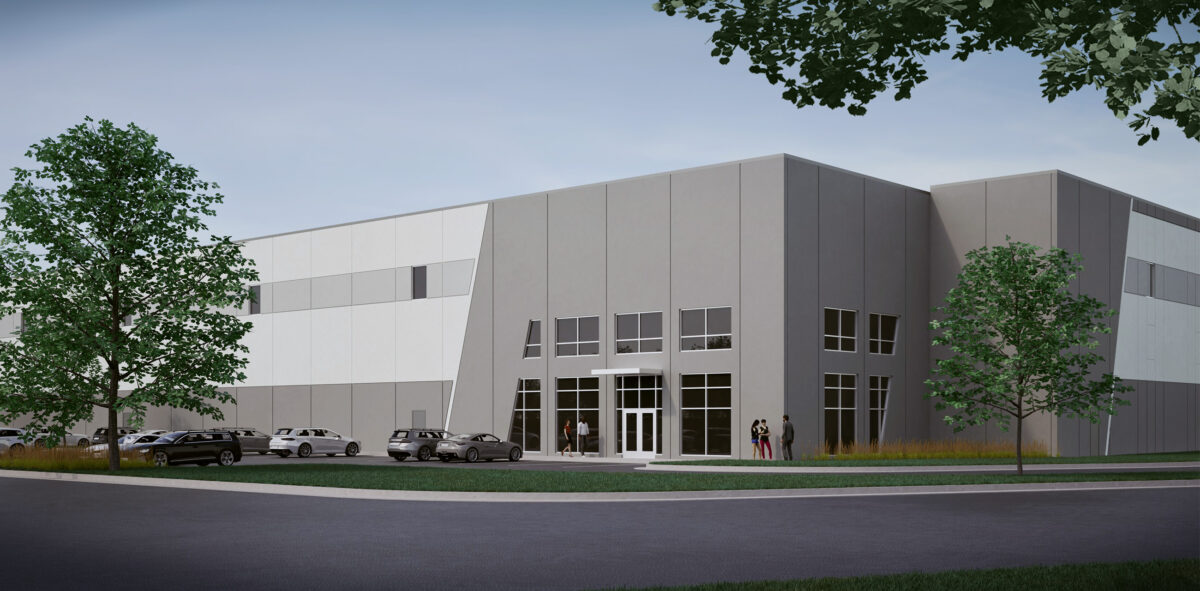
So, when Browning broke ground June 22 on Velocity Hill Road, a 200,200-square-foot speculative industrial building in Canal Winchester, Ohio, in the Columbus market, the project represented more than the company’s first ground-up development in Ohio.
It was a carefully considered first step into this key Ohio market, one Browning officials say boasts the population growth, manufacturing investment and logistics infrastructure to support years of industrial demand.
“We take forever to make decisions,” said Mark Susemichel, chief development officer and principal with Browning. “We take our time. We study the information. We know the markets. We want to be present in the markets we are servicing.”
New opportunities
Velocity Hill Road, part of Browning’s Velocity industrial park brand, will rise on about 16.33 acres in a planned industrial district in Canal Winchester, roughly 13 miles southeast of downtown Columbus. The project is scheduled for completion near the end of this year.
Browning is targeting LEED Silver certification for the building, which will feature a 32-foot clear height, 10 dock doors, two drive-in doors, ESFR sprinklers, LED lighting, 2,000-amp electrical service and parking for 200 vehicles.
But the building’s biggest selling point might be its size. For years, industrial developers in Columbus, as in many major U.S. markets, have focused on building increasingly large buildings. Browning saw an opening in the market for something smaller.
“Everyone was building much larger buildings, 500,000, 600,000, a million square feet,” said Jon Rolwing, senior vice president of development with Browning. “From 2017 to 2023, that was the case. Most of the smaller spaces under 300,000 square feet were absorbed. Nothing was added to the market.”
That created what Rolwing considers a compelling niche for a smaller spec industrial project.
Velocity Hill Road can be divided into as many as four spaces, though Browning expects the building ultimately to house one or two tenants. The developer also has additional land that could accommodate trailer parking or outdoor storage, amenities that aren’t always available with smaller industrial buildings.
Velocity Hill Road benefits from a strong location, too. The property sits along the U.S. 33 corridor, with Rolwing pointing to its quick access to the highway. From State Route 33, he said, tenants can reach the property with essentially one right turn and one left turn.
“We think that really sets us apart, even within our submarket,” Rolwing said.
The location offers another advantage that might sound less important on an industrial site plan but can matter to companies trying to attract and retain workers: Amenities are nearby.
Fast-food restaurants, a grocery store and other community shopping-center tenants are within walking distance of the property, Rolwing said. Employees can grab lunch, pick up groceries or run an errand before or after work without driving across a sprawling industrial park.
“Employees at our property will be able to stop after and before work, run an errand at lunch, in just a couple of minutes,” Rolwing said. “That’s not often the case in big industrial parks that aren’t located near easy commercial amenities.”
A market built for logistics
Browning’s confidence in Columbus starts with the same characteristic that helped make Indianapolis and Louisville such important pieces of the company’s industrial strategy: location.
Columbus, Rolwing said, shares some of Indianapolis’ most important logistics characteristics. A high percentage of the U.S. population can be reached from the market within a day’s truck drive, making Central Ohio an attractive location for logistics providers, distributors and manufacturers.
But Columbus isn’t relying solely on its location. The city is growing, and that growth is occurring across several economic sectors.
“It’s an unusual city in this economic cycle,” Rolwing said. “It’s one of the few growing cities.”
Manufacturing investment is increasing, too, he said, pointing to Intel’s major investment in the region. Data-center development is another significant part of the area’s growth story.
And people continue to move to Columbus, both from other parts of Ohio and from outside the state.
Ohio, Rolwing said, offers a combination that is increasingly attractive to businesses and workers: a relatively lower cost of living, a strong quality of life and a compact, accessible metropolitan area.
“It’s the kind of city where you are 15 or 20 minutes anywhere,” he said.
Browning said that about 7.1 million square feet of speculative industrial space is under construction across the Columbus market, with the overall industrial vacancy rate in the market standing at 5.6%. In the Southeast U.S. 33 Corridor, where Velocity Hill Road is located, there is no other speculative industrial product under construction and vacancy was 4.3%.
The developer isn’t betting against Columbus’ demand for massive distribution facilities. That demand remains strong. Last year, Rolwing said, the market recorded substantial absorption, including four 1-million-square-foot buildings being leased.
But those enormous buildings don’t serve every industrial user.
Browning believes that manufacturers, data centers and other major projects arriving in Central Ohio will create concentric circles of suppliers, vendors and service providers that need smaller warehouse and distribution facilities.
“With the manufacturers and data centers coming to town, their suppliers, vendors and concentric circles of providers will need warehouse space,” Rolwing said. “That’s our ultimate tenant.”
Browning received its first request for proposal for Velocity Hill Road shortly after breaking ground. Tilt-wall construction is underway, with the project expected to be completed in December.
The company plans to pursue LEED Silver certification, giving corporate users another way to demonstrate environmental commitments to shareholders and boards.
Susemichel said that environmental focus is part of what Browning considers the company’s “Velocity way” of developing industrial properties.
Building a brand
Browning’s successful history of delivering quality industrial facilities includes projects for major users such as Walmart.com and UPS, as well as Amazon, Daimler Trucks North America, Reebok, Subaru, Kohl’s and Logisco/PepsiCo.
That experience helped shape Browning’s decision to move into Columbus. This doesn’t mean, though, that the company is trying to blanket the Midwest with Velocity parks. Its strategy is more deliberate.
Susemichel said Browning’s next potential markets include Detroit, Cincinnati, Lexington and Dayton, Ohio. What do each of these markets have in common? Geography. Browning builds in markets that its team can reach by car, allowing its development executives to remain personally involved.
“If we have to jump on an airplane to reach a site, that’s outside of our radius,” Susemichel said.
That makes Columbus a natural fit. Browning already operates in Indianapolis and Louisville, and the Columbus market is close enough to those existing operations to make the company’s hands-on approach practical.
Louisville’s latest chapter
While Browning is starting its Ohio push, the company is also moving ahead with another major industrial project in Shepherdsville, Kentucky, south of Louisville.
Browning has just started vertical construction on Building 5 at Velocity 65 Trade Center, a 235,830-square-foot speculative industrial building.
The project is the latest chapter in a park that Browning has spent about a decade assembling and developing. Susemichel said the company originally saw the opportunity in Louisville because of the growth of e-commerce and the importance of locating near major air-freight hubs.
The biggest draw was the sprawling UPS Worldport in this market. Browning assembled more than 300 acres near the UPS hub, creating a park that ultimately attracted major users including Walmart, UPS and Meta.
The site had another advantage: Interstate 65. When Browning acquired the land, the park was served by one interchange. After closing, the company worked to secure a second interchange.
Today, Susemichel said, Velocity 65 is the only industrial park in the area served by two interstate interchanges.
Demand has been strong. The park has no vacancy, Susemichel said, and other developers have since acquired land nearby and built their own industrial projects.
For Browning, the Louisville project and Velocity Hill Road illustrate the same basic philosophy: Find a location with powerful logistics fundamentals, understand the users that need space there and then build a product that isn’t simply another commodity industrial building.
Browning will celebrate its 50th anniversary next year. Susemichel said the company’s industrial strategy has evolved, but its basic approach has not.
“When you see a Velocity park, you know that it is a quality development,” he said.