In the competitive world of multi-family housing, success isn’t just about breaking ground or getting a project approved—it’s about unveiling new ideas that maximize return on investment, making the undertaking feasible and worthwhile for all parties. The most effective developments aren’t just well designed, they are strategically planned to attract residents, differentiate from competitors, and ensure long-term value for investors. As architects, our role extends well beyond design. We help developers bring projects to market with a vision that drives efficiency and profitability. To accomplish this, we start with a fresh, future-ready perspective that builds strong partnerships, facilitating the collaboration necessary to maximize value for every dollar spent.
Bring Something New to Market
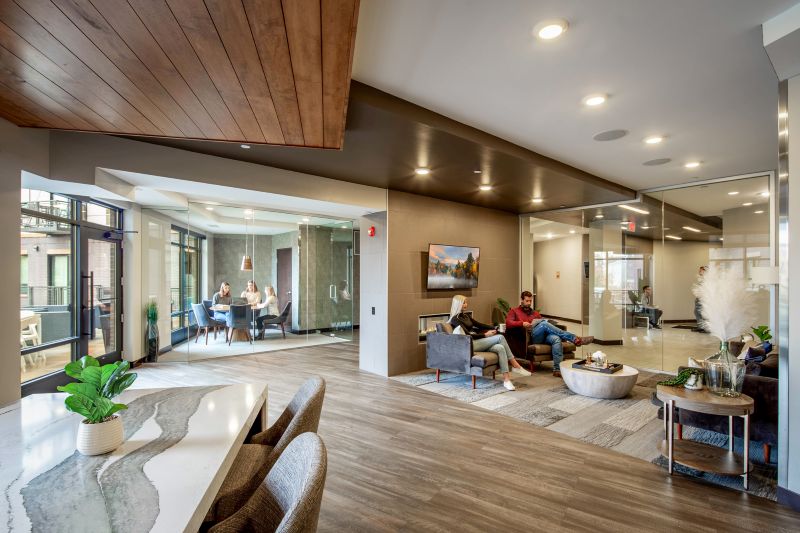
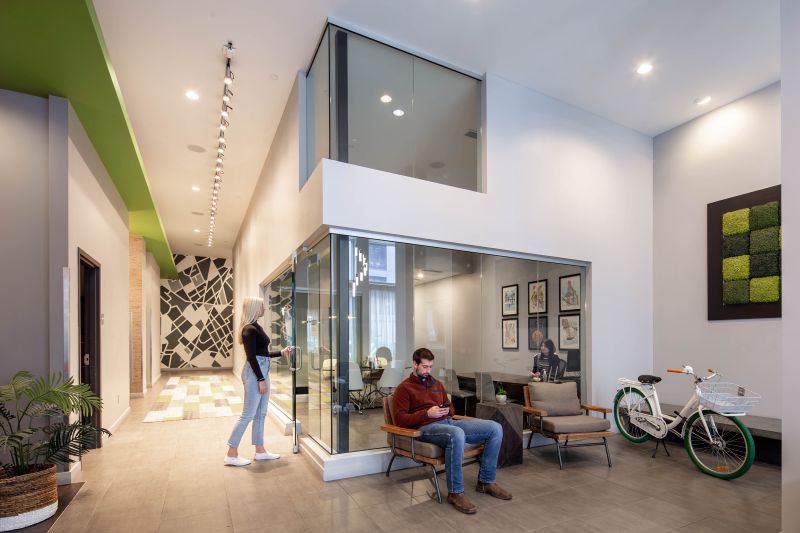
To lease up a new apartment quickly, several boxes need to be checked, including creating a memorable brand and differentiating amenity package. Identifying the right location, target market, and lifestyle is key to capturing the interest of prospective residents. Cultivating a lifestyle experience that reflects its residents and leverages the unique qualities of the neighborhood helps developers fill units and retain residents. To begin this process, we study the competition to then propose design and amenity differentiators that will attract new residents and set you apart in that community.
Examples of this experience-driven differentiation include:
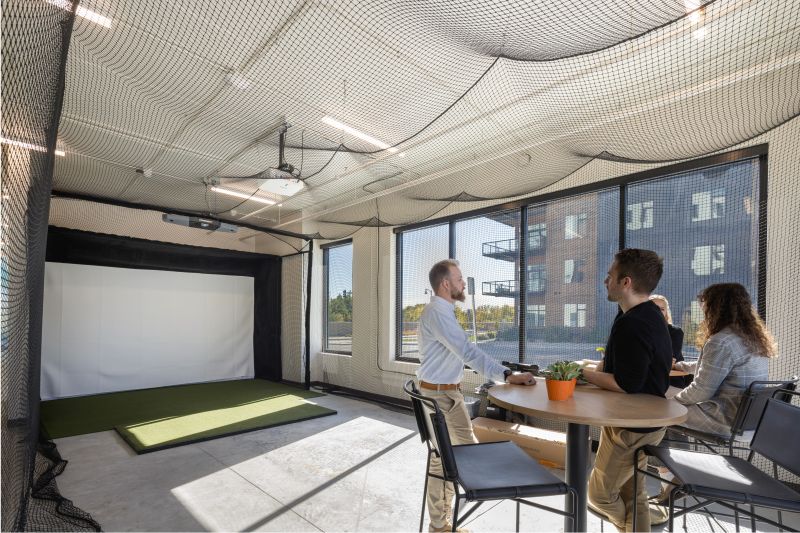
Golf Simulators: An amenity that caters to a wide demographic, offering year-round appeal in the Midwest.
Pickleball Courts: The fastest-growing sport in America, providing both social engagement and all-level fitness opportunities.
Sport Courts: An amenity missing in many neighborhood gyms, now popular with Millennial post-college residents.
Fitness & Wellness Centers: Create convenient and varied ways to exercise for today’s mobile and hybrid work lifestyles to offset the cost of a gym membership.
Lap Pools: Attract goal-setting achievers who want to get ready for next year’s triathlon, at a lower cost than a typical pool.
Therma Culture: An emerging wellness amenity and experience-driven culture gaining traction in northern communities. Hot and cold plunge pools demonstrate support for the well-being of residents by improving muscle recovery time and increasing feel-good endorphins.
Unique Games: Redirecting the focus from a smartphone culture to a more social, pet-friendly, and community-driven culture.
Pet Amenities: Helping residents provide the best life for their furry friends is vital. From woof-top patios to pet spas and dog + residence social spaces, these common spaces create a unique sense of community among residents to improve resident retention.
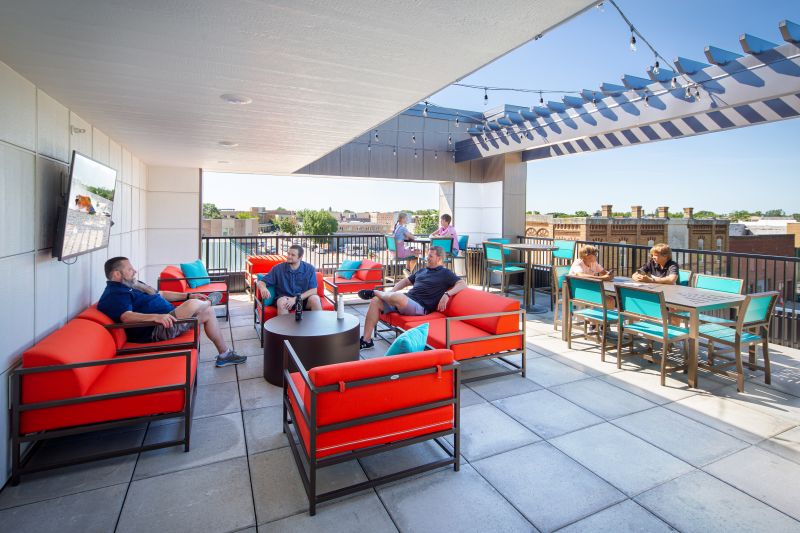
Outdoor Spaces: Support resident well-being with connections to nature, including relaxing and flexible outdoor spaces that can be programmed with in-demand amenities adaptable to the market.
Selecting the right mix of amenities requires careful consideration of the neighborhood and what that community values in their home. In the case of Block 25 Lofts, a multi-family housing development in Willmar, MN, rooftop patios aren’t as prevalent in this region as they may be in more populous, urban cities such as Minneapolis. The development’s rooftop lounge is now the focal point of the exterior and a prime amenity for residents, offering views of downtown and a variety of seating and outdoor grill stations. Furthermore, the excitement for this feature has trickled into the community as a whole, opening the door to more development opportunities.
“It’s important to see the neighborhood with fresh eyes, not only what already exists, but what has the potential to exist in that space,” explained JLG Architects Project Designer, Brian Carlson. “These are the small but mighty details that become dynamic differentiators, sparking community growth and additional development opportunities.” Forward-thinking amenities like these help projects stand out in a crowded market and command premium rents.
As architects, we help lead the collaboration between leadership and management teams to ideate and design experience-driven amenities specific to location and target market, providing an ultimate differentiator that attracts residents and bolsters multi-family developments. In essence, we’re maximizing leasing and rent values by creating memorable destinations that capture the imagination of future residents in a way that is unique to that community.
Collaborate & Innovate to Lower Cost
Collaboration isn’t just about bringing a shiny new idea to market, but the ability to work with builders, subcontractors, and suppliers in innovative ways to save money while also improving project quality. Having a design team that can proactively lead this process is essential.
Collaborate with Builder on Test Fits: Collaborating with the builder during the initial test fit will help maximize value from the very beginning. When the architect explores the highest and best use of a site, the value can be assessed by a contractor even during the test fit phase of the project. The contractor can advise on the cost for sitework and bring in the trades with the largest scope of work to evaluate structural and mechanical systems at a very early stage in the process. An initial test fit that digs into the site design can derive feedback from the builder to advise on high-cost items such as cut and fill grading, retaining wall layouts, efficiency in stormwater management, and the cost of phasing and staging to help determine when less is more and how to drive project value.
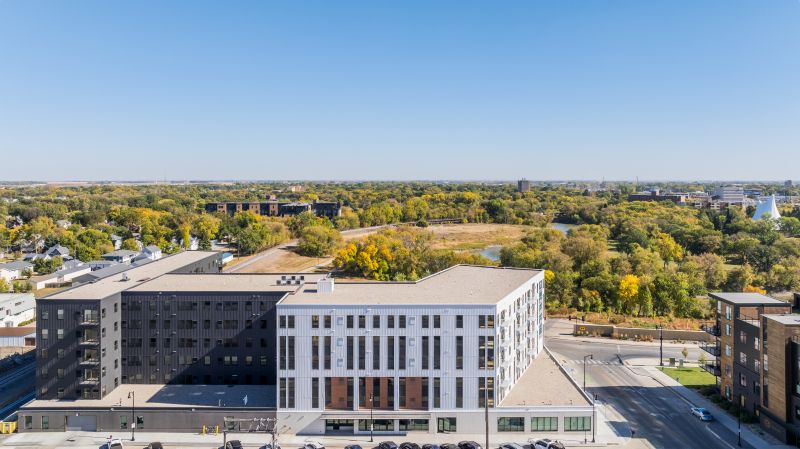
Early collaboration on test fits proved to be successful in the design of Riverhouse in Fargo, ND, a multi-family development built to support active lifestyles with connection to the Red River and local trails. With outside factors affecting the initial allocation of the budget, a pivot was necessary to re-align unit density and keep things on track with the developer’s financial modeling. This prompted a value engineering exercise in which our team considered various unit density and amenity mix options.
Through collaboration and strategic thinking, the team identified levers that could be pulled for more effective budget alignment, which opened the door for additional amenities to be added—including a heated indoor pet run, tenant storage areas, upgraded appliances, EV charging stations, and a golf simulator. Thanks to strategic moves made early in the process, these enhancements maximize the development’s value and enrich the living experience for residents.
Focus on High-Cost Items with Subcontractors: When the architect and builder collaborate with subcontractors on high-contract value items at an earlier stage in the process, it allows more time for exploration and coordination to develop creative solutions.
In the early stages of design for Sand Creek Flats in Jordan, MN, JLG worked with the contractor to leverage material trends that would streamline the production process. Tapping into construction data, the team leveraged the lower cost of precast foundational walls as opposed to other methods that require more intense labor, such as cast-in-place or masonry foundations. Strategic coordination of structural systems kept construction on track with timely arrival of precast materials on site, resulting in a project delivered on time and on budget without surprises.
Collaborate with Trades to Innovate & Find Efficiencies: The building exterior is another high-cost contract that can vary greatly based on the design, where the design and construction team can work with the trades to find strategic design efficiencies to minimize waste, standardize
layouts, and maximize the yield count.
When the entire team is along for the journey from the get-go, it minimizes surprises as design development wraps up and the construction phase begins. JLG and the MEP team leveraged this philosophy in the design of The Landing at 1001 NP, a mixed-use multi-family development in the heart of downtown Fargo, ND. Working closely with contractors, we found efficiencies in wood frame construction to minimize waste of construction materials. Furthermore, a modular approach to construction elements such as pre-made metal paneling and cement boards optimized the waste yield percentage of construction materials. The result is a highly efficient building that was delivered on schedule with minimal waste, providing ultimate value on investment.
Collaborate to Maximize Pre-Leasing
Another key way to drive value for multi-family developments is a well-executed marketing strategy, put in place long before the building is complete. The architect is in a unique position to help optimize the transition of projects to the Marketing and Pre-Leasing Teams, minimizing the time to a fully leased building and project stabilization for a higher return on investment.
Market Branding & Naming: By collaborating with an interior designer and marketing team to brand and name the project, the architect can fully communicate the design ideas behind the experience-driven differentiation process. The marketing lead can then build on and position the development at the most optimal point in the marketplace.
Integrated Interior Design with FF&E Selection & Procurement Support: By using an architect with integrated interior design and FF&E selection with procurement support, developers can compare FF&E systems at a high level to find the best value while staying true to the brand, from big-picture placemaking to market-focused interiors – all while spending less time managing the overall process.
The Paxon, a more recent project, implements a fully integrated design strategy to deliver a cohesive and elevated residential experience. “Beyond just selecting furniture, we curated accessories and finishing touches throughout the shared spaces to create a welcoming and refined atmosphere,” explained Karen Mutschelknaus, NCIDQ, IIDA, LEED AP, Interior Design Lead at JLG Architects.
The design emphasizes warmth, tranquility, and sophistication through a serene palette of whites, warm golds, natural browns, and wood details. “Every element was selected to resonate with a diverse, international clientele while reflecting the essence of the city,” she added. “The result is a beautifully branded environment that feels both luxurious and personal, demonstrating the power of design integration in creating spaces that are as financially efficient as they are emotionally engaging.”
Pre-lease Web Content: From 3D unit plans to virtual walkthroughs of units and amenity spaces, architects can provide the additional content needed to market the project with web and online sales tools. With the architect already modeling and often rendering the units, amenities, and building exterior, they can produce these additional assets at minimal effort and cost, compared to other marketing sources.
Pre-lease Center and Exhibits: For significant projects with adjacent commercial space, the architect can assist with the design of sales centers and collaborate with sales teams to select exhibits or leasing spaces that are on brand with the project for maximum sales impact.
Conscientious Schedule Decisions Ensure Speed to Market: Strategic project schedule decisions will help get properties on the market at the right time, taking into consideration the construction start date in relation to the occupancy date. Oftentimes, fast-tracking construction schedules in multi-family housing development is crucial for controlling and reducing construction loan costs. Because of the fluctuating nature of interest rates, less time building reduces interest accrued on construction loans.
Completing construction on time or ahead of schedule minimizes these interest expenses and avoids costly loan extension fees or penalties. Moreover, faster completion allows developers to begin leasing units sooner, generating income and reaching stabilization more quickly. For value-based scheduling, prioritize project completion around optimal leasing season to ensure speed to market that helps developers quickly realize value from their investment. By accelerating project timelines, developers not only improve financial efficiency but also enhance their capacity to take on future projects through better cash flow and capital utilization.
These efforts not only accelerate lease-up, they instill confidence with lenders by demonstrating strong pre-leasing numbers, helping secure financing before construction begins.
Building Success
The role of architects extends beyond design—as partners in bringing innovative ideas to market and fostering strong collaborations that maximize value. In the dynamic landscape of multi-family housing, architects can help deliver projects that not only meet but exceed expectations for return on investment. By strategically planning developments to attract residents and differentiate from competitors, working together ensures long-term value for investors. Through early collaboration, strategic marketing, and thoughtful scheduling, the right architect can enhance financial efficiency and create vibrant communities that stand out in the marketplace. Build more than housing projects—build lasting legacies of success for developers and communities.
Jesse Hadley, AIA, and Ben Lindau are principal architects with JLG Architects, which has offices in Minnesota, North Dakota and South Dakota.