Across the Midwest, municipalities are asking the same question: “How do we move from behind the curve to the front of the line when global hyperscale data-center developers come calling?”
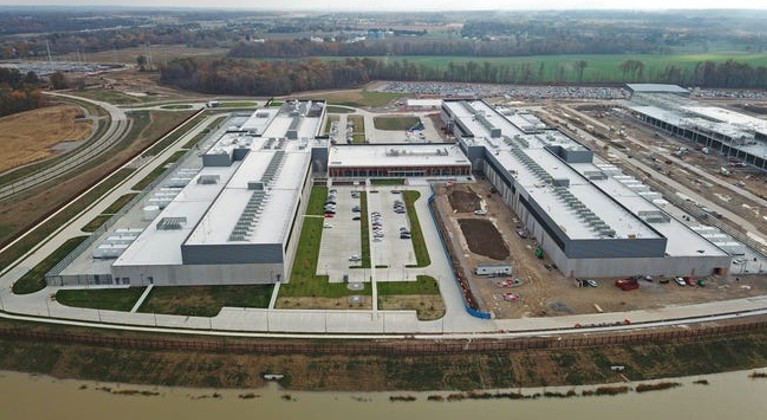
The story of New Albany, Ohio, serves as living proof. When Meta Platforms, Inc. (owner of Facebook, Instagram, WhatsApp & Threads) chose New Albany for its “Prometheus” supercluster — by CEO Mark Zuckerberg described as the world’s first online-gigawatt data-center campus — it revealed far more than infrastructure. It revealed a community ready to pivot and prosper.
But what the headlines miss is the system behind success, the invisible framework of readiness and collaboration that allowed a regional Midwestern suburb to become a global tech magnet.
A Vision Established Before the Invitation
Meta didn’t select New Albany by accident. The municipality had quietly created the conditions: shovel-ready land, streamlined zoning and permitting, public-private alignment. Infrastructure wasn’t added as an afterthought — it was positioned as a competitive asset.
With a nearly 900,000 sq ft expansion in its Beech Road campus and a total investment of USD 1.5 billion, Prometheus may be a headline-grabbing figure — but the bigger story lies in how this magnitude became possible.
At the municipal level, New Albany treated Meta not just as an investor, but as a partner in community transformation. Local officials aligned utility-capacity upgrades, workforce training and infrastructure planning with the company’s timetable.
At the county and regional level (in Licking and Delaware Counties), transportation, utilities and workforce initiatives were coordinated so the project wasn’t just land, but was sustainable. A new 200-megawatt natural-gas generation plant by Will‑Power OH, LLC is a case in point — ensuring the power reliability data centers demand.
At the state level, Ohio’s incentives, university partnerships and training programs matched the operational profile of large-scale digital infrastructure. At the federal level, grid modernization and AI-research funding complemented the ecosystem.
Lessons for Midwest Municipalities Ready to Compete
What can municipalities in Southeast Michigan and Northwest Ohio learn from New Albany’s journey?
- Prepare Before You Pitch – Having land, zoning clarity, and infrastructure plans demonstrates readiness. Investors look not just at today’s status but tomorrow’s likelihood of smooth execution.
- Think Regionally, Not in Isolation – Data-center projects don’t land in a silo. When a city, county and region speak with one voice and align utilities, workforce, and transportation, the offer becomes compelling.
- Plan for Power, Water & Connectivity – Reliability is non-negotiable. For hyperscale data centers, power capacity, backup infrastructure, and sustainability matter.
- Build the Talent Pipeline – A community that can demonstrate training, education partnerships, and workforce readiness reduces investor risk.
- Craft the Story of Innovation – Communities that position themselves as forward-looking — where public–private collaboration is the norm, not the exception — signal they are ready for digital-age investment.
Community Impact — Beyond the Data Center
Often, data centers are criticized for being high-tech but low-job-creation. New Albany turns that narrative around. Through strategic engagements, the project strengthened schools, nonprofits and local workforce programs. The result: a global tech infrastructure anchor and a thriving local ecosystem.
The community didn’t compromise its identity — it expanded its possibility.
When municipalities in Michigan and Ohio look ahead to the digital infrastructure wave, they can see this blueprint: alignment creates acceleration.
The Prometheus project was not just about gigawatts or square footage. It was about readiness, collaboration, and a shared vision for the future.
Conclusion
The success of Meta’s Prometheus data center was not achieved by size alone — it was engineered through strategy, alignment and community-vision with owners and investors in land, office and industrial assets. For municipalities in the Midwest: those who think ahead, build alliances, and prepare for the digital age will thrive.
If you’re ready to position your community as the next data-center destination, I’d welcome the opportunity to work with your team to define and activate that readiness. One way to begin your journey is to evaluate your community’s readiness in context of The Fall 2025 NAIOP CRE Sentiment Index and how that impacts your municipality to see how owners and investors think and feel.
To learn more about Joseph: https://www.marcusmillichap.com/advisors/joseph-carrizales
To learn more about the NAIOP CRE Sentiment Index check REJournal’s October 23, 2025 article: https://rejournals.com/what-the-fall-2025-naiop-cre-sentiment-index-means-for-local-property-owners/
Joseph Carrizales is Associate, Investments, for Marcus & Millichap.