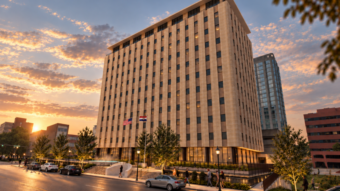

The deal Nathan Smith just closed says as much about the Austin office market as any vacancy report: a seven-year Class A lease with 10 months of free base rent and $85 per square foot in tenant improvements, funded entirely by the landlord.
“That’s not a distressed building,” said Smith, President of Austin Tenant Advisors. “That’s a competitive landlord in a well-located property doing what they must do to win a tenant.”
Smith, who works exclusively on the tenant side, said the biggest surprise of the recovery has been the persistent gap between what landlords advertise and what they ultimately accept.
“Landlords have gotten better at protecting their asking rates on paper, but behind closed doors they are still writing very large checks to get deals done,” Smith said.
The math behind those checks is deliberate, he added.
“The reason is straightforward: their stated rents feed into property valuations and loan covenants, so they’d rather give away a year of free rent and $85 a foot in tenant improvements than reduce their face rate by $5 and set a new market comp in their building,” Smith said.
None of that means the recovery is smoke. According to Ted Rohan, Principal and Market Leader of Avison Young‘s Austin office, vacancy remains elevated at 24% but has come down roughly two percentage points over the past year,and the market has now posted four straight quarters of positive absorption. Avison Young’s Office Busyness Index puts Austin at 72.5% of pre-pandemic visitation levels, up 540 basis points year over year and third among major tech hubs, trailing only Manhattan and Denver.
Rohan said the recovery rests on a broader foundation than the tech-driven booms of past cycles.
“Growth in advanced manufacturing, defense, aerospace and life sciences has broadened the tenant base and improved office market fundamentals beyond our traditional tech dependency,” Rohan said.
Attendance trends back up the leasing data. While many companies keep flexible policies for recruiting purposes, Rohan said, more employees are choosing the office as their primary workspace, a shift he attributes partly to investment in high-quality buildings and buildouts designed to draw teams back together.
“Hybrid work is still the norm, but we’re increasingly seeing companies plan for full capacity, with headcount growth built into their space decisions,” Rohan said.
Max McDonald, Principal at AQUILA Commercial, has watched sentiment build since January, with quality space beginning to move faster as competition gravitates toward it.
“I have been pleasantly surprised with the amount of tenants that are experiencing growth trajectories as opposed to much of the downsizing or ‘right-sizing’ we’ve seen in past years,” McDonald said.
Recent corporate commitments have reinforced that momentum.
“I think announcements like Apollo choosing Austin for its second headquarters or MD Anderson planting a new flag in north Austin, speak volumes about the growth that can still be absorbed in our city as well as help diversify the tenant mix from being so tech-heavy to more financial services and medical occupiers that can continue to balance the overall tenant mix,” McDonald said.
Geographically, demand is settling around a familiar center of gravity.
“The Domain having 7% vacancy is a telling figure,” McDonald said.
That scarcity has pushed activity into the near-northwest submarket as well as the CBD and East Austin, according to McDonald, with tenants still showing a willingness to pay a premium for walkable amenities.
The amenity race extends well beyond the urban core.
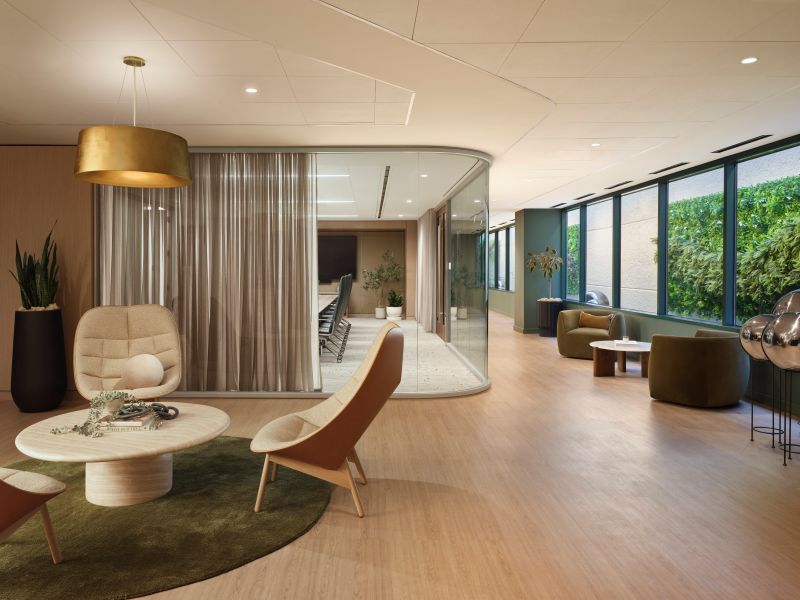
“We continue to see a trend of ownership groups revitalizing amenity offerings and putting money into buildings to not only stay relevant and capture the demand from tenants, but elevate the level of the experience of a given project,” McDonald said.
AQUILA has seen that playbook at work with clients at Procore Tower and 9500 Arboretum, McDonald said, and is now underway at Cielo Center in southwest Austin and The Campus at Arboretum in northwest Austin, where revamped tenant lounges, new fitness centers, added conferencing and move-in ready spec suites are headed to market.
Cost pressure is pulling other tenants in the opposite direction. Smith said more of his clients are taking a serious look at well-located Class B space in the Northwest and Southwest corridors, where rates run $35 to $43 per square foot against $55 to $77 for trophy product.
“What I’d push back on is calling it a flight from quality,” Smith said. “Tenants are just getting smarter about what quality means for their specific team. The CFO and the HR director are in the same conversation now and they’re asking different questions than they were five years ago.”
For the smaller tech and creative firms that shaped Austin’s identity, the calculus is tougher.
“The biggest obstacle is that landlords in Class A buildings are chasing creditworthy tenants with established balance sheets, and a 15-person tech startup doesn’t fit that profile,” Smith said.
With landlords committing serious capital to tenant improvements, he said, they want certainty they will see the full lease term, which translates into personal guarantees, larger security deposits or letters of credit that smaller companies often can’t absorb. Those firms are getting deals done anyway, Smith said, by taking sublease space in quality buildings at below-market rates with buildouts already in place, leaning on Class B landlords who are more flexible on credit and terms or using coworking as a bridge to prove out headcount before negotiating a direct lease from a position of stability.
Supply will do little to relieve the pressure on either tier. Rohan said new construction has essentially stopped aside from a single tower delivering this year and working through vacancy at this scale will take years rather than quarters.
“I don’t expect the market to snap back to what we were used to previously — I expect a slow grind where the best buildings keep gaining leverage and pushing rents higher, while the older, undifferentiated buildings fall further behind,” Rohan said.
Those laggards, he added, will need repositioning, conversion or removal from the competitive inventory altogether.
For tenants, the same forces argue for urgency.
“The broader takeaway is that we are still in a tenant’s market — but the window is closing,” Smith said. “The construction pipeline is essentially shut off, absorption has been positive for several quarters, and the deals available today won’t be on the table in 18 months. Tenants who are willing to commit to five-to-seven year terms are still in the driver’s seat. I’d encourage any company with a lease coming up to start negotiations now rather than waiting for their expiration.”