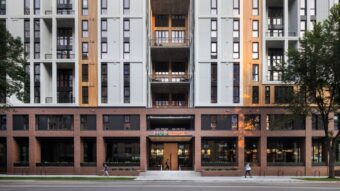
According to the annual multifamily housing industry forecast event Preview 2026, hosted by the Chicagoland Apartment Association, the supply of new apartments in downtown Chicago in the coming year will only modestly increase from 2025, which was downtown’s lowest level in more than a decade.
The outlook is far stronger in the suburban market where levels are maintaining 96% occupancy and housing providers have close to 4,700 new apartment units currently under construction.
The annual forecast was researched and presented by Ron DeVries, senior managing director of Integra Realty Resources.
“Despite high occupancy rates and continued strong demand, there is only a nominal number of new apartments being added to the supply in downtown Chicago. The better news is that Chicago’s neighborhoods and suburbs are seeing steady deliveries of new units,” said DeVries. “The largest challenge with adding more supply downtown is uncertainty, including fiscal issues at the state and city level, real estate taxes, and even the continued potential for rent control. Equity doesn’t like uncertainty.”
DeVries added further context to the nominal supply of new apartments downtown, “Between the three years of 2025, 2026 and 2027, the number of deliveries of new apartments downtown will be no more than 3,000. In the previous decade, developers were often producing that many new units annually. As demand remains high and supply stays stubbornly low, we will inevitably see more rent increases. Reducing fiscal uncertainty will encourage more supply.”
This new research confirms Chicago’s housing gap is real and growing. According to the nonpartisan organization Up for Growth, our metro area now ranks among the top three nationwide for housing underproduction, with a shortfall of roughly 165,000 units.
“This imbalance between supply and demand is one of the biggest threats to our city’s long-term affordability and competitiveness,” said Michael Mini, executive vice president of the Chicagoland Apartment Association. “The solution is clear: build more housing. We must encourage investment, partner with developers and property owners, and make it easier—not harder—to create new homes in every neighborhood.”