As cities look for ways to add housing and investors seek compelling multifamily opportunities, former houses of worship are emerging as a small but distinctive corner of the adaptive reuse market.
Churches, synagogues, mosques and other religious properties can offer investors an unusual combination of established locations, recognizable architecture and differentiated residential product. For investors, the strongest prospects combine the character that makes these buildings unique with the fundamentals that drive any successful multifamily investment.
A distinctive investment opportunity
While the potential supply is difficult to quantify, there is evidence that the pool of surplus religious properties is substantial. A 2024 paper in the Journal for the Scientific Study of Religion cites research estimating that about 1% of U.S. congregations close annually. Extrapolating data in the 2020 U.S. Religion Census, this amounts to roughly 3,500 closures annually. Only a fraction of those buildings will make sense for residential redevelopment but the properties that do typically check several boxes for investors.
Urban houses of worship are often located in established neighborhoods where land for new development is difficult to assemble. Many are close to transit, retail, restaurants and other amenities and have longstanding visibility within their communities, often making their preservation and conversion more palatable to neighbors who might otherwise oppose ground-up construction.
Their architecture also provides a degree of differentiation that is impossible to replicate in a new build. This allows investors to acquire an asset with a built-in identity and reposition it for today’s renter.
Character as a competitive advantage
The main differentiators of converted religious buildings are the one-of-a-kind architecture, layouts and materiality. High ceilings, stone construction, atypical window lines, large rooms and other details can influence both leasing and investment performance.
The more distinctive a unit is, the greater the potential for a renter to form an immediate connection with the space, which may lead to quicker leasing. This renter is also likelier to accept a premium relative to more conventional units in the same submarket, though it is difficult to establish a universal premium since each property has such a different set of attributes.
However, there are trade-offs that impact leasing decisions and turnover. Residents may find it difficult to furnish unusual unit configurations, while very high ceilings can contribute to higher utility costs. In addition, leasing is generally less uniform due to the variety of layouts. Experienced marketing and leasing teams can address these issues by providing prospects with rendered furniture plans and an overview of each apartment’s individual attributes.
Chicago conversions in practice
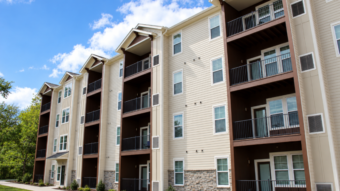
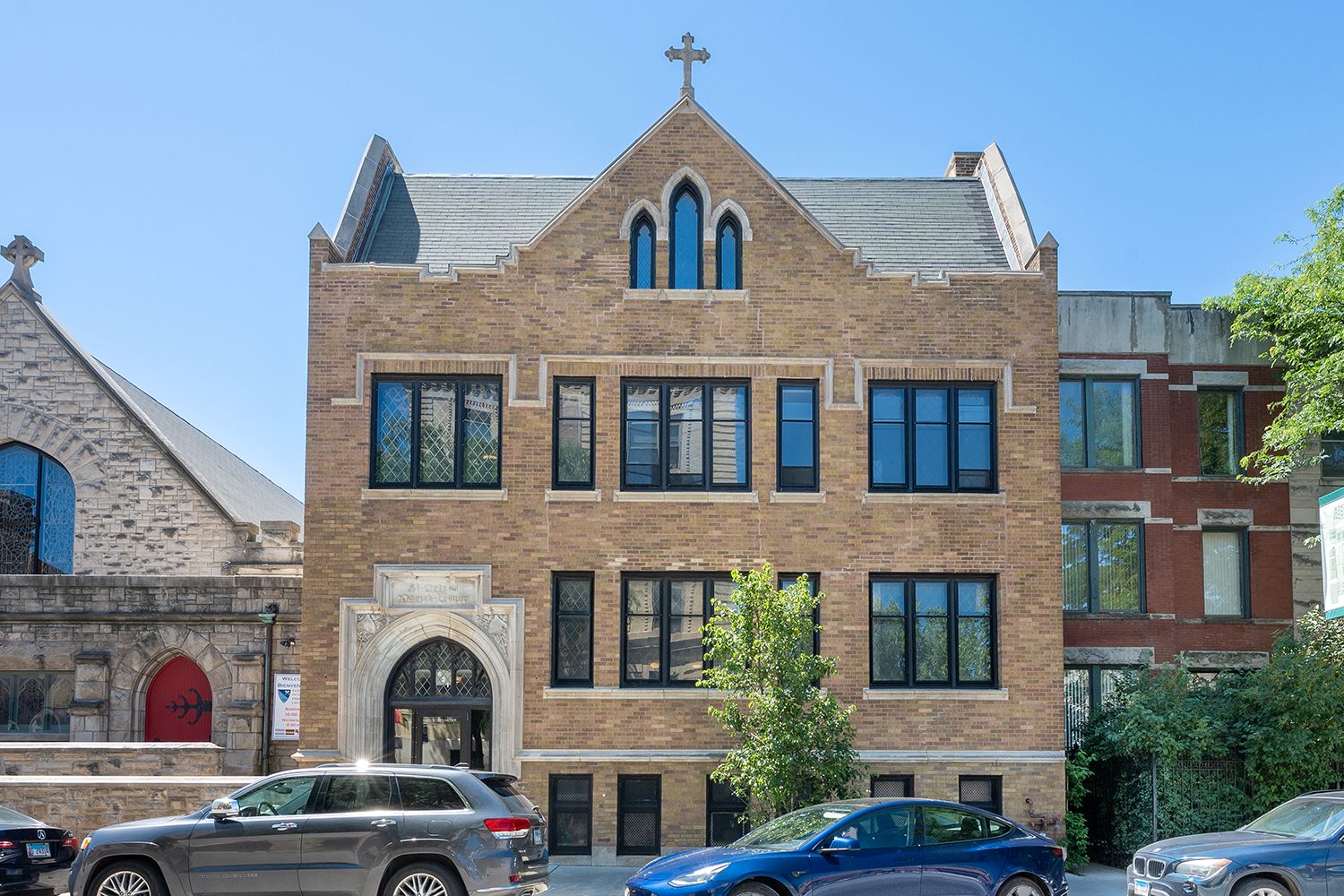
Two Chicago properties illustrate the range of opportunities for multifamily investors. Interra Realty is currently marketing 621 W. Belmont Ave. in Lakeview, a building that previously served as a parish house for St. Peter’s Episcopal Church. A 2021 conversion created 19 apartments with quartz countertops, stainless steel appliances and other contemporary finishes.
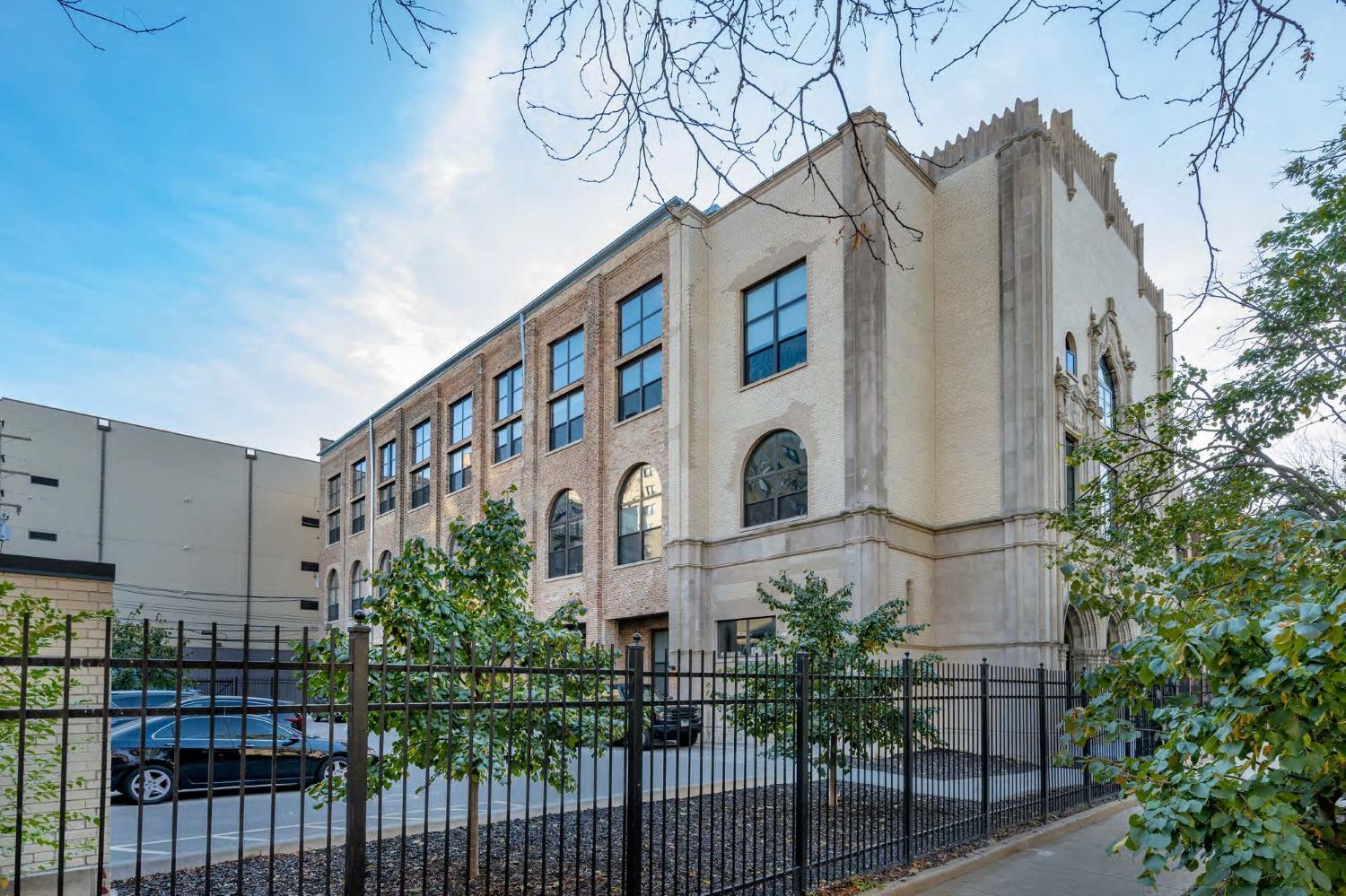
In 2024, Interra brokered the $8.175 million sale of 5029 N. Kenmore Ave. in Uptown, a former synagogue that had served the Agudas Achim North Shore Congregation until its closure in 2008. A 2016 conversion, which was supported by neighbors and preservationists, added 40 apartments with condo-quality finishes such as custom cabinetry, quartz countertops and subway tile backsplashes. Some of the original architectural details preserved during renovation include exposed brick walls and arched windows.
There is a neighborhood factor with these types of properties that apartment buildings generally lack. Houses of worship can serve as neighborhood landmarks for generations, and there is often goodwill associated with finding a new use for a building rather than demolishing it. In the case of 5029 N. Kenmore, the synagogue had fallen into disrepair prior to its conversion and was added to Preservation Chicago’s annual “Chicago 7 Most Endangered” list. Respectful preservation ensures these structures remain relevant to their communities while adding necessary housing supply.
A place in the adaptive reuse landscape
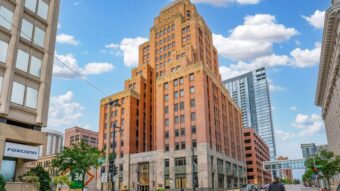
As Chicago and other cities face housing shortages, sanctuary-to-residential conversions are part of a broader adaptive reuse conversation. Given the diverging trajectories of office and multifamily demand, there has been a concerted effort to transform underutilized office buildings into apartments. The Bellwether, the first LaSalle Street Reimagined project to deliver, is a successful example of this. Office conversions can face challenges, however, from oversized floorplates that drive up loss factor, and from locations without the amenities residents expect nearby.
Hotels often convert well because their plumbing is already in place, with stacked bathrooms and risers that can be built around rather than replaced, saving time and cost. But each building comes with its own nuances, such as room sizes, window layouts and corridor widths. Some will always read as hotels unless the façade is substantially reworked.
In the end, cost is what decides whether a conversion will pencil out. The process starts with an honest accounting of what’s worth keeping and what isn’t, followed by a side-by-side comparison with a traditional new build. In the cases of former houses of worship, historic tax credits may apply depending on the property, and developers frequently fold them into the capital stack. They also benefit the broader community by returning previously tax-exempt real estate to the property-tax rolls, expanding the local tax base while adding housing without requiring new land.
Fundamentals still come first
The number of religious properties potentially available for reuse suggests there will continue to be opportunities, but sanctuary-to-residential conversions are unlikely to become a large-scale substitute for conventional multifamily development. The supply is fragmented, the buildings are highly individual and the strategy is too property-specific to replicate at scale.
That selectivity can be part of the appeal, particularly for developers willing to throw a Hail Mary on a property with the right combination of character and market fundamentals. For investors, identifying where distinctive architecture intersects with strong rental demand can create an opportunity to own an asset that is difficult for competitors to replicate.
And while a rich history and architectural heritage may set a property apart, investors cannot rely on character alone. Instead, they must put their faith in the same fundamentals that govern multifamily more broadly: attractive location, reliable cash flow, controllable costs and strong exit value. When those elements align, a former house of worship can preserve its distinctive character while delivering an investment that pays dividends.
Jon Morgan is co-founder and managing principal of Chicago-based Interra Realty.