In Chicagoland commercial real estate, 2025 did not reward momentum for momentum’s sake. It rewarded clarity. Capital was cautious, leasing timelines stretched and long-held assumptions about office demand finally cracked. In that environment, the projects that moved forward were not necessarily the biggest or the newest. They were the ones designed to function as places people actually wanted to be.
For Ralph Zucker, CEO and President of Inspired by Somerset Development, that distinction has been years in the making. Rather than chasing square footage or single-use development, Inspired has focused on reimagining obsolete corporate campuses as walkable, mixed-use environments that prioritize life beyond the workday. In 2025, that approach did more than hold up. It proved durable.
“We’re seeing a real flight to quality, especially in suburban markets,” Zucker said. “Boring, mind-numbing locations are falling by the wayside and turning into data centers, warehouses or apartments. But walkable, human-scale, public-facing environments with real life between the buildings are thriving.”
That bifurcation has defined much of Chicagoland’s office landscape over the past year. Properties designed around efficiency alone struggled to reassert relevance, while places that offered energy, flexibility and community found renewed demand. For Inspired, Bell Works Chicagoland stands as a tangible example of that shift.
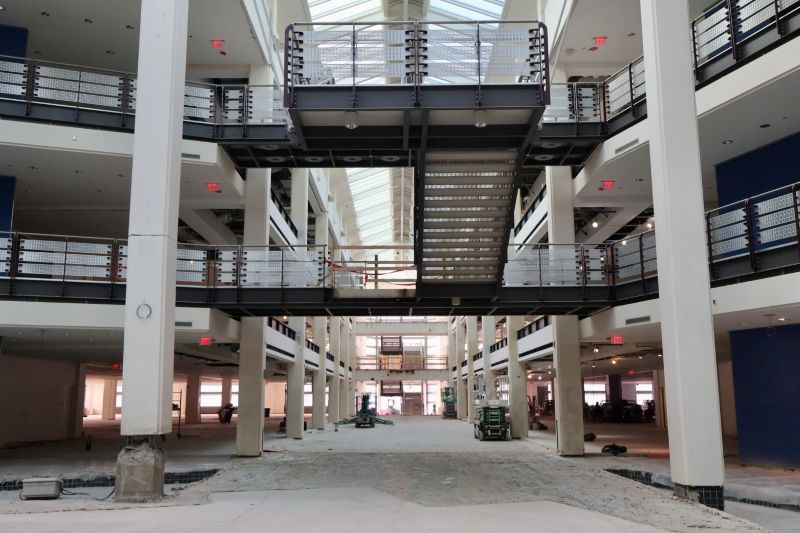
Located on a former AT&T campus in Hoffman Estates, Bell Works Chicagoland replaces the traditional suburban office park with a public-facing district that blends office space, retail, dining and community programming. Rather than closing itself off, the project welcomes the public in, creating activity throughout the day and into the evening.
“At Bell Works, we’ve created an ecosystem where you can work, walk, shop, grab a drink, play a little indoor golf and actually feel part of a community,” Zucker said. “It’s not a closed-off office building with a cafeteria sandwich on Tuesdays. It’s a place with energy and a welcome mat for the public.”
That ecosystem has translated into leasing momentum at a time when many suburban office properties have stalled. Inspired has leased nearly 500,000 square feet across Bell Works Chicagoland over the past three years with much of that activity occurring in 2024 and 2025.
“Our east side is 97 percent full,” Zucker said, noting that development continues on the west side. “The momentum continues because the model works.”
Flexibility has played a central role in that performance. Bell Works Chicagoland offers a range of options from coworking desks rented by the hour to furnished, move-in-ready suites and build-to-suit offices for tenants approaching 100,000 square feet. That adaptability has resonated with companies navigating uncertain growth trajectories.
“You don’t need to sign a 10-year lease and bring in architects and lawyers,” Zucker said. “You can rent a desk for an hour, take a furnished suite for a year or grow into a 100,000-square-foot space. We’ve built flexibility into every level of the ecosystem.”
The Bell Works concept did not originate in Chicagoland. Inspired first tested the model at the former Bell Labs facility in Holmdel, New Jersey, a two-million-square-foot building many believed should be demolished.
“The building wasn’t archaic. The zoning was,” Zucker said. “Once we reimagined it as a mixed-use environment and focused on life between the buildings, it became 98 percent leased.”
That emphasis on life beyond the building itself has become central to how Zucker views both urban and suburban development. In his view, strong neighborhoods can carry even challenged structures while isolated buildings struggle regardless of design.
“Where there’s nothing but parking lots or dead space, it’s very hard to make anything work,” Zucker said.
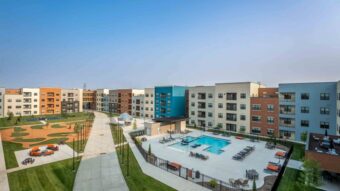
That philosophy is not limited to large-scale adaptive reuse projects. Across Chicagoland, developers integrating residential, retail and community-oriented design are seeing similar results. In high-end multifamily, retail is increasingly treated as an extension of the amenity experience rather than a separate revenue stream.
“Retailers value the built-in customer base of our residents and the appeal of operating in design-forward buildings located in active, walkable settings,” said David Hovey Jr., President of Optima Inc., design-driven real estate development firm. “The result is a mutually reinforcing dynamic where retail enhances our communities and residents provide steady patronage that supports long-term commercial success.”
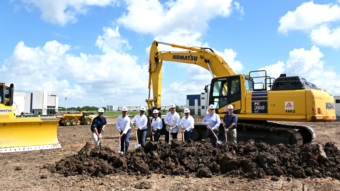
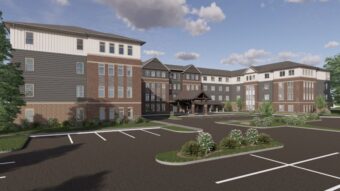
For Inspired, that integration continues to evolve at Bell Works Chicagoland, where residential development is now coming online alongside office and retail uses. Nearly 164 townhomes are under construction on the former campus with additional residential units entitled for future phases. Zucker sees housing as a stabilizing force that deepens activity and reinforces long-term value.
“Suburban Chicago is one of the strongest value plays in the country because there’s been so little new development,” Zucker said. “There’s real hunger for new product, great school systems and great places to live. It’s hard to get anything approved, but once you do, you’re off to the races.”
Looking ahead, Zucker believes 2026 will mark a turning point for office leasing, particularly for projects that already demonstrate momentum. After years of uncertainty, larger tenants are reentering the market and conversations that stalled in 2024 are resurfacing with renewed urgency.
“We used to say ‘stay alive for ’25.’ Now we say ‘stay in the mix ‘til ’26,’” Zucker said. “The whales have surfaced again. We’re seeing tenants in the market for 100,000 to 200,000 square feet, enough serious activity to fill our entire west side.”
That cautious optimism is emerging across other sectors of Chicagoland development, even among firms that largely pressed pause on new starts in 2025.
“Due to slower leasing activity, we didn’t have any industrial development starts in 2025,” said Mike Yungerman, Executive Vice President and General Manager of The Opus Group. “Leasing has escalated over the past six months, and we’re anticipating new construction throughout the market to pick up in 2026.”
Yungerman said the firm’s focus during the slowdown remained on fundamentals, particularly in industrial markets where demand drivers never fully disappeared.
“Whenever a market slowdown happens, we focus on disciplined underwriting, flexibility in our development plans and staying close to core relationships,” Yungerman said. “Infill space among industrial users continues to be strong because transportation and labor costs are key decision points.”
As activity begins to return, Opus is positioning for that next phase with infill projects such as Alsip Park 294, a two-building, 360,026-square-foot Class A spec industrial development near the Interstate 294 corridor and Midway Airport, as well as Merrillville Industrial, a 289,000-square-foot Class A facility along Interstate 65 between Chicago and Indianapolis.
“Infill space among industrial users continues to be strong as these users have their cost of transportation and labor as key decision points,” Yungerman said. “We continue to explore infill opportunities as one of our industrial strategies.”
That return to fundamentals has made projects with visible momentum stand out even more. At Bell Works Chicagoland, the concept no longer has to be sold or explained. The environment does the work on its own.
“When we started leasing after COVID, people had to believe in the vision,” Zucker said. “Now they walk in, see the market buzzing, people lining up for coffee, someone playing indoor golf, people walking their dogs, and they get it instantly. The vision is no longer theoretical. It’s alive.”
In a year defined by restraint and recalibration, Bell Works Chicagoland illustrates what 2025 ultimately demanded from developers across the region: not just new buildings, but new ways of thinking about how people live, work and gather.