Communities across the country are working to address a growing shortage of affordable housing, yet bringing these developments to life continues to present challenges. Rising construction costs, labor shortages, higher interest rates and more complex financing structures make projects more challenging to deliver than in years past.
While owners and developers can’t control many of the market forces affecting affordable housing, they can influence how projects are planned and delivered. In our experience, the most successful developments become affordable because project teams make smarter decisions before construction ever begins.
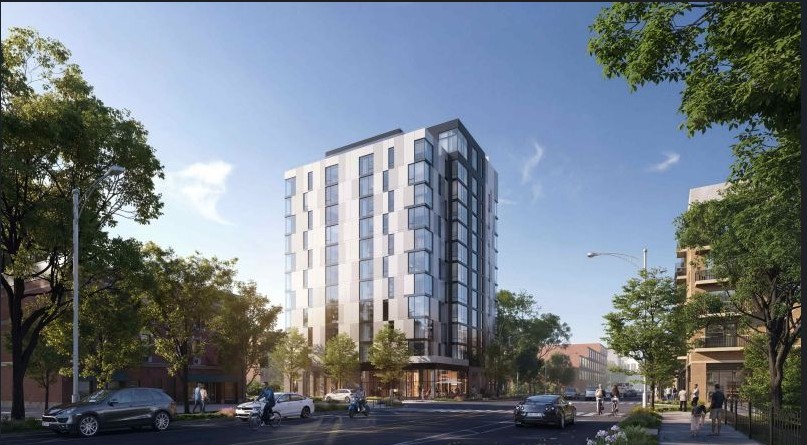
Over the past four years, McHugh Construction has served as general contractor on projects delivering nearly 500 affordable and mixed-income residential units across Chicago. These developments include Southbridge 1C, an 80-unit mixed-income community being developed by The Community Builders as part of the redevelopment of the former Harold Ickes Homes; Habitat’s OC Living community in North Lawndale; 508 Pershing in Bronzeville; and Habitat’s 43 Green equitable transit-oriented development, also in Bronzeville. While each project has presented unique opportunities and challenges, they’ve reinforced a common lesson: the greatest opportunities to control cost, reduce risk and maximize value occur during preconstruction.
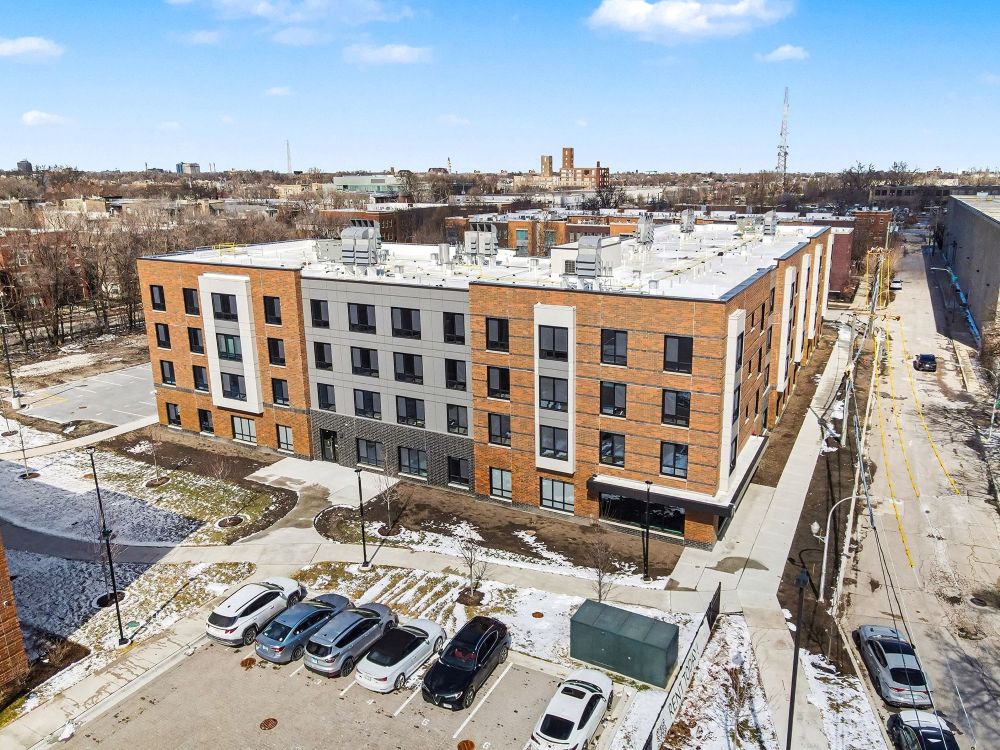
The Junction at OC Living introduces 75 new mixed-income apartments within a four-story residential building to Chicago’s North Lawndale neighborhood as part of Habitat’s larger Ogden Commons development. (Credit Habitat)
Early Collaboration Pays Dividends Throughout Construction
One of the biggest misconceptions about affordable housing is that cost savings come from bidding and value engineering in the later stages of the design process. In reality, the greatest savings often come from bringing the construction team to the table much earlier.
When a construction manager or general contractor is engaged during design, the team has the opportunity to evaluate constructability, recommend more efficient structural or building systems, improve sequencing and identify logistical challenges while changes remain relatively inexpensive. Those discussions become much more difficult, and often much more costly, once construction documents are complete and permitting is underway.
Early collaboration also allows owners, architects and contractors to establish clear project priorities. Whether the objective is preserving resident amenities or maintaining an aggressive funding schedule, aligning those priorities early helps every subsequent design decision support the same outcome.
We saw the benefits of this approach during construction of 508 Pershing, a 53-unit mixed-income development in Chicago’s Bronzeville neighborhood developed by The Community Builders. As supply chain disruptions affected the project, our team worked closely with the owner and design partners to identify cost savings in façade materials, structural framing, finishes and mechanical, electrical and plumbing systems. Those collaborative decisions helped offset rising costs while maintaining the building’s quality and keeping the project on budget.
When the goal is to maximize value, project teams who evaluate alternatives early often improve efficiency without compromising the quality or long-term performance of the building.
Strong Partnerships Lead to Better Outcomes
Affordable housing developments are among the most collaborative projects in commercial real estate. Success depends on owners, architects, contractors, lenders, public agencies and trade partners working toward the same objective while navigating tight budgets, multiple funding sources and demanding schedules. Long-term relationships make that process more effective.
McHugh’s ongoing partnerships with The Community Builders demonstrates how trust and familiarity can benefit a project. After completing 508 Pershing in 2023, we were selected to build Southbridge 1C, the next phase of TCB’s work on Chicago’s Near South Side. Because the teams had worked together previously, we were able to build on established communication, streamline decision-making and focus our attention on solving project-specific challenges rather than developing new working relationships.
The same has been true with Habitat, where our collaboration has included completing 179 units at 43 Green in Bronzeville and 167 units at its OC Living community in North Lawndale. While every project is different, strong partnerships consistently create efficiencies that are difficult to quantify but invaluable over the life of a project.
Procurement Requires More Strategy Than Ever
The construction industry’s supply chain has improved considerably since the pandemic, but procurement remains one of the most important tools for managing cost and schedule.
Lead times for structural steel, electrical equipment and major mechanical systems continue to require careful planning, particularly as data center construction increases demand. Affordable housing projects often operate within strict financing timelines, making schedule certainty just as important as budget certainty.
A thoughtful procurement strategy allows project teams to secure production schedules, pre-purchase critical materials when appropriate and provide owners with greater confidence throughout the development process.
Procurement strategies can also extend beyond material purchased, such as maintaining healthy relationships with subcontractors. Affordable housing projects frequently undergo multiple pricing exercises as financing packages evolve, but repeatedly requesting bids can discourage participation and ultimately reduce competition. Carefully planned procurement milestones help meet project budgets while respecting subcontractors’ time and encouraging more competitive pricing.
Standardization offers another opportunity to improve efficiency. Repeating unit layouts, finish packages and building assemblies can increase labor productivity, reduce material waste and simplify long-term maintenance without sacrificing design quality. The objective is to identify where consistency creates value so resources can be invested where they have the greatest impact.
Successful Projects Are Won During Preconstruction
Once a project enters construction, the opportunity to make significant changes becomes increasingly limited. That’s why preconstruction planning remains one of the most effective ways to control cost and improve project outcomes.
Coordinating design milestones, permitting, procurement, estimating and construction sequencing into a single plan allows teams to identify conflicts before they become delays. Digital tools like Building Information Modeling (BIM) and clash detection further improve coordination by resolving issues virtually instead of in the field, reducing rework and improving productivity.
Planning should also extend to field operations. Material staging, crane locations, workforce access and delivery logistics all influence efficiency once construction begins. Establishing quality standards, mock-ups and inspection procedures before work starts helps reduce rework while ensuring the finished building meets the expectations of owners and residents alike.
Delivering More Housing by Building More Efficiently
Affordable housing developments do more than provide apartments. They create opportunities for families, strengthen neighborhoods and support long-term community investment. That makes every construction dollar especially important.
No contractor can eliminate inflation, labor shortages or financing challenges. But project teams can choose to collaborate earlier, procure more strategically and invest the time necessary to plan projects thoroughly before construction begins.
Our experience building nearly 50,000 residential units in our company’s history, as well as 500 affordable and mixed-income residential units in just the past four years, has led to practical strategies that help limited housing dollars go further. As demand for affordable housing continues to outpace supply, the industry’s goal shouldn’t be to build cheaper housing. It should be to build housing more intelligently. When owners, designers, contractors and trade partners work together from the outset, more projects become financially viable, more communities benefit and more families gain access to quality housing.
Kinjal Patel is president of Chicago-based McHugh Construction.