The COVID-19 pandemic has fundamentally changed the view of healthcare preparedness and identified areas for heightened focus moving forward. Almost overnight, healthcare organizations have needed to radically increase their ability to care for infectious, high-risk patients while maintaining ongoing operations.
The risks to patients, care providers, loved ones and everyone else during this time has been significant. A new report from Mortenson identifies the greatest long-term impacts to healthcare facilities and changes needed.
To understand how COVID-19 has impacted healthcare providers, Mortenson surveyed professionals at the 2021 American Society for Health Care Engineering’s Planning and Design Conference. Respondents included administration, facility and operational leaders from many of the nation’s largest healthcare organizations. Eight out of 10 respondents indicated their facility investments in the next 12 to 18 months will be at or above pre-pandemic levels.
All survey participants agreed that the pandemic resulted in new ways of thinking that will endure long after COVID-19 subsides. Providers are reconsidering approaches in many areas, including operations, planning and facilities, as well as patient and staff care.
With 22 percent of nurses indicating they may leave their current position, according to a recent McKinsey & Company study, the healthcare industry is being forced to think differently. Among new strategies, improving environments for healthcare workers are top-of-mind for industry leaders.
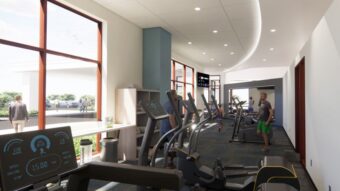
The need for more adaptive spaces and design changes with a heightened focus on staff well-being and patient safety are most noted in the Mortenson report. The need to take care of those who take care of others is significant. Ninety-seven percent of those surveyed confirmed the pandemic has heightened their organization’s commitment to the safety and well-being of staff. This includes proper ventilation and air quality, creating meaningful respite and wellness spaces, and better separation and physical barriers.
“Healthcare organizations see the role of facilities much differently today than just a few years ago,” said Chantilly Malibago, director of real estate development in healthcare for Mortenson, in a written statement. “There’s a critical need for more flexible, adaptive multi-functional spaces that can scale up or down in acuity and capacity levels. We are also seeing increased focus toward caring for care providers, including respite spaces and areas designed to support their mental well-being and emotional needs, as much as their physical health and safety.”
Other key insights:
• Increased focus on underserved communities receiving quality care and access. Providers overwhelmingly agree that their organization will make a stronger commitment to providing quality care and access to underserved communities. Heighted attention will also be placed on social determinants of health such as food insecurity and housing.
• Modularity is flexible and has the potential for cost reduction. Using a modular construction approach, facility rooms and components are designed and built in a standardized manner so they can be reconfigured efficiently in the future to address changes in acuity and volumes.
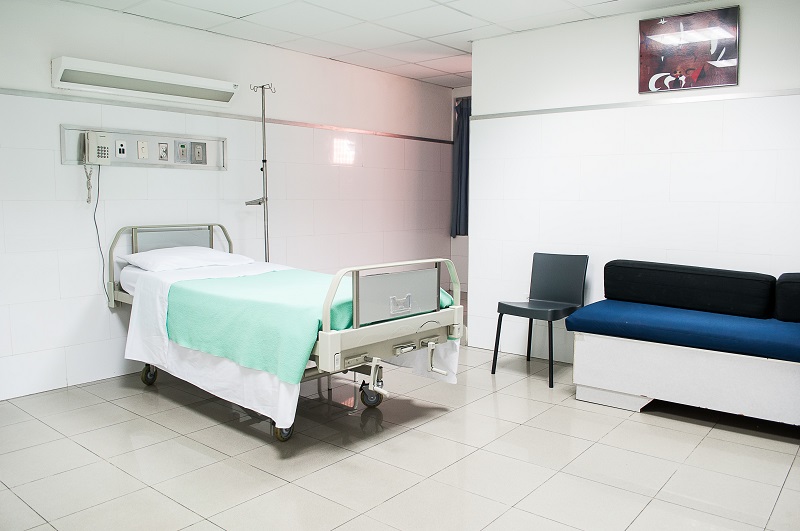
• The need for space changes include more adaptable spaces designed for distancing and touchless designs—integrating technology enabled check-in and patient navigation processes. There is also a need for more isolation rooms, negative-pressure rooms and more single occupancy rooms.
In addition to space changes and improved infrastructure, those surveyed confirmed that out of necessity, the pandemic accelerated the transition to telehealth and providers quickly recognized the positive impacts to their organizations. Interestingly, telehealth’s ease of access to care is also increasing new patient utilization rates. Due to its contribution to the entire continuum of care, nearly all respondents confirmed telehealth is receiving more or much more attention today compared to pre-COVID-19.