The Negro Leagues Baseball Museum has crammed a lot of storytelling into its 10,000-square-foot space in Kansas City, Missouri’s 18th & Vine Jazz District since 1997. But the museum has grown so popular, and residents and tourists alike have become intrigued by the baseball stars it highlights, that the Negro Leagues Baseball Museum has long outgrown this space.
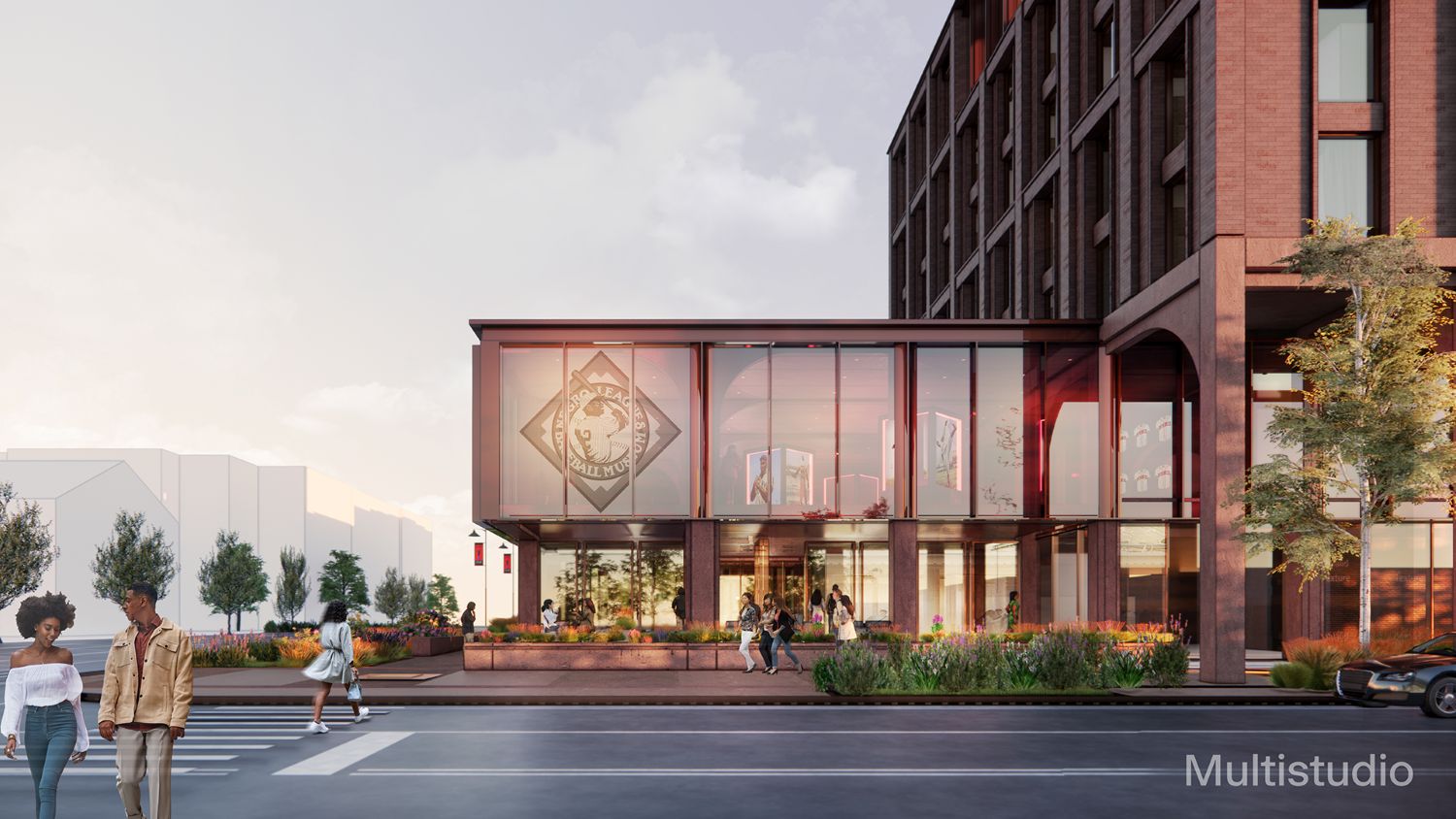
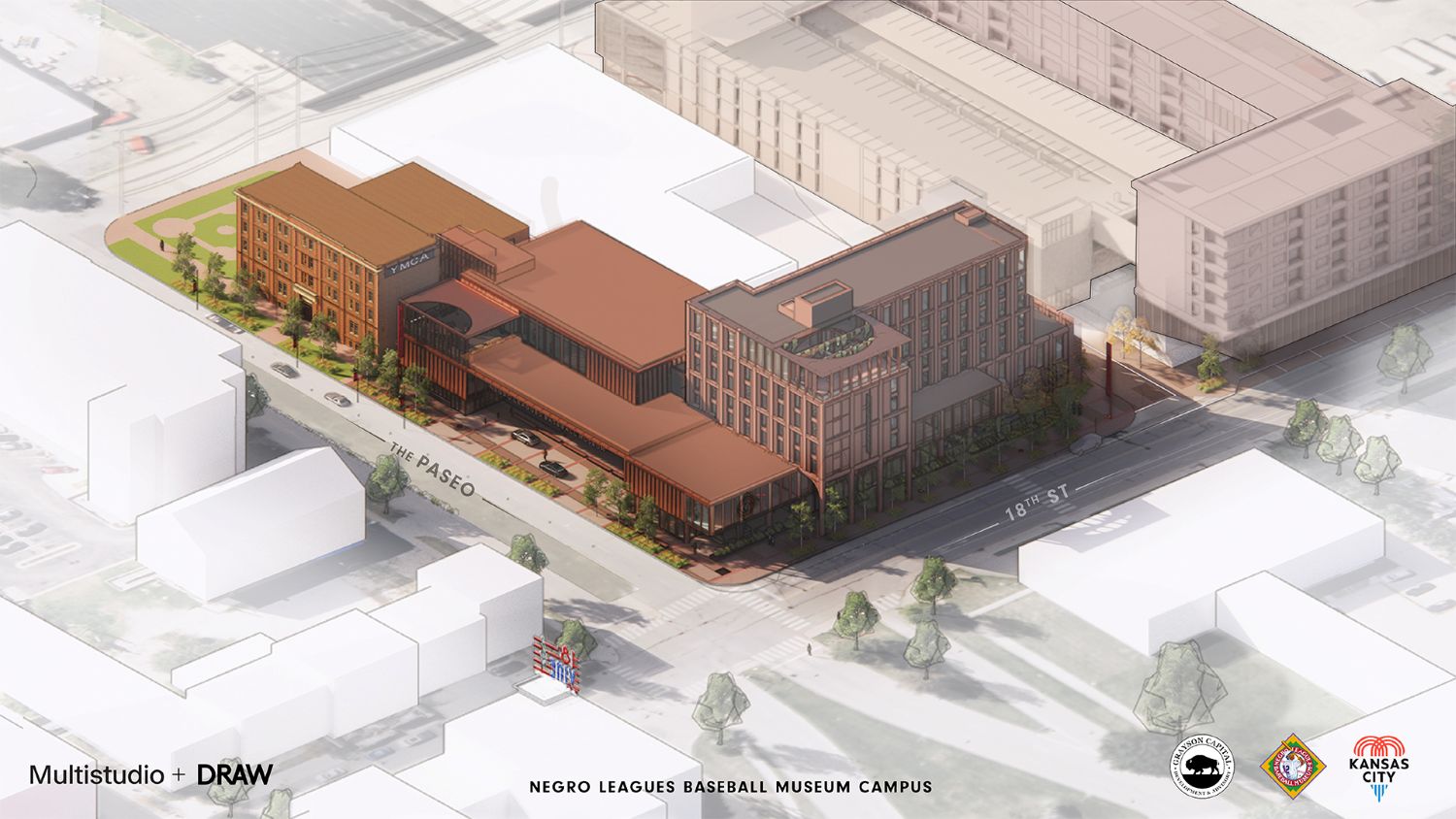
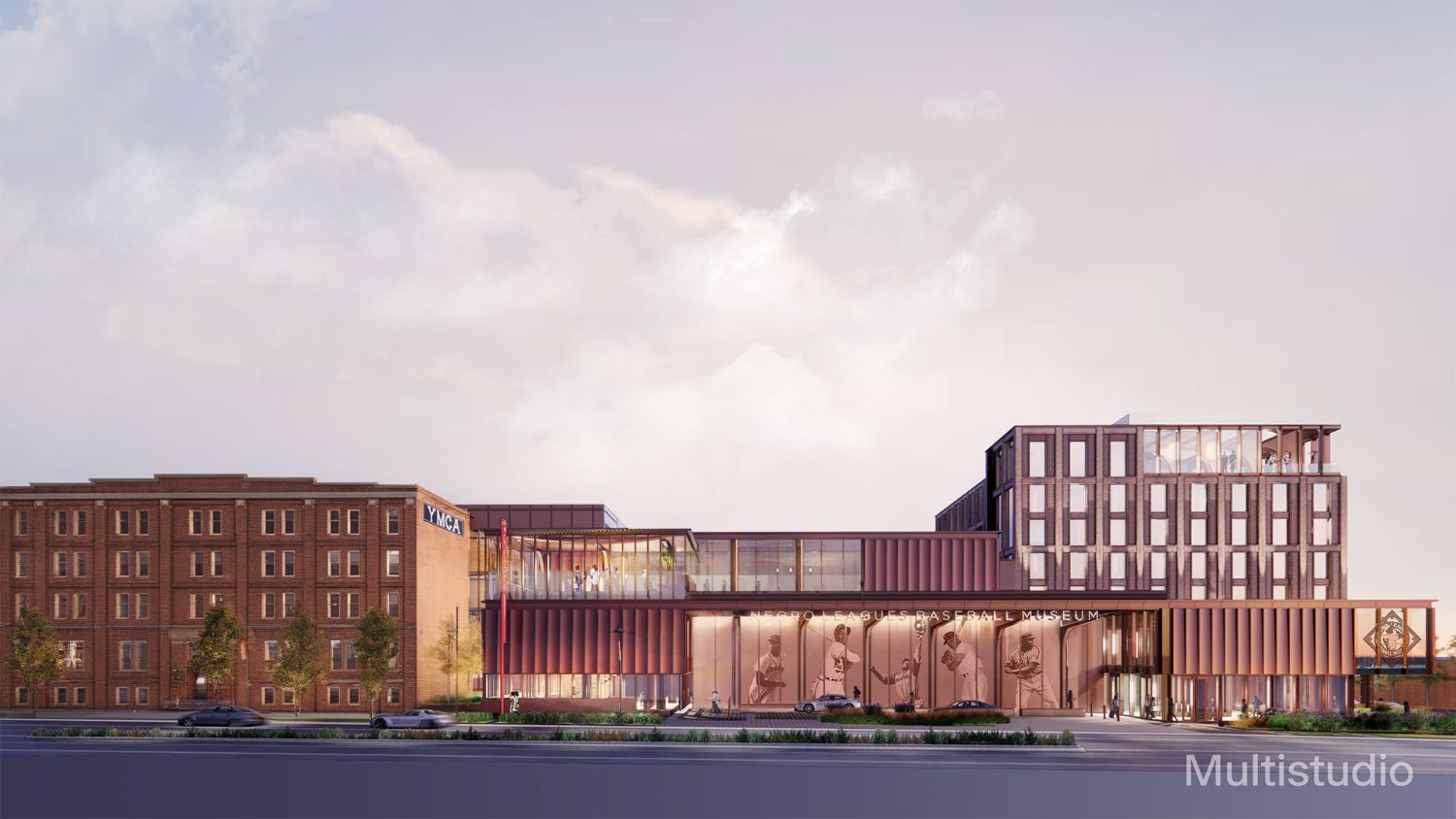
So now? This museum is on the move. The Negro Leagues Baseball Museum will soon move to a new 35,000-square-foot stand-alone museum just north of the historic Paseo YMCA at 1824 The Paseo in Kansas City. This location makes sense: That famed YMCA is where the National Negro League was founded back in 1920 during a meeting of eight independent Black baseball team owners.
The Paseo YMCA, built in 1914, has long been a key building for Kansas City’s African-American community. It closed in the 1970s and had sat vacant for decades. But the Negro Leagues Baseball Museum now owns the building, and has transformed the space into the Buck O’Neil Education and Research Center. Named after famed manager and first baseman for the Negro Leagues’ Kansas City Monarchs, this building houses archival and educational materials charting the history and development of the Negro Leagues.
The museum’s new campus will also feature a 144-room Pennant Hotel by Marriott, which will be the only hotel operating in the 18th & Vine Jazz District. Plans call for the hotel to include an on-site restaurant and rooftop bar.
Grayson Capital, a Kansas City real estate firm, is leading this development, while Mutistudio is serving as its architect and Taliaferro & Browne Inc. as its civil engineer. Russell Construction and Vazquez Grayson have recently been selected as the project’s construction team.
An official timeline for the $35 million expansion has not yet been announced, but Bob Kendrick, president of the Negro Leagues Baseball Museum, said that the ultimate goal is to have the new spaces open by 2029. This means that construction crews would break ground sometime in the first quarter of next year, with the expansion taking about 18 to 24 months to build.
“We have some work to do, but I feel so encouraged by our progress,” Kendrick said. “Our goal is to have this open immediately prior to the opening of the new Kansas City Royals stadium. What a great celebration that would be of the heritage of baseball in our great city.”
Kendrick said that the new 35,000-square-foot museum space will give planners access to 15,000 to 18,000 square feet of exhibit space. The rest of the square footage would serve as ancillary space to hold events and create additional revenue streams.
“We have had to pack a lot of information into very tight quarters,” Kendrick said. “It’s so exciting to be able to reimagine this story again 25-plus years after our current space opened. There are still stories we want to share that we don’t have the space for. This new museum campus will give us the opportunity to do that.”
The new space will also include interactive exhibits, creating a more immersive experience throughout the museum. But this doesn’t mean that the Negro Leagues Baseball Museum’s new space will throw too much technology at visitors.
“When you walk through the museum, it is an intimate experience,” Kendrick said. “You feel the spirit and soul of the place when you walk through it. We don’t want to lose that. We want the technology upgrades and immersive feel. But we are also being careful to not lose the soul of the museum.”
A boon to the neighborhood
Kendrick said that the addition of the museum and the hotel will provide a boost to the 18th & Vine neighborhood. And that’s fitting. As Kendrick says, successful Black baseball league teams historically brought prosperity to Black neighborhoods and communities. It’s poetic, then, that the new museum campus has the opportunity to do the same in this Kansas City neighborhood.
“Wherever you had successful Black baseball, you typically had thriving Black communities,” Kendrick said. “When we lost the negro leagues, we lost the economic commerce in many of those communities.”
When the Negro Leagues Baseball Museum first opened in 1991 as a one-room office in the 18th & Vine district, naysayers told the organizers that they were making a mistake. The neighborhood surrounding the museum was suffering economically. No one, these critics said, would visit a museum located there.
Those critics were wrong. As Kendrick says, the popularity of the museum has only grown, with tourists from across the globe regularly visiting the space. The growing crowds are one reason why the museum needs to expand.
“They thought we were crazy for opening here,” Kendrick said. “But we have seen this neighborhood change. We knew that we could help resurrect this once very proud and prominent African-American community. People are living and working and playing at 18th & Vine today.”
The addition of the new hotel is an important step in helping to bring more commercial activity to the 18th & Vine Jazz District, too. This neighborhood hasn’t been home to a hotel since the closure of the famed Street Hotel in the 1960s. That hotel, operated by Rueben and Della Street, was a well-known listing in the Negro Motorist Green Book, marking it as a safe haven for Black travelers.
The hotel did house several famous guests, perhaps none more important to Kansas City’s baseball history than Hall-of-Famer Jackie Robinson, who lived at the Street Hotel in 1947 while playing for the Kansas City Monarchs.
“The cool thing about a hotel is that we can socialize it,” Kendrick said. “It will have a rooftop deck. It is going to have a restaurant. That full-service hotel will be a tremendous asset.”
The new museum space will mark the latest chapter in the Negro Leagues Baseball Museum’s history. As Kendrick says, outgrowing its current space? That’s a great problem to have.
“Negro Leagues baseball history is as hot as it’s ever been,” he said. “I believe that our museum has had a hand in generating that interest. We started this with a hope and a prayer and some dedicated individuals who believed that this story needed to be preserved. Now is the time to dream out loud and build a new, modern museum.”