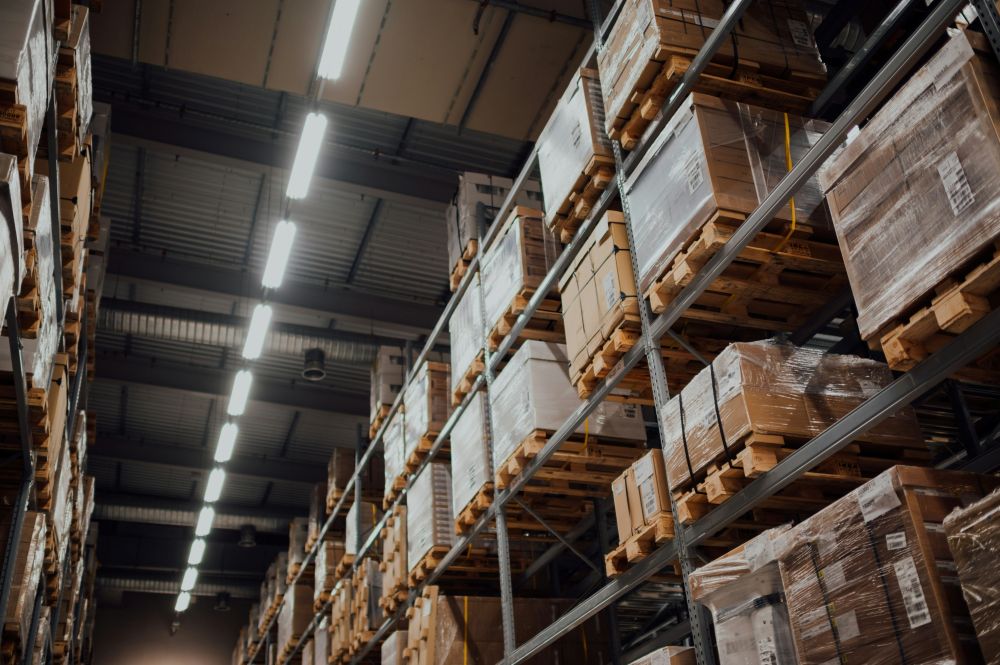
Industrial developers across the Chicago market are picking up the pace of construction, with construction crews now adding nearly 17 million square feet of warehouse and distribution space as occupiers search for modern facilities in strategically located markets.
According to NAI Hiffman‘s third-quarter 2026 Construction Pipeline Report, 46 industrial developments totaling 16.9 million square feet were under construction across the Chicagoland region at the end of September. That’s a significant increase from the 12 million square feet being built during the same period last year.
Developers also delivered more than 5 million square feet of new industrial space during the third quarter, bringing 2026 year-to-date completions at that time to approximately 9.2 million square feet. NAI Hiffman projects that total deliveries will reach approximately 11.7 million square feet by the end of 2026.
A growing divide
Denes Juhasz, director of research at NAI Hiffman, said that one of the most notable Chicago-area industrial construction trends is the growing divide between large build-to-suit projects and more measured speculative development.
Juhasz said that large-scale construction is being driven primarily by tenants with specific needs. This includes Illinois industrial projects such as Kimberly-Clark’s development in Wilmington, Goodyear’s in DeKalb and Walmart’s in Belvidere.
Don’t expect this more conservative approach from developers to change anytime soon.
“Developers remain more cautious about pursuing million-square-foot speculative projects, despite continued demand for large blocks of space,” Juhasz said.
The expanding construction pipeline comes as the Chicago industrial market continues to demonstrate healthy demand. The region recorded 8.1 million square feet of positive net absorption during the third quarter, up from approximately 7.5 million square feet during the same period in 2025. New leasing activity climbed to 17.1 million square feet, a substantial improvement from the 9.6 million square feet recorded a year earlier.
Despite the addition of new inventory, the overall industrial vacancy rate remained unchanged at 5.8% in the third quarter, according to NAI Hiffman’s research.
One of the most notable developments during the quarter was the completion of a 1.1- million-square-foot build-to-suit facility for CJ Logistics at 21012 W. Mississippi St. in Elwood, Illinois. Developed by ARCO/Murray, the Class-A warehouse broke ground in the fourth quarter of 2024 and was completed in September, when CJ Logistics took occupancy of the facility.
The I-80/Joliet Corridor led all Chicago submarkets in year-to-date absorption, recording nearly 2.9 million square feet. It also has the largest amount of industrial construction underway, with approximately 2.85 million square feet in its pipeline.
DeKalb County followed with 2.1 million square feet under construction, while Northwest Indiana had approximately 1.85 million square feet underway.
The balance between speculative and build-to-suit construction also illustrates how developers are responding to occupier demand. Build-to-suit projects account for 58.1% of the region’s active construction pipeline, while speculative developments represent the remaining 41.9%.
Spec construction not dead, either
And what about speculative industrial construction? Juhasz said that developers tackling spec projects are focusing on mid-sized industrial facilities, generally in the 100,000- to 450,000-square-foot range.
At the same time, food production, grocery and cold storage continue to drive construction. Manufacturing demand is coming largely from pharmaceutical and industrial equipment users, Juhasz said.
“Large-scale projects are also moving farther from Chicago to locations where land is more plentiful and affordable,” Juhasz said.
The Chicago market currently has 30 speculative industrial projects underway. Most fall within the 100,000- to 200,000-square-foot range, reflecting demand for moderately sized modern industrial facilities.
One particularly notable speculative project is Trammell Crow Company’s 788,000-square-foot building at 26230 W. 143rd St. in Plainfield, Illinois. The project broke ground during the first quarter, and RJW Logistics signed a lease for the entire building during the third quarter. The tenant is expected to take occupancy in July 2027. It’s just one more project that shows that demand for industrial space in the Chicago area, while a bit muted from the sector’s busiest days, remains solid.
Several larger build-to-suit projects are also moving forward. The largest development underway is a 1.54-million-square-foot warehouse for Kimberly-Clark at 30961 S. Elion Blvd. in Wilmington, Illinois. Elion Partners is developing the facility, which is scheduled for completion in the fourth quarter of 2027.
Other significant projects include a 1.35-million-square-foot facility for Goodyear in DeKalb County and a 1.2-million-square-foot build-to-suit warehouse for John Deere in Hebron, Indiana.
Walmart Cold Storage is also expanding its Midwest logistics footprint with a 1.2-million-square-foot refrigerated facility at 1500 S. Appleton Road in Belvidere, Illinois. Developed by Scandroli Construction and Ipanco, the project is scheduled for completion in the first quarter of 2027.
Meanwhile, two additional speculative developments, each measuring approximately 1.2 million square feet, are expected to break ground in Minooka during the fourth quarter. Prologis is planning its project at 200 McLinden Road, while Crow Holdings is planning a facility at 901 Mid Point Road, NAI Hiffman reported.
Construction costs remain an important consideration for developers pursuing these projects. NAI Hiffman’s report found that the Producer Price Index for new industrial building construction increased 5.7% year over year in September. Construction materials costs climbed even faster, rising 11% over the same period.
Labor costs are also moving higher. Average hourly earnings for construction employees reached $41.69 in September, a 4.2% increase from a year earlier. Rising labor costs are another challenge that developers face today when working in the Chicago industrial market.
Those pressures could complicate development budgets even as demand supports additional construction.
Chicago remains the nation’s largest industrial market by inventory, with approximately 1.4 billion square feet of industrial space, NAI Hiffman said in its report. However, its active construction pipeline ranks eighth nationally, trailing markets such as Dallas-Fort Worth, which had 51.2 million square feet underway.
Still, with strong absorption, substantial leasing activity and several major projects moving forward, the Chicago region’s industrial development pipeline suggests that developers continue to see opportunities throughout the market.