Texas CRE in 2025 felt like watching the state exhale after years of compressed pressure. The market didn’t surge. It clarified. Supply cooled in places where it needed to, capital finally remembered how to return phone calls and manufacturing quietly became the statewide anchor that tied five very different metros together. After two years defined by volatility, activity finally started matching fundamentals instead of sentiment. For anyone who’s been tracking Texas deal flow, it wasn’t a year of fireworks. It was a year of fundamentals coming back into focus.
That clarity showed up first in Austin, where the long-running construction sprint finally eased up. Ryan Kasten, Austin Market Leader and Senior Managing Director for Central Texas at CBRE, said 2025 marked a shift in leverage that the city hadn’t seen in years.
“This year was the first time in recent history that tenants have had the luxury of options,” Kasten said.
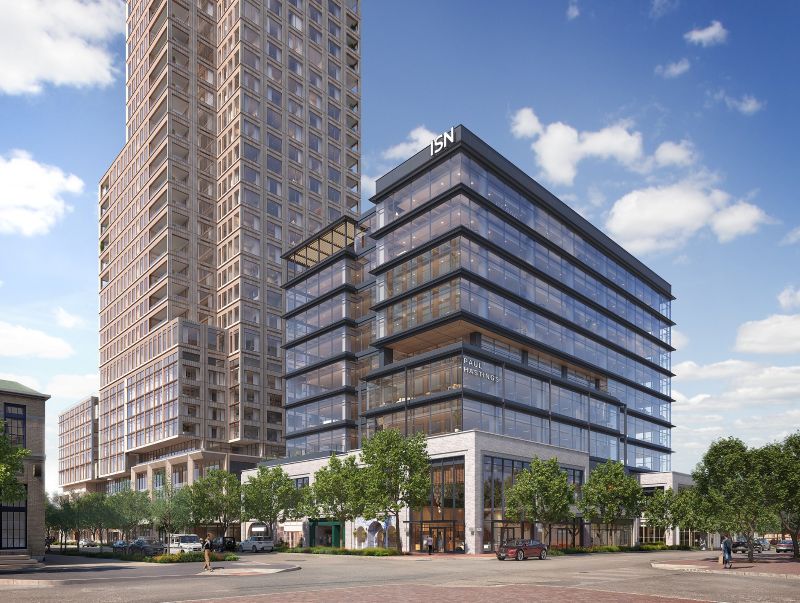
He wasn’t exaggerating. By Q3, Austin’s office pipeline fell below 1 million square feet for the first time in a decade. For a metro that spent years trying to keep up with demand, that thinning pipeline set the stage for the market to better absorb existing space rather than adding nonstop new deliveries. Trophy and prime office carried the weight, drawing the tenants willing to make long-term commitments while the broader market continued recalibrating.
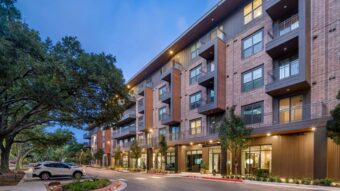
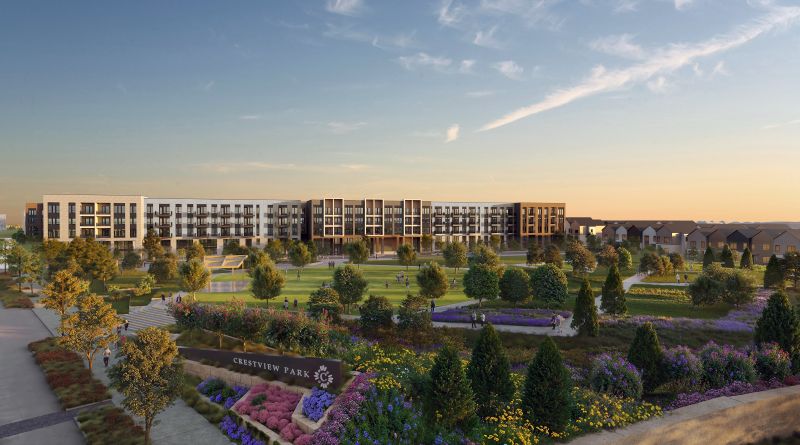
Dallas experienced its own version of the reset, but through the multifamily lens. After the massive 2022 and 2023 starts, 2025 became a digestion year. Joel Behrens, Managing Director with Trammell Crow Company/High Street Residential in Dallas, said the slowdown in starts was overdue and necessary. Instead of chasing volume, capital in DFW shifted toward more strategic infill and mixed-use plays. Projects like High Street Residential’s Crestview Apartments and Crestview Townhomes in Allen or The Knox Hotel and Residences in Dallas reflected developers thinking in cycles rather than headlines. That recalibration aligned with a broader statewide shift as Texas’ largest metros transitioned from aggressive pipelines to absorption-first discipline.
San Antonio found itself balancing in two directions at once. Industrial rents stayed flat under the weight of oversupply even as retail rents climbed due to limited new construction. That split wasn’t entirely unexpected, but it forced the market to reckon with how uneven its product performance had become. Meanwhile, Houston demonstrated a more dramatic bifurcation between office and industrial. On the office side, discipline held; only 764,381 square feet was under construction with 86 percent already preleased. Industrial was the opposite story: more than 17 million square feet under development, 12.8 million square feet already delivered year-to-date and leasing volume hitting 11.8 million square feet in Q3 alone, the strongest since late 2023. Together, these commitments signaled how Houston’s industrial role has shifted from regional strength to national relevance.
If supply told the market where things were cooling, manufacturing told it where things were heating up. And no city had a clearer front-row seat to that shift than El Paso. The border market became a statewide bellwether. Christian Perez Giese, Executive Vice President & Director of CBRE El Paso, watched large manufacturing users purchase buildings and land at a scale that’s atypical for the region.
“The strength of manufacturing in Mexico is creating ripple effects that open new opportunities statewide that are increasingly tied to cross-border collaboration,” Perez Giese said.
Those ripple effects took concrete form. The Wiwynn Corp. transaction east of El Paso, a $152 million operation supported by CBRE teams on both sides of the border, underscored how deeply the “Twin Plant” model is shaping demand across Texas. Even with fewer total transactions this year, the sheer size of these manufacturing deals gave El Paso an outsized role in the state’s CRE narrative.
Austin’s manufacturing story grew in a different direction. The metro doubled down on its identity as a hub for advanced industries. Mark Harris, Executive Vice President of JLL’s Austin office, noted that semiconductor companies, robotics and military technology groups drove demand across office, industrial and land. Samsung, Tesla and their ecosystem of vendors expanded again, reinforcing a demand base that remained solid even as other tech corridors softened.
Houston’s manufacturing pulse beat primarily through industrial leasing. PepsiCo’s million-square-foot commitment and Constellation Brands’ 496,000-square-foot move-in were standout deals that helped drive the year’s strongest quarter of absorption at 3.6 million square feet. New-to-market tenants like Creative Innovations further strengthened the region’s position as the state’s industrial anchor. San Antonio captured its share of activity as well, with foreign manufacturers exploring relocations as a hedge against tariff uncertainty, a dynamic that positioned the city as an emerging link in Texas’ manufacturing corridor.
As leasing momentum firmed, capital followed. A more predictable interest rate environment gave investors and lenders enough certainty to stop waiting for perfect timing.
“Interest rate stability allowed more activity from investors in San Antonio, whether that was starting ground up projects, purchasing new assets or recapitalizating owned assets and funding for capital improvements that have been on pause in recent years,” said John Moake, Managing Director of CBRE San Antonio.
Similar sentiment surfaced across the state. Harris pointed out that Austin’s capital markets saw their most active stretch since 2021. Behrens said DFW’s multifamily market began to stabilize as the region absorbed the wave of new units delivered in 2024 and those still scheduled to come online. And in Houston, JLL’s Q3 office report showed the metro had already surpassed its entire 2024 transaction volume by the end of Q3, making it one of the most active office sales markets in the country.
Underneath all of this, demographics continued to support demand the way they always do in Texas. Austin benefited from its steady influx of college-degreed workers in their 20s and 30s. San Antonio leaned on affordability and quality of life with Moake and Krenger both pointing to population growth that pushed demand across logistics, healthcare and housing. Dallas rode sheer volume and Houston’s demographic strength helped reinforce its industrial boom. None of this was new, but in a year defined by corrections, that demographic tailwind became one of the most reliable parts of the entire CRE equation.
Retail followed the population, but with a bifurcated twist. San Antonio’s retail segment remained one of the city’s strongest performers thanks to limited new development. Harris noted that in Austin, retail stayed tight and retained pricing power despite industrial approaching oversupply. In Dallas and Houston, retail remained steady as tenant demand concentrated in key submarkets where supply simply couldn’t expand fast enough.
By the end of the year, every Texas metro contributed something different to the statewide picture. Austin offered clarity as supply cooled and manufacturing surged. Dallas provided depth with multifamily recalibrating and prominent infill projects like Crestview Apartments, Crestview Townhomes and The Knox staking out long-term positions. San Antonio delivered stability with its biggest office deal at The Reserve, strong retail fundamentals and renewed investor activity. El Paso supplied connectivity through cross-border manufacturing and the influence of deals like Wiwynn. Houston brought proof through absorption gains, disciplined office development and an industrial market that repeatedly outperformed expectations.
If 2024 was the year of waiting and 2025 was the year of resetting, then 2026 looks like a year where Texas CRE finally moves forward with confidence. Supply is more disciplined. Manufacturing is no longer a subplot. Capital is active again. And demographic strength continues to support demand from El Paso to Austin. The market isn’t sprinting. But after years of turbulence, it’s finally running on signals that make sense.