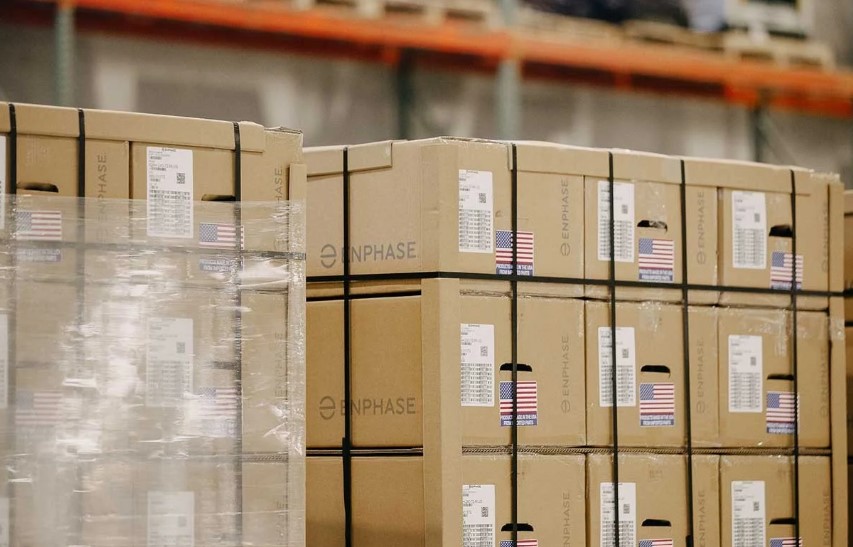
Foxconn earlier this summer signed a contract with Enphase Energy to manufacture computer parts for solar power generators at the company’s Mount Pleasant, Wisconsin, campus. This is one example of how companies are looking to the greater Milwaukee area as a destination for a wide variety of manufacturing and industrial uses.
We recently spoke with two professionals at JLL – Andy Cvengros, managing director for data center solutions, and James Young, senior vice president and lead industrial broker – about the benefits industrial users receive from setting up shop in the Milwaukee area and what needs to happen to boost Southeast Wisconsin’s ability to attract data centers.
Here is some of what they had to say.
Let’s start with the obvious question: What impact have higher interest rates had on the Milwaukee-area industrial market?
James Young: From a boots-on-the-ground perspective, I can say that demand is still very strong for leasing space. A lot of that is because we are finally getting the product that tenants want. Milwaukee has historically been a market with older industrial buildings. It’s only been about three to six years where developers have realized the opportunities here and have moved aggressively to build a footprint of more modern industrial facilities.
Now we can offer tenants modern facilities with 28-foot to 36-foot clear heights. That type of product is still limited in certain pockets of the market, in Waukesha County, specifically. We virtually have no spec industrial buildings available in Waukesha County. We just have a very minimal amount of inventory in certain areas.
When it comes to industrial sales, on the user side of the equation, there is no slowdown. Investors want to buy industrial product. It’s a lack of product that is really slowing the sales activity. I was speaking with an associate in my office yesterday. There’s a 60,000-square-foot industrial listing in Menomonee Falls for sublease. People are interested in knowing whether the owner will sell the building. If the owner is willing, it would sell quickly. But the owner has no interest in selling. And that is the case today with most industrial properties here. A lack of inventory is continuing to slow the market.
But a 90,000-square-foot building sold in New Berlin for $92 a square foot. If you would’ve asked me five years ago if I thought a 90,000-square-foot building in New Berlin would sell for that much, I would have found it hard to believe.
So we are definitely seeing strong interest on the buy side and strong interest on the leasing side in industrial here. It’s just a matter of getting the product out there.
What about data centers? Are you seeing much demand for data center space in the Milwaukee area?
Andy Cvengos: We are representing a lot of operators and big developers of data center space around the country. The top markets are effectively tapped out on power, places like Ashburn, D.C., Chicago, Dallas and Phoenix. Because of that, a lot of developers are looking at secondary and tertiary markets. They are chasing the power. The transmission power is getting hard to come by. It can be challenging getting the transformers, the lines out to the sites, challenges like that. That can be a three- to five-year process to get the necessary power for new developments.
But I would say that Milwaukee is not yet a strong data center market. There are no tax abatement programs in place. The pricing of power, then, is more expensive here than in Illinois and other competing states. The availability of power is an issue, though. The activity on the Foxconn site is primarily driven by the power that is there. People are looking for new markets that have not yet been talked about.
In the wake of the latest Foxconn deal in Mount Pleasant, are you seeing a greater demand from tech companies looking for space in the Milwaukee area?
Cvengos: There is interest, but Wisconsin isn’t yet a big market for, say, electronic vehicle manufacturing. The EV users tend to toward the southern United States where labor is cheaper. We have not yet seen people looking at Wisconsin for that type of manufacturing.
We have seen interest from solar users. But that has more to with legislative support and the benefits that they can get.
Just look at data centers. The typical data center abatement is typically a 100% sales tax abatement on IT gear. That can be a big swing in costs for users that go to states that offer that type of abatement. If your state doesn’t offer that, it’s a non-starter in most cases.
From a general industrial standpoint, what makes Wisconsin an attractive place for companies?
Young: Wisconsin has a great business climate. We have municipalities here that are pro-business. The communities offer tax incentives to companies looking to locate here. We also have great labor, a great quality of life and a strong freeway system.
Look at communities like Kenosha, Pleasant Prairie, Germantown and Richfield. There is great land in these communities, land that is easily developable. Milwaukee has always lagged the other big industrial markets, but more companies are looking at us today. We are getting our due. We are relatively affordable compared to other markets our size. The cost of doing business here is more economical.
Looking at demand from data center users, are there any Midwest markets that are particularly hot right now?
Cvengos: Chicago is a top-five data center market nationally. We continue to see massive demand for data center space in the Chicago market. But one of the strongest Midwest data center markets on the map today is Columbus, Ohio. A lot of the hyperscale users have already set up shop in markets like Chicago. It can be hard, then, to find land in a market like that. Because of how tight land is in these bigger markets, many users are looking to places like Columbus. There, you can find 100 acres for a data center easily.
There is some demand for data center space in Minneapolis, though I wouldn’t say there is a tremendous amount. Kansas City and St. Louis are tertiary data center markets. They are not on the radar when it comes to mass demand. But Columbus, Ohio, is one Midwest market that is attracting a lot of data center activity.
I know it is difficult to predict, but do you think demand for industrial space in the Milwaukee area will continue to rise as we near 2024?
Young: We are set to get a lot of product delivered during the third quarter and into the fourth quarter, a lot of projects that broke ground last year. It will be interesting to see how long it takes for that to get absorbed. If you look at Racine and Kenosha counties, millions of square feet of new industrial development will be delivered in the next few months. That might take a while to absorb. But that’s not because our market is in a negative situation. It’s just that we are not a fast-absorption market. Our market takes time to absorb space.
But the demand for industrial space in the Milwaukee market will be there. That space will fill up. It will just take a bit of time. Again, that’s not a negative. It’s just the way our market works.