Kansas City’s story is not one of flashy, headline-grabbing growth. Historically, it has ranked squarely in the middle of the pack, but its defining strength is consistency. And in moments like this, that consistency becomes a competitive advantage as Kansas City rises while larger metros contend with oversupply, more challenging regulatory environments or both.
The Kansas City metro area has added nearly 100,000 people in the past five years and the city’s downtown population is forecast to increase another 33% over the next decade. Developers are driving investment across residential, retail, entertainment, hospitality and sports. Meanwhile, major projects tied to the Kansas City Chiefs and the Kansas City Royals are expected to create additional opportunities throughout the region.
What really distinguishes Kansas City, however, is the discipline behind its growth. The market has benefited from steady demographic gains, resilient demand and relatively measured new supply. In multifamily, early 2026 absorption outpaced new deliveries by roughly 200 units, helping to keep vacancy nearly flat. Central business district (CBD) office vacancy rates have fallen below suburban rates for the first time since 2020, with little speculative office development in the pipeline. And retail vacancy has remained between 3% and 5%, supported in part by limited new construction.
Kansas City also boasts a central location, extensive rail and highway infrastructure to support transportation and logistics, competitive tax incentives and moderate labor and occupancy costs. Together, these fundamentals offer a comparatively low-risk environment for continued investment.
An experiential emphasis
In many ways, Kansas City has become a model for the next generation of Midwest commercial real estate. At the center of this model is an emphasis on experiential living, where housing, employment, education, walkability and accessibility work together with sport and wellness to foster a unique sense of place and community. This proprietary development model, called The Center for Sport+Lifestyle and part of the development arm of Price Brothers, is advancing throughout the Midwest—banking on the traffic engine driven by youth sports.
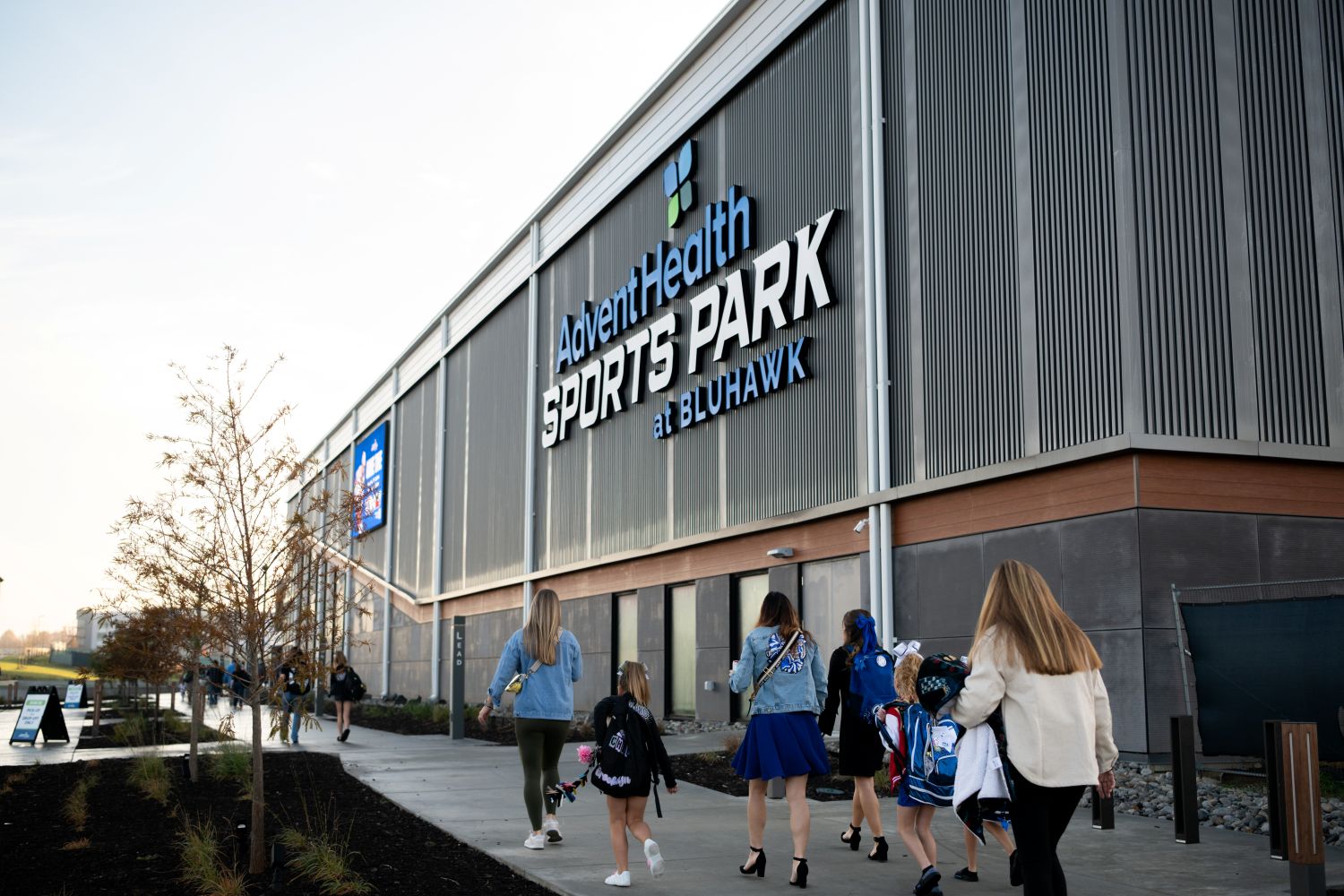
Bluhawk, a 277-acre mixed-use development in Overland Park, Kansas, a suburb of Kansas City, is the flagship implementation of this vision. The project integrates recreation, entertainment, retail, dining, residential, office, hospitality, healthcare, flexible outdoor space and neighborhood amenities within one master-planned community. Its mix of uses creates sustained activity, attracting a broad range of commercial tenants, including new-to-market concepts. In addition to the sustained and recurring customer base that boasts some of the strongest demographics in the Midwest, the development is anchored by the Advent Health Sports Park at Bluhawk, which attracts thousands of visitors every weekend for hockey, volleyball, basketball and pickleball events.
A similar pattern is emerging across the Midwest, where developers are combining an experiential anchor with housing and walkability. Many of these destinations are led by sports facilities or franchises acting as master developers and sometimes the attraction is sports, sometimes music or sometimes other entertainment-based venues. The Fiserv Forum in Milwaukee, the soon-to-be-under construction Union Omaha project in Omaha and the entertainment/recreation-based Columbus Commons in Columbus all incorporate elements of this model among many other Midwest examples.
Kansas City has been applying this playbook for years. The Power & Light District, the CPKC Stadium and the T-Mobile Center each represent downtown destinations that have contributed to urban revitalization and residential growth. The Kansas Speedway and Sporting Park are similar stories speaking to suburban growth.
Building from solid fundamentals
Experiential development works best when grounded in strong market fundamentals. Residential momentum remains a major driver of commercial activity. Housing tends to follow employment and quality schools, while residential density fuels demand for retail, restaurants and amenities. This relationship has played an important role in Kansas City’s continued mixed-use growth.
The sequence will vary by market and project type. In urban environments, a large-scale development can generate nearby residential demand. In suburban settings, a solid residential population can provide a built-in consumer base for the commercial and recreational uses that follow. For instance, at Bluhawk, a 200-unit multifamily complex and a 153-lot single-family subdivision were introduced early, establishing a residential presence to support future phases of the project.
Transit and zoning also dictate where this activity can take hold. Kansas City’s streetcar extension is strengthening connections from the CBD to Country Club Plaza. Meanwhile, zoning policies that allow for higher-density development create additional opportunities around these corridors.
The public/private connection at Bluhawk with the State of Kansas and the City of Overland Park has been prominent from the very beginning, with Price Brothers dedicating public incentive dollars normally available for project costs to support key public infrastructure elements earlier than city and state planners had scheduled. This also provided land for a needed safety services facility housing police, fire and ambulance services. Developer and City worked together to determine potential uses that served the surrounding communities and the developer. Eventually, public incentives defrayed a portion of the development cost.
A disciplined approach to development
Kansas City’s momentum reflects several factors working in tandem. The population is growing. Residential demand remains strong. Major sports and entertainment investments are underway. The Chiefs’ plans for a new stadium and practice facility in Kansas, along with ongoing discussions around the Royals’ relocation to Crown Center, have the potential to open up new areas for development.
The metro area offers a combination of location, robust infrastructure, housing demand, public investment and development-friendly policies that few markets can match. But every market has its own strengths. The best results come from leveraging those strengths with a disciplined and honest approach that mitigates shortcomings.
When it comes to adding mixed-use supply, prudence is key. Investments that respond to existing demand, build from established infrastructure and advance at a sustainable pace are more likely to succeed in the long run. Experiential developments with entertainment and sports opportunities can be a strong catalyst for greenfield projects. And housing is always important. To see what that looks like in practice, operators and developers need look no further than Kansas City.
Travis Whitacre is CEO of Price Brothers, a vertically integrated real estate investment, development and management firm based in Kansas City. To reach Travis directly, email [email protected].