The volume of end-of-life electronics continues to rise as technology cycles accelerate across business and consumer use. For businesses, retiring outdated equipment is no longer just an operational task – it carries implications for data security, regulatory compliance and environmental responsibility. Similarly, as individuals rely on handheld and connected devices for work, banking, shopping and managing their homes, the amount of personal data stored on those devices – and the risk associated with it – has increased significantly.
This combination of data sensitivity and device turnover is driving measurable growth in electronics recycling and IT asset disposition (ITAD), along with the need for more specialized facilities to process that electronic waste. As operations become more complex, buildings must be intentionally designed to support equipment, workflow and data security requirements.
The Value of a Customized Solution
Existing speculative industrial buildings remain a practical solution for many users, as they typically require a lower capital commitment and may offer a faster speed to occupancy than a fully customized facility. Many existing buildings can be improved through tenant improvements, such as adding or removing dock doors, installing drive-through doors or upgrading HVAC, refrigeration or power systems. However, certain building characteristics – such as clear height, column spacing and overall building footprint – generally cannot be changed, which can limit a user’s ability to fully optimize operations within the space.
For companies with more specialized equipment, workflow or material handling needs, customized solutions may provide better alignment between their facilities and their operations. In these cases, new speculative construction or construction of a dedicated facility offer advantages.
New speculative space provides users with a clean slate from which they can tailor layouts, power capacity, ventilation systems and loading configurations to meet their operational needs. The space can be highly customized on a shorter timeline because the building is already planned, permitted and under construction or recently completed.
Constructing a dedicated facility offers the highest level of customization, particularly when planning for future growth, specialized equipment or evolving operational needs. Rather than adapting operations to fit an existing footprint, users can design a facility around their workflow, which often creates efficiencies that improve throughput and reduce long-term operating costs.
Integrating Design & Construction
Selecting the right facility or land is only part of the equation. How that facility is designed and constructed can be just as important to the overall outcome.
For users pursuing a customized facility – whether improvements to an existing building, speculative space or a new construction dedicated facility – the design and construction process itself can introduce uncertainty. Site conditions, infrastructure requirements and coordination across multiple project partners can all influence cost and schedule.
An integrated design-build approach helps address these challenges by aligning design and construction under a single contract. With construction and design teams working together, key decisions can be evaluated in real time based on cost, constructability and schedule, supporting better decision-making and helping manage risk.
This coordinated approach often results in faster project delivery, more reliable budgeting – often through early establishment of a guaranteed maximum price – and improved communication throughout the project. It also allows for creative problem solving and value engineering as decisions are being made, rather than after design is complete. The result is enhanced collaboration, a more coordinated process and greater visibility into outcomes.
Elgin Recycling’s Plan for Growth
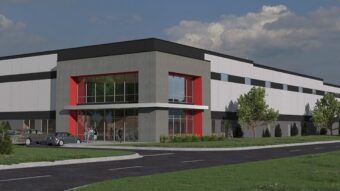
Elgin Recycling’s new recycled electronics processing facility in Gilberts, Illinois, completed earlier this year, illustrates how a company can align its real operational needs and project delivery method to support long-term growth.
The company had an established electronics recycling operation in leased space, but the building offered limited expansion options and was not located near its headquarters, impacting operational coordination and long-term planning. Several years earlier, however, Elgin Recycling had purchased the last vacant parcel in the same business park as its headquarters and one of its scrap yards, creating an opportunity to build a facility tailored to its electronics recycling operations while consolidating key functions in one location.
By selecting Opus Design Build as their design-build partner, Elgin Recycling was able to plan the building around its operations from the outset, including equipment layout, material flow, loading positions and site circulation. Because those decisions were made in coordination with construction planning and cost estimating, the company was able to make informed decisions about where to invest in the building for long-term operational efficiency while maintaining budget and schedule goals. The coordinated approach also allowed the project to move from design into construction efficiently, helping align the project timeline with the company’s operational needs.
The resulting dedicated facility is designed to support the company’s processing workflow, specialized equipment and data security requirements, including high-efficiency shredding and operations aligned with R2 data sanitization standards. The building allows for future growth and expansion, and its proximity to Elgin Recycling’s headquarters improves overall operational efficiency.
Aligning Facilities with Business Strategy
As industries evolve, facility requirements often evolve with them. In sectors like electronics recycling – where operational demands are shaped by both technological change and regulatory expectations – the ability to align design and construction with business needs is increasingly important.
Customized space offers a path to that alignment. By designing around operations, selecting locations that support efficiency and integrating design and construction, users can create facilities positioned to adapt alongside their business.
Luke Zizzo is a senior project manager with Opus Design Build and was responsible for overseeing construction of Elgin Recycling’s new recycled electronics processing facility. His 13 years in the construction industry have spanned the industrial, multifamily and senior living sectors and includes client direct, build-to-suit, speculative and tenant improvement projects. To learn more about Opus, visit www.opus-group.com.