Consumers may have traded malls for mobile apps, but in Chicago, the local strip center has never been busier. From nail salons to neighborhood grocers, service-based tenants are breathing new life into an asset class many once wrote off as outdated. Across the metro area, smaller centers are full, rents are rising and investors are quietly refocusing their attention on necessity retail — the kind that anchors everyday life. In short, neighborhood retail is the city’s quiet outperformer.
According to JLL’s Q2 2025 market report, Chicago’s retail vacancy rate has fallen to a near 30-year low of 4.9 percent — down from 8.6 percent pre-pandemic — underscoring just how tight the market has become. That tightness persists even with year-to-date net absorption in the red, a paradox driven by scarce quality space and minimal new supply.
“Retail continues to be very strong, with leasing activity and renewals remaining on an elevated pace,” said Charles Margosian III, managing principal of Highland Management Associates. “With limited new development and elevated construction pricing making new development difficult to ‘pencil,’ existing properties with availability have an advantage in the current market.”
New projects that do proceed tend to be smaller, highly pre-leased and strategically located — a sign of discipline rather than exuberance. Legacy properties, meanwhile, are benefiting from tenants who are staying put.
“It’s a very highly occupied leased market,” said Richard Tucker, CEO of Tucker Development. “Rents are stable and growing. Because of limited construction, the existing well located centers with good demographics have high occupancy and a growing income streams, which all generatesl, greater interest on the investment side.”
That interest shows up as tighter bidding for well-located centers and fewer concessions for stabilized assets. That sentiment echoes broader market performance. JLL found that more than 1.7 million square feet of negative net absorption through midyear hasn’t dented landlord leverage: investors still chase high-quality neighborhood centers because there’s so little to buy.
In Chicago’s fragmented landscape, access and demographics often make or break a deal. Tucker said his firm focuses on corridors with both density and convenience — “good traffic corridors with good access to the property.” Each of these plus drive times, daytime population and daily-needs tenants remain critical. Those fundamentals, he said, separate thriving centers from those lagging behind.
Investment, meanwhile, is catching up to a new reality. As interest rates remain elevated, capital has shifted toward properties with predictable performance rather than aggressive growth potential. Margosian noted that “the investment market is still adjusting to the new ‘normal’ of higher interest rates,” but the bid-ask spread is narrowing as sellers reset and trades clear closer to market.
“We are encouraged in that we see more deals transacting at current market price,” Margosian said.
That renewed confidence stems partly from how the definition of “retail” has evolved. E-commerce no longer replaces storefronts; it reinforces them. Click-and-collect, delivery staging and showrooming push transactions back to the store.
“We have seen e-commerce become a complement to retail bricks and mortar instead of [the] oft-forecasted downfall with good retailers adapting their brick-and-mortar strategy to complement their online offerings,” Margosian said.
The result is a network of smaller, service-based tenants — restaurants, medical users and fitness brands — that meet daily needs and generate consistent foot traffic. These users renew more often, resist pure online substitution and create predictable cash flow.
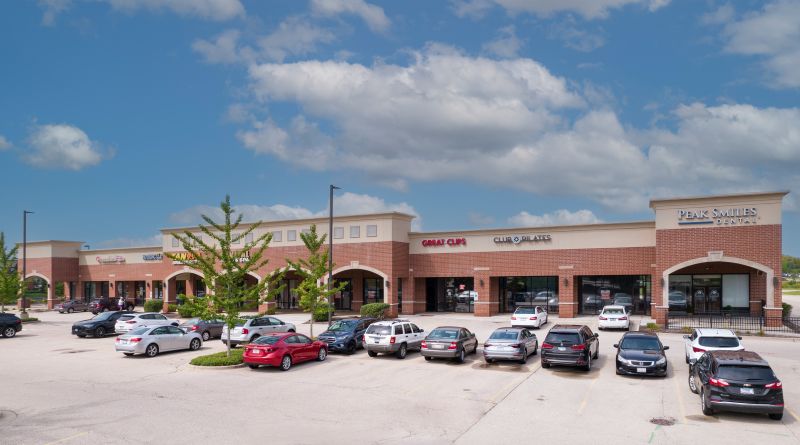
Reliability is exactly what Tucker’s latest investment strategy is built on. While many developers chase mixed-use megaprojects, he’s leaning into the overlooked workhorses of retail: unanchored strip centers. His firm recently launched a fund to acquire what it calls “necessity-based retail centers” throughout Chicago and the Midwest.
“It’s the services, it’s food, it’s all the basics,” Tucker said. “The key now is using our 40 years of experience in retail to acquire the best centers with necessity based tenancy and durable cash flow.”
The appeal, he explained, lies in the tenant mix and tenure. Tucker said one factor that’s particularly important is the weighted average lease duration — how long tenants have actually stayed rather than how long they’re obligated to. For investors, actual tenure is a better proxy for durability than credit ratings — longevity matters more than paper credit.
“The tenants tend not to relocate,” Tucker said. “It’s not so much focused on the credit of the tenants. But it’s more about the operational history and the business.”
Because these centers are made up of smaller, locally owned spaces — often 2,000 to 4,000 square feet — vacancies have a limited ripple effect. One 2,500-square-foot move-out is a reletting exercise, not a thesis-breaker.
“If you had a few of those that happen, it doesn’t impact the portfolio like the larger boxes do,” Tucker said.
The model provides stability, diversification and an opportunity to add value through better management and leasing. Simple fixes — better parking flow, lighting, signage, patio rights — often move the needle more than capex-heavy redevelopments.
Many of these assets have been held by local families for generations and are now coming to market. Tucker called it “a very fragmented industry from the standpoint of the strip centers,” describing a wave of owners no longer interested in owning and managing their assets or lacking succession plans. That churn has opened the door for well-capitalized operators to modernize tired properties without overspending on construction.
“Construction costs are starting to stabilize, but are much higher than pre-pandemic,” Margosian said. “It makes development returns very difficult and even poses challenges to re-tenanting spaces, especially large boxes.”
Data backs that up: only about 600,000 square feet delivered through the first half of 2025, and roughly 78 percent of projects were pre-leased before completion — clear evidence of developers’ caution and tenants’ commitment to physical retail.
Limited new supply, in turn, sustains rents for existing centers — keeping occupancy high and concessions modest in the best corridors.
Retail performance across categories reflects those same consumer habits. Margosian said “service and medtail seem to continue to be strong users,” while the rise of resale and consignment stores shows how younger buyers favor value and uniqueness over labels.
“We believe this trend will continue with Millennials, many of whom are motivated by experiences and unique items vs. ‘brand names,’” Margosian said.
For Tucker, necessity retail isn’t just a short-term play — it’s a cornerstone of a long-term portfolio strategy. His firm’s past developments — District 1860 in Lincolnwood and The Henry in Skokie — combine multifamily living with essential retail, reflecting how urban convenience now drives suburban design.
“We see it as an exciting place to be,” Tucker said. “It’s one of the pieces of our puzzle that we think is important, and we’re focusing on it.”
As JLL notes, the market is trending toward equilibrium as supply stays muted and occupier demand remains steady — a setup that rewards patient ownership and hands-on leasing. Despite persistent narratives about the city’s fiscal challenges, both leaders share a pragmatic optimism rooted in experience.
“The reality of Chicago vs. the perception will continue to provide opportunities for people who really know the market,” Margosian said. “Chicago remains a major metropolitan center where people want to live, work and play.”
And in that reality, the humble strip center looks less like yesterday’s format and more like tomorrow’s cash flow.