Chicago invented the skyscraper, rebuilt itself from ashes and turned its lakefront into a public trust. The city’s development story has never stood still and the current chapter may be one of its most ambitious. A $7 billion campus is rising on the West Side, a casino resort is taking shape on the river, quantum computers will soon be manufactured where steelworkers once poured slabs and a Fulton Market tower is about to heat and cool itself with the earth below. Here are four projects Chicagoans are watching.
The 1901 Project
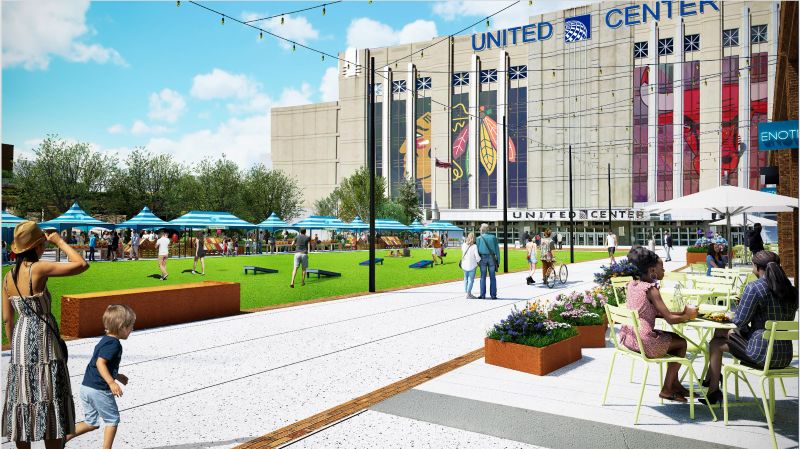
The largest development in West Side history broke ground in June, launching Phase 1 of the $7 billion campus surrounding the United Center. The first phase includes a 6,000-seat music venue, a 180-key hotel, more than 80,000 square feet of retail, public open space and two parking garages with a mid-2028 target for completion, according to Colleen Quinn, Senior Director of Communications and Public Affairs for the United Center and The 1901 Project. Construction is active on the west garage and music hall sites and passersby at Damen and Adams can already see cranes in the air.
“The families are committed to developing in this community and presenting local residents with a neighborhood of choice backed by economic opportunity,” Quinn said of the Reinsdorf and Wirtz families, who are funding the development privately after more than 30 years as West Side neighbors.
Full buildout calls for 25 acres of parks and open space including an elevated park, more than 5,000 residential units and 660,000 square feet of office space. More than 20% of the housing will be affordable, Quinn said, with additional workforce and student housing planned. She estimates Phase 1 will generate roughly 2,000 construction jobs, growing to 32,000 at full maturity, alongside 7,000 permanent positions.
“Our history lives on the West Side of Chicago,” Quinn said. “We plan to be here for another 100+ years investing in the community, delivering economic opportunities for local residents and creating a neighborhood where the unifying power of sport, music and culture connects the city.”
Bally’s Chicago
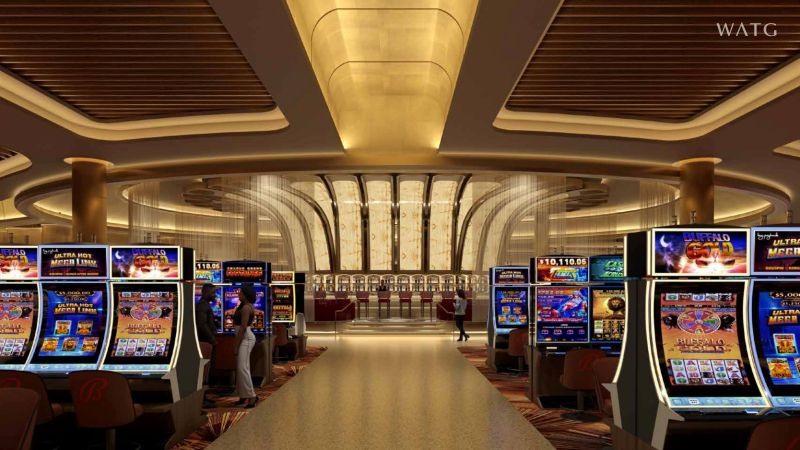
Bally’s topped off its permanent casino at 560 W. Grand Ave. this spring, shifting the project from vertical construction to interior build-out ahead of a 2027 opening. The integrated resort will bring a 500-room hotel, a 3,000-seat theater, a comedy club, dining concepts curated with Chicago-based Levy and an expanded riverwalk to a stretch of the Chicago River that has long sat disconnected from its surroundings, according to Christopher Jewett, Senior Vice President of Development for Bally’s Corp.
“Our goal is to create a destination where guests come to stay, dine, be entertained and experience Chicago, not to just simply visit a casino,” Jewett said.
The economic case reaches beyond the gaming floor. Jewett expects approximately 3,000 permanent jobs upon opening and more than 1,500 union tradespeople have already worked on construction. He projects sustained spillover for hotels, restaurants, retailers and entertainment venues across River West and downtown along with dedicated tax revenue for the city.
“It’s designed to complement, not compete with, the surrounding neighborhoods by creating another reason for residents and visitors to spend more time exploring Chicago,” Jewett said.
Illinois Quantum and Microelectronics Park
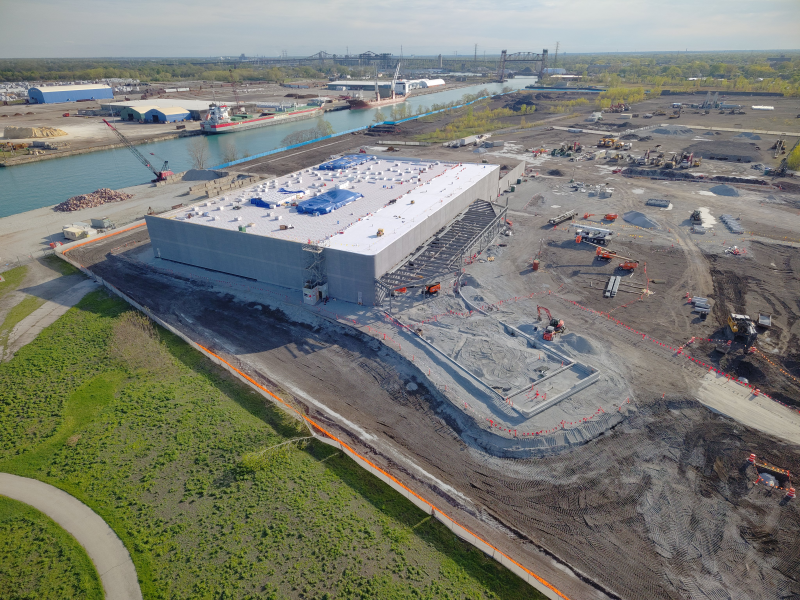
The most improbable entry on the watch list sits at the former U.S. Steel South Works site, where the Illinois Quantum and Microelectronics Park occupies 128 acres of the larger 440-acre Quantum Shore Chicago redevelopment. The land that produced steel for skylines across America sat vacant for three decades after the mill closed in 1992. Now it is being transformed into a campus for quantum technology and advanced microelectronics anchored by PsiQuantum’s roughly 580,000-square-foot facility, which broke ground Sept. 30, 2025 and is expected to begin operating in May 2027.
“The site’s transformation into a global destination for quantum technology and advanced research reflects the enduring strength of Chicago’s industrial legacy and the neighborhood’s role in shaping industries of the future,” an IQMP spokesperson said.
The tenant roster reads like a who’s who of the industry: IBM, Infleqtion, Diraq, Pasqal, Zero Point Cryogenics and Quantum Machines have all committed along with DARPA’s Quantum Proving Ground program. Tenants have pledged more than 1,000 jobs at the park, according to IQMP officials, and a 2024 Boston Consulting Group analysis projects as many as 191,000 quantum technology jobs across the Illinois-Wisconsin-Indiana region by 2035. Partnerships with Chicago Public Schools, City Colleges of Chicago and Chicago State University aim to build the local talent pipeline.
410 N. Elizabeth
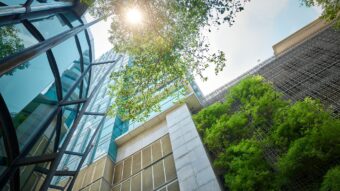
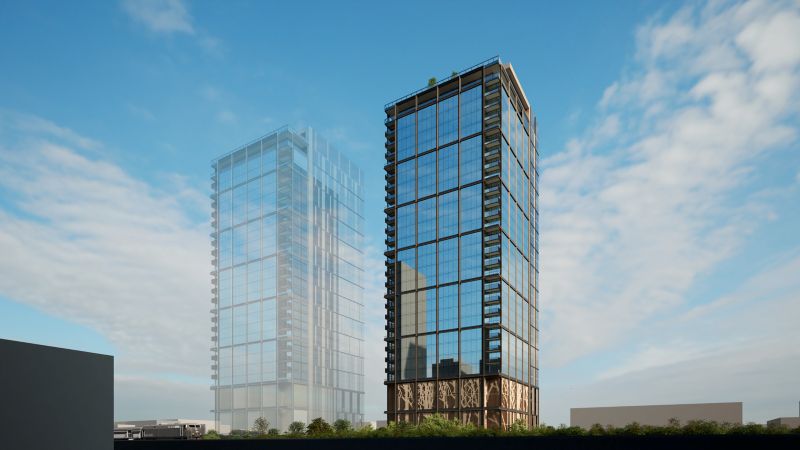
Innovation on the watch list also comes at the scale of a single building. Construction is underway in Fulton Market on Chicago’s first geothermal, all-electric multifamily high-rise, a 33-story tower from Tree Street Group, Magellan Development Group and Mark Goodman & Associates. The building at 410 N. Elizabeth St. will deliver 383 units, 77 of them affordable, as the first phase of a two-tower development that will eventually total more than 724 units.
The geothermal system developed and operated by Infinite Energy Partners is designed to cut energy usage by up to 60% while handling all heating, cooling and domestic hot water electrically. The developers project 30% lower emissions and 25% energy-related cost savings, aided by a triple-glazed window wall system.
“Reaching this milestone is a result of the dedication and vision of our project partners, the faith of our investors in our construction-informed design model, and thoughtful collaboration with city officials and the community to create what we expect will become a model for sustainability and a beautiful addition to the neighborhood,” said Rodrigo d’Escoto, Principal at Tree Street Group.
The project adds public amenities beyond its walls including ground-floor retail, a publicly accessible park and a 30-foot-wide pedestrian street that will eventually connect Elizabeth Street to Ogden Avenue and the planned Fulton Market Metra station.