How to sum up the 2025 U.S. industrial market? CommercialCafe in its latest industrial report used the word “moderation.”
In its December 2025 National Industrial Report, CommercialCafe said that the industrial sector had a sluggish last year as it struggled to absorb the space that flooded the U.S. market during the boom years of 2020 through 2024.
According to CommercialCafe, from 2020 to 2024 more than 2.5 billion square feet of industrial space was built across the United States. Even though this included build-to-suit and pre-leased space, this surge of new supply resulted in rising vacancy rates and moderating rent growth last year across the country.
Industrial construction in the United States then dropped sharply in 2024, CommercialCafe said. That didn’t change last year, as new industrial deliveries again stalled in 2025.
But that isn’t the only big trend. CommercialCafe also pointed to tariff-driven volatility as a contributor to the industrial sector’s challenges in 2025. CommercialCafe reported that in the first months of last year, companies stockpiled goods in anticipation of import tariffs. Then delays in tariff implementations and tariff level cuts brought further uncertainty for companies that relied on international trade.
A new tax law is making an impact on the U.S. industrial sector, too. The law, enacted last year, is designed to encourage domestic production of goods. But it also eliminated the tax credits for the production and purchase of electric vehicles and green technology, both industries that had driven a significant amount of the manufacturing sector’s recent growth.
CommercialCafe also cited tariffs on steel and aluminum that have raised production costs for companies that rely on these materials.
“Uncertainty reigned supreme in 2025,” said Peter Kolaczynski, director with Yardi Research, in a statement. “Between tariffs and their economic effects, AI and the volume of data centers needed to support it and fluctuating EV and battery trends, resilience and flexibility became key traits for owners, developers and occupiers.”
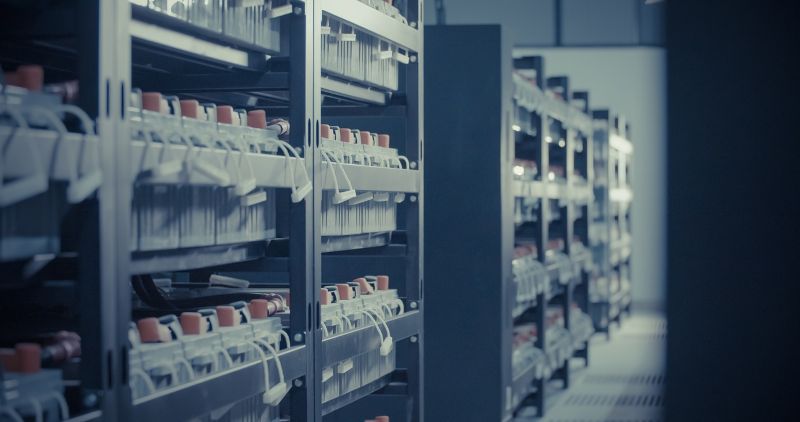
Not all subsectors of the industrial market performed equally last year. CommercialCafe cited data centers as the darling subset of the industrial sector, with tech companies pumping billions of dollars into massive facilities as they expand their generative AI capabilities.
CommercialCafe says that there is a growing investor appetite for industrial outdoor storage, with occupiers seeing it as a low-cost option for filling gaps in their supply chains.
Nationally, the average industrial rent hit $8.76 a square foot in November of 2025. That represents a 12-month change of 5.7%, according to CommercialCafe. The U.S. industrial vacancy rate stood at 9.7% in November of last year.
In the Dallas-Fort Worth Market, CommercialCafe reported that the average industrial rent was $6.77 a square foot in November while the average vacancy rate was 11.2%.
In Columbus, Ohio, the average industrial rent in November of 2025 was $5.34 a square foot while the average vacancy rate was 11.8%. In Cincinnati those numbers stood at $5.27 and 8.6%.
When it comes to industrial space under construction, Texas markets are leading the pack. CommercialCafe reported that the Dallas-Forth Worth market had 31.5 million square feet of new industrial space under construction as of the end of last year, while the Houston market had 21.9 million square feet in the pipeline.
Chicago ranked fourth in the country with 13.7 million square feet of new industrial space under construction as of the end of 2025. Columbus was right behind in fifth place with 12.9 million square feet, while Memphis had 12.8 million square feet in the pipeline.
In Indianapolis, 7.4 million square feet of new industrial space was under construction, while that figure stood at 6.1 million square feet in the Minneapolis-St. Paul market.
Year-to-date industrial sales totaled $68.4 billion in the United States as of the end of November of last year. CommercialCafe said that this puts 2025 on track to be the best year for industrial transactions since 2022.