The biggest misconception about Chicago retail right now, according to Michael Flinchbaugh, is that there is too much of it.
“In reality, quality space — especially in strong neighborhood corridors — is extremely limited,” said Flinchbaugh, Associate Director at Bradford Allen. “Well-located storefronts are leasing quickly, and many markets are effectively supply-constrained, which continues to support rent growth and landlord leverage.”
That gap between perception and reality is rooted in how little high-quality retail space is actually available where tenants want to be. In many of Chicago’s strongest corridors, limited redevelopment, high replacement costs and entrenched ownership have kept supply tight even as demand has shifted geographically.
The divergence traces back to a shift in consumer behavior that took hold during the pandemic and has not reversed. As more residents settled into working and spending closer to home, neighborhood corridors absorbed the foot traffic that once flowed toward downtown destinations. Retailers followed.
“Neighborhood retail corridors have leased up well post-COVID as consumer habits shifted toward working and spending more time closer to home,” Flinchbaugh said. “That has translated into stronger, more consistent foot traffic in areas like Armitage, Southport and similar corridors, where retailers are seeing daily activity rather than relying on office-driven demand.”
That shift effectively redistributed demand away from downtown and into neighborhood corridors, where daily residential activity now drives a more stable customer base.
Downtown has not been left behind entirely. The Magnificent Mile and other legacy retail districts have seen renewed interest in experiential concepts. Flinchbaugh cited The Hand & The Eye as an example of the kind of destination-oriented use that gives consumers a reason to make the trip. But the Loop’s recovery is still constrained by the hybrid work week. Tuesday through Thursday are the busiest days; Mondays, Fridays and weekends remain noticeably lighter. For retailers dependent on steady daily traffic, that inconsistency is a real obstacle.
National brands have taken note and many are choosing neighborhood locations precisely because the customer base is more predictable. Flinchbaugh pointed to Anthropologie’s presence on neighborhood corridors and newer-to-market concepts like Hotel Chocolat and Rails as examples of brands selecting those locations for their strong demographics, consistent foot traffic and close alignment with their target customers.
“Typically, national retailers have the financial resources to pursue space in higher-rent corridors and can provide landlords with a comfortable degree of leasing certainty,” Flinchbaugh said. “For local and independent operators, that can create more competition for premier locations, although many continue to succeed by targeting neighborhoods where their concept and customer base are a strong fit.”
Much of that demand has also been reinforced by a broader shift toward smaller store footprints, as operators look to reduce occupancy costs while maintaining sales performance. That flexibility has accelerated absorption in neighborhood locations, where right-sized spaces are leasing quickly and availability remains limited.
Experiential retail has been another consistent source of demand, though Flinchbaugh cautions against treating it as a monolithic category. The universe of uses spans established fitness and wellness operators, newer boutique concepts and emerging medical wellness formats, and landlords and lenders evaluate each on its own merits rather than underwriting the category as a whole.
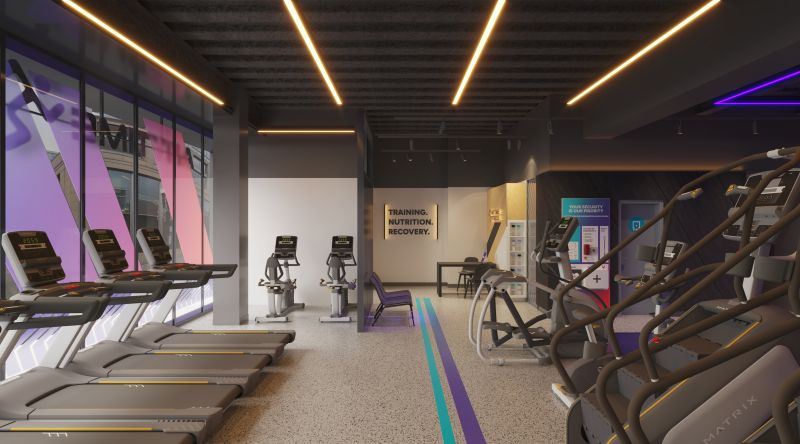
The Anytime Fitness lease Flinchbaugh recently completed at Belmont and Clark in Lakeview illustrates what draws these operators to neighborhood locations. The brand, operating under Omega Fitness Holdings, selected the site for its heavy foot traffic, transit access, young neighborhood demographic and the pull of co-tenants like Target that generate consistent visitation. A landlord with buildout capabilities sealed the deal.
Underneath all of it, Flinchbaugh sees a retail sector in the middle of a longer identity shift.
“Increasingly, locations are being used as brand-building and customer-engagement tools rather than purely as places to transact,” he said. “That shift is influencing everything from site selection to store size, and it will continue to shape leasing decisions across the market.”
The outlook through 2026 and into 2027 is cautiously optimistic with solid fundamentals in well-located neighborhood corridors and grocery-anchored suburban centers. Interest rates, economic growth and consumer confidence remain the variables that could tighten or loosen that picture.
But in the corridors where quality space is already scarce, landlords continue to hold the advantage, and that imbalance is unlikely to change soon.