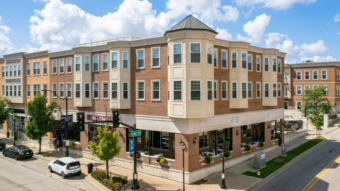
The United States is experiencing an affordable housing crisis.
The U.S. needs 5 million more homes than it currently has. And even those who have homes are struggling, as 40% of renters are cost-burdened, while housing prices are rising faster than wage growth in 80% of U.S. markets, according to the Kenan Institute of Private Enterprise.
People may disagree about what the path forward looks like, but any path forward must include cooperation. The federal government, state governments, local jurisdictions, the private sector, not-for- profit organizations – there is plenty of opportunity to work together to manage the housing crisis. Yet, there is no one-size-fits-all solution. Collaboration between the housing industry and all levels of government remains the key to determining a tailored solution to the housing emergency facing each individual community.
Examining a critical connection
Understanding the relationship between the workforce housing crisis and local economic development needs is an important first step toward ultimately developing a plan, policies and solutions to bridge the gap and providing housing options for our workforce.
If communities do not have sufficient housing for their workforce, there will be an ongoing challenge to achieve economic growth.
At a high level, cities need affordable, available housing to attract workers to their community in the first place. A city can have hundreds of schools, daycares, entertainment complexes and restaurants, but if the workers have nowhere to live nearby, then there will always be a workforce shortage.
The workforce housing crisis, as we see it.
Baker Tilly has the advantage of being able to view the workforce housing crisis from two distinct perspectives: our public sector practice and our housing development practice. Our specialized teams understand and empathize with communities that are rapidly trying to come up with answers amidst unique situations, seeking to digest and manage all the complexities related to housing development, including site reuse and redevelopment for housing, public sector programs and incentives, project financing, construction risk management and every aspect of real estate.
The intersection of these firm specializations viewed through a workforce housing crisis lens can employ solutions to create a road map for long-term success.
Understanding the specific issues within your community:
- Recognize that housing is part of economic development. While most people in the economic development industry are focused on growth strategies and re-development planning, it is common for people to lose sight of the housing element. Approaches for community growth in terms of economic and redevelopment strategies and incentives programs can lead the path forward.
- Engage with your employers. An underrated strategy for creating jobs in your community is to organize an open forum that encourages local businesses to talk about what they need.
- Study the housing market. A thorough housing assessment (including a gap analysis) should help further highlight the current state of the region while determining what the community needs to do from a housing standpoint.
- Establish a housing taskforce. This taskforce should include representatives from both the public and private sector and not-for-profit organizations. Together, the taskforce should form an action plan with specific strategies that the local government and housing developers can take to turn the community’s issues into action.
- Determine the funding options. Configuring your ability to leverage different funding options is like solving a puzzle. You must get creative and examine every alternative to maximize your funding options.
- Prepare the developers for success. Along with clear processes, communities can also set the stage for workforce housing development through updated zoning codes and considering ways in which higher-density housing and other factors play a role in increasing development.
Communication-based solutions
- Community awareness. Housing professionals should sound the alarms throughout the community, making it clear that a lack of workforce housing will ultimately result in fewer jobs and less growth in the community.
- Strategic networking. Staying connected with economic developers is a necessary step. If you make a concerted effort to bring them into your community, you’ll quickly find that economic developers have many similar interests.
- Connect with statewide housing agencies. Statewide housing agencies are a key resource for connecting the state and local governments with the economic developers in the region.
Next steps
These are basic ideas of how to get started, but obviously the workforce housing dilemma isn’t going to be solved with easy answers or simple steps. Connect with our specialized teams If you would like to discuss tailored solutions for your community and address your workforce housing challenges.
Donald Bernards is principal in the real estate group of Baker Tilly, working from the company’s Madison, Wisconsin, office. Jolena Presti is managing director with Baker Tilly’s public sector advisory practice and works from the company’s Milwaukee office.