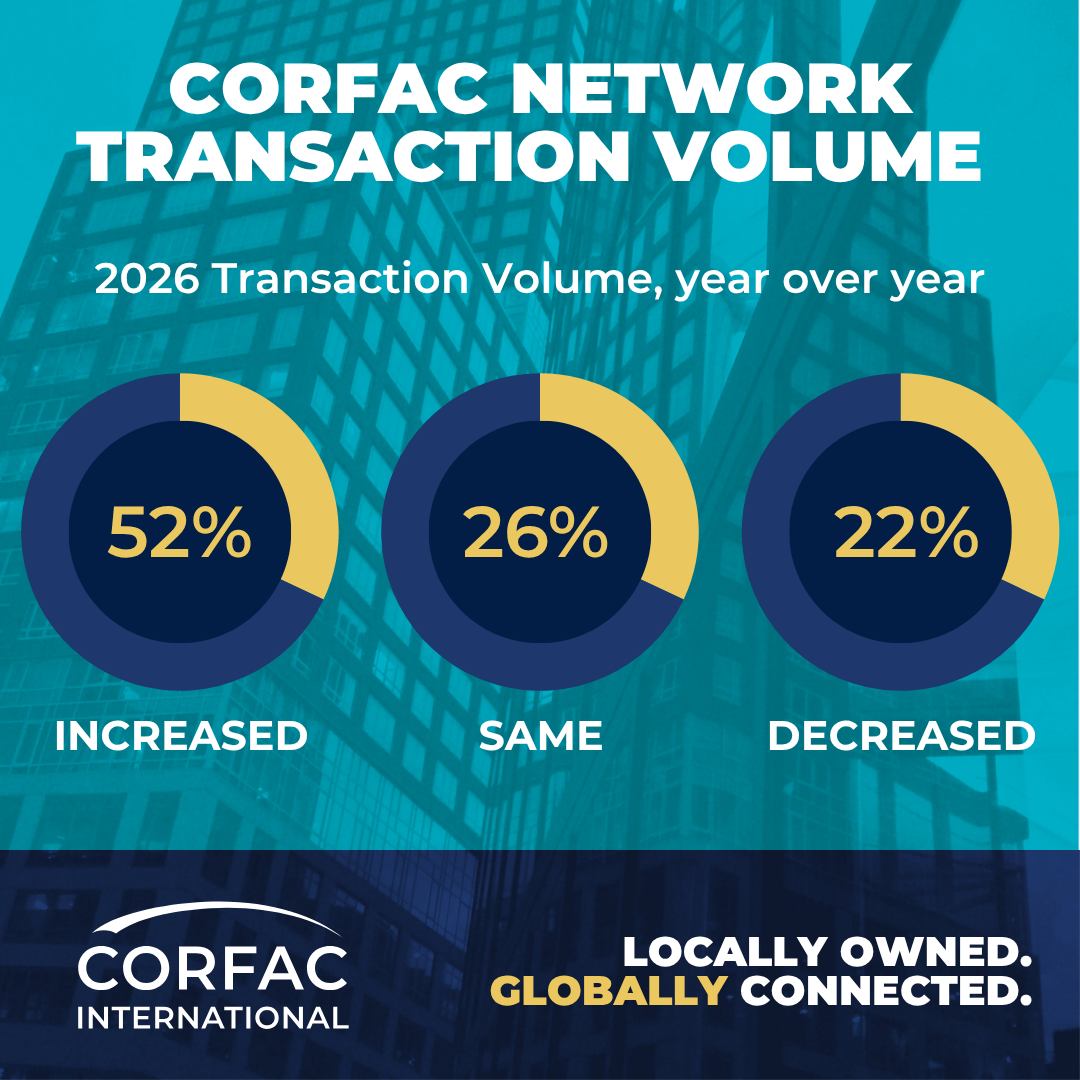
CORFAC International’s survey of members earlier this year demonstrated that the commercial real estate sector as a whole and transaction activity within specific sectors are seeing growth. More than half of surveyed members experienced increased transaction activity. Because of this trend, respondents from across the global network are expressing optimism about the market’s performance and the prospects for their businesses this year.
Continued Strength in Industrial
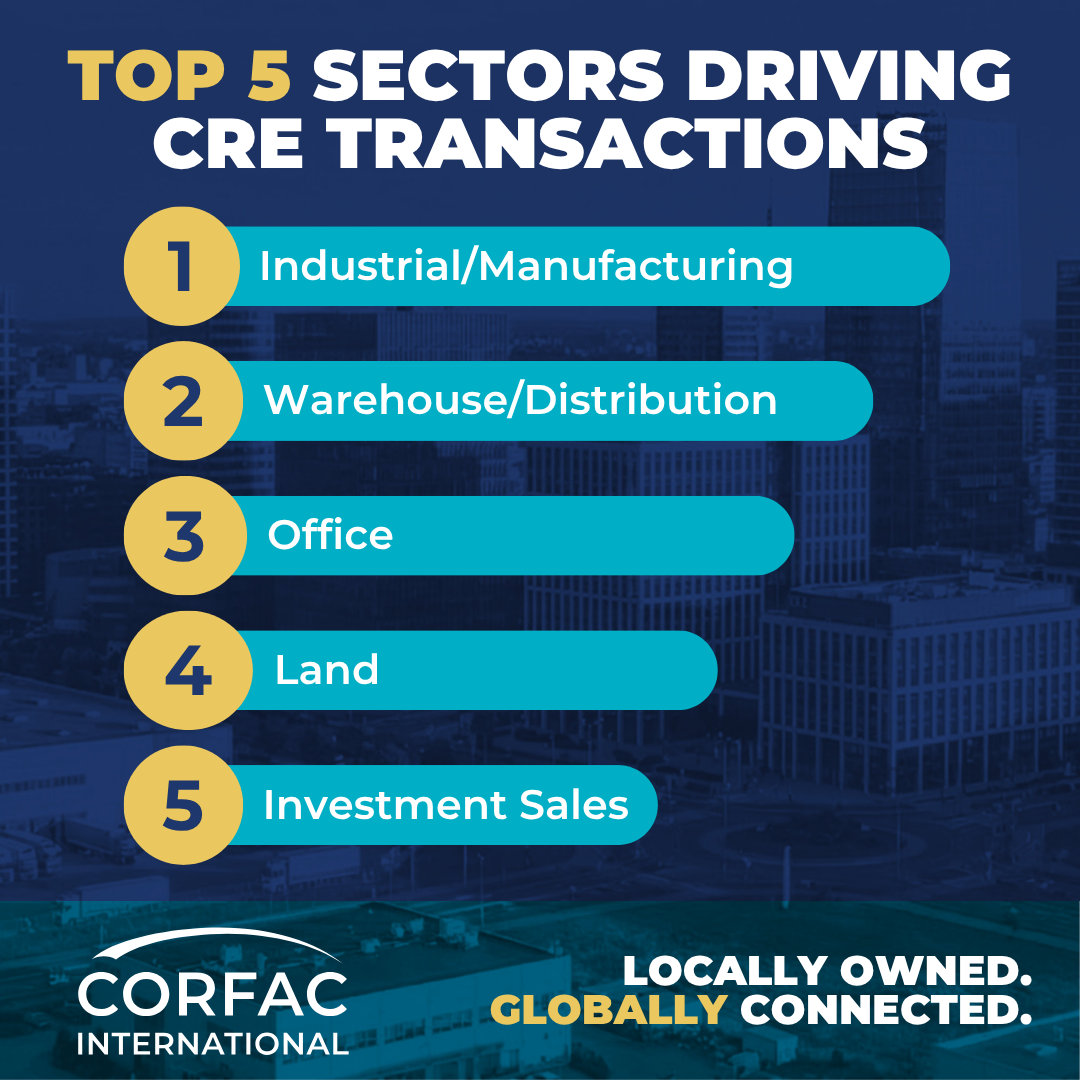
Industrial- and logistics-related sectors dominate transaction activity across the network so far this year. Manufacturing, noted by more than 70% of respondents, is the leading subsector driving business activity, with warehouse/distribution following close behind it. Office continues to drive select markets, and investment sales are showing a network-wide uptick as well. Meanwhile, retail transaction activity has slowed for most respondents.
Members expect industrial will continue to fuel business across the network for the remainder of the year. One member noted, “Advanced manufacturing users continue to drive industrial demand.”
The survey also revealed growing diversification of activity. Land transactions, particularly tied to multifamily development, are gaining traction. One respondent reported having “over $200 million under contract in land deals driven by multifamily development to combat the affordable housing crisis,” signaling a shift toward development-driven opportunities in growing markets.
Office and Retail Are Still Evolving
Though office remains a smaller share of expected growth, the subsector is not dormant. Respondents highlighted a continued shift toward smaller, more efficient spaces, creating transaction activity. As one member explained, companies maintaining hybrid schedules are “looking to downsize and leasing smaller spaces with more buildouts.”
Retail also shows pockets of strength, particularly tied to development and experiential uses. One respondent reported recently completing a “25-acre land assembly for a grocery-anchored retail development,” reflecting how necessity-based retail continues to fuel activity.
The Good News: Transaction Activity Increases
Compared to the last fall’s survey results, transaction activity is growing across the network. More than 50% of respondents reported increased transaction activity and just over a quarter of members said activity has remained stable since. While others noted performance remains “highly dependent on the sector,” just over 20% said transaction activity declined in the first quarter.
Deal highlights reinforce this trend. Members reported significant transactions ranging from a $24 million industrial sale to multiple office leases exceeding 20,000 square feet. Another highlight reported is a 165,000-square-foot corporate headquarters project. These examples underscore continued deal flow across asset types and geographies within the network.
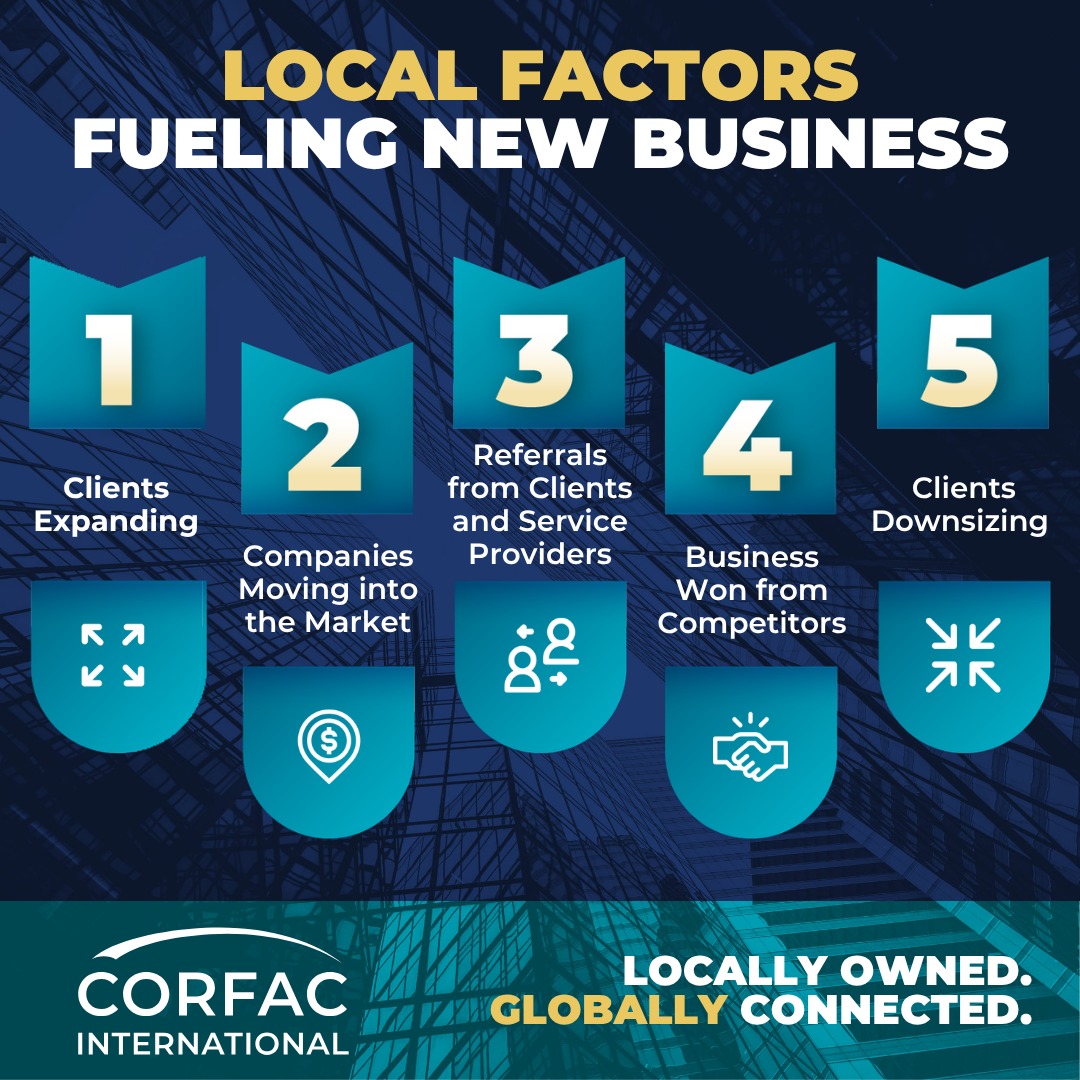
Top sources of new business among CORFAC firms so far this year include client expansions, business relocations into the market and referrals from local service providers. Collaboration and in-network referrals between CORFAC firms also continue to drive business.
The Bad News: Inflation and Interest Rates
Despite improving sentiment about the commercial real estate market overall, respondents reported inflation and interest rates as the most significant negative influences on transaction activity. Other factors, such as high costs for labor and construction materials, lack of available space and difficulty obtaining financing, are plaguing some markets.
How AI is Shaping CORFAC Member Operations
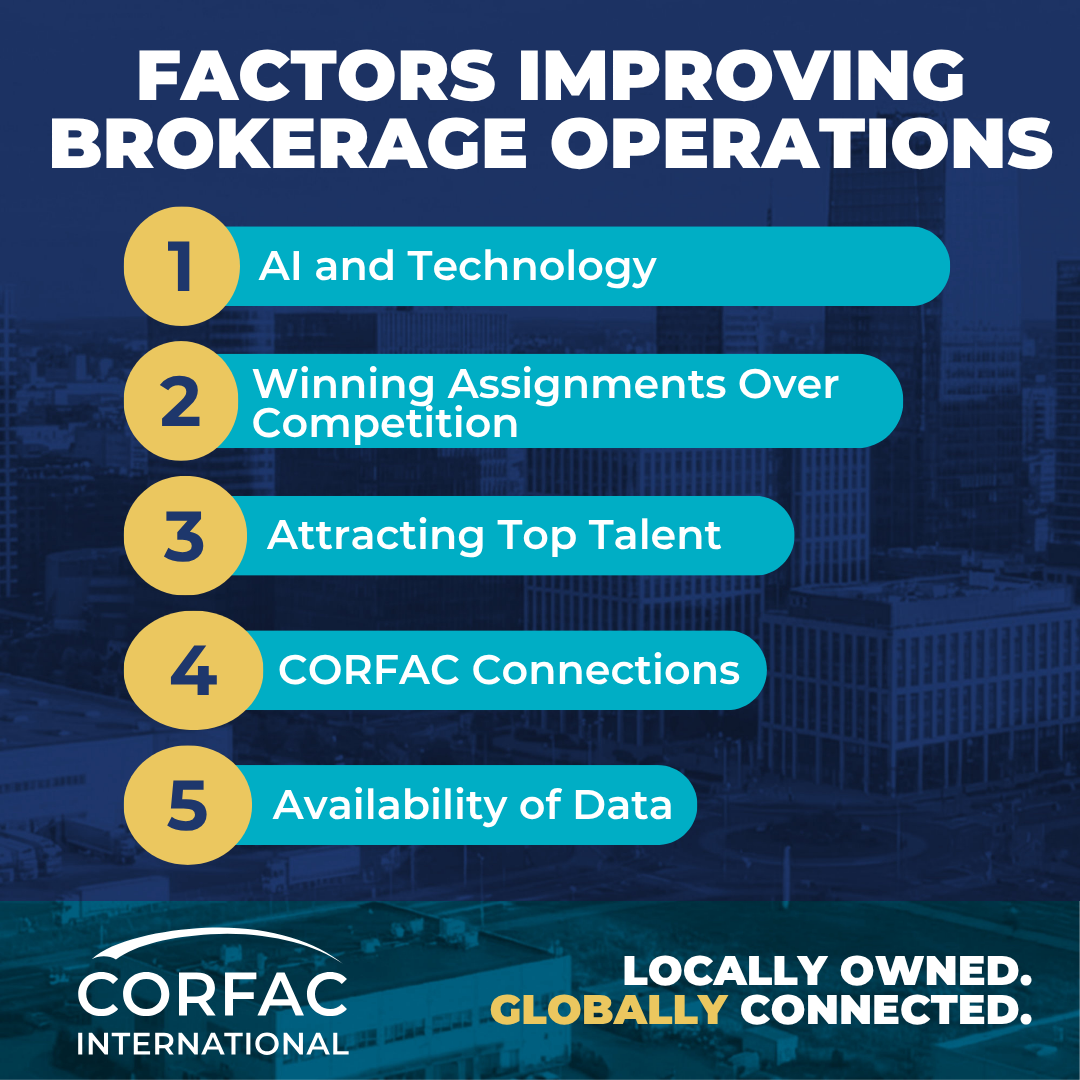
AI and new data technology are playing a growing role in enhancing operational efficiencies. AI and data availability were among the top positive influences on brokerage operations, along with attracting top talent and connections made through CORFAC. Although AI is having a positive impact on operations, some respondents also cited it as a disruptor. The question of how to incorporate AI effectively into daily workflow remains a key concern.
Throughout the rest of the year, member success will hinge on navigating the rapidly changing market. Brokers must look to capitalize on strong sectors while adapting to evolving client needs, economic realities, and technological change. CORFAC members and their clients can stay on the forefront even when encountering challenges by leveraging the network’s collective expertise and robust referral network.
Joe Santaularia, executive vice president at Dallas-based Bradford Commercial Real Estate Services/CORFAC International, is the current president of CORFAC International.