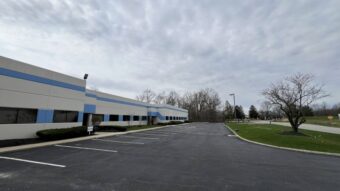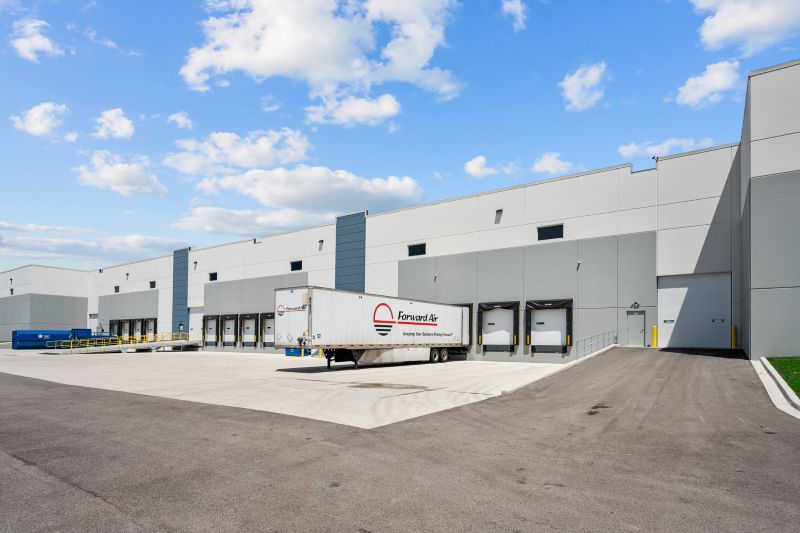
When 50 S. Fairbank traded earlier this year, the building carried no investment-grade tenant and no single-tenant profile to reassure buyers. What it offered was a shallow-bay, multi-tenant layout in an infill location that would be nearly impossible to replicate. It sold for a record price per square foot.
For Maxx Kossof, Vice President of Development and Acquisitions at The Missner Group, the sale captures where Chicago’s industrial capital markets stand at midyear 2026.
“Speculative development remains attractive because core buyers continue to pay premiums for high-quality assets,” Kossof said. “That premium is really a reflection of the broader flight to quality happening across the market, with capital increasingly concentrated on the best assets in the best locations and less patience for anything that doesn’t clear that bar.”
The capital behind that competition is deeper than it has been in years and lenders may be the most eager participants of all.
Lenders line up
Matt Robertson, Senior Vice President of Byline Bank’s Commercial Real Estate Group, said banks are seeing higher payoff levels this year than in the previous two and are hunting for new business to backfill their books. Activity runs from community banks through the largest institutions with private capital growing more aggressive and pressuring bank lending.
“Themes continue to be the same, which is that lenders are bidding aggressively in the same deals, which drives down pricing and loosens structure,” Robertson said.
The data backs up the anecdotes. Jaime Fink, Senior Managing Director and Managing Broker at JLL’s Chicago Office, said JLL’s proprietary credit index hit an all-time high in April 2026 with a near-record number of distinct lenders, from banks and credit funds to insurance companies, quoting simultaneously across every capital source.
“Debt is not the constraint right now — conviction is,” Fink said.
Borrowers feel it. Robin Stolberg, Executive Director of Acquisitions at Clear Height Properties, said local, regional and national lenders are actively financing small-bay industrial and debt today limits neither pricing nor Clear Height’s ability to close acquisitions.
Pricing that refuses to budge
Where all that capital lands on pricing depends on whom you ask. Robertson called cap rates relatively steady with no significant compression or expansion. Fink sees industrial cap rates down from fourth-quarter 2025 levels with Class A infill pricing tightest of all. Noel Liston, Managing Broker at Core Industrial Realty, expects any second-half compression to be slight given the recent rise in the 10-year Treasury yield. And Bryn Feller, Senior Vice President and Managing Director at Northmarq, pegs stabilized, well-located Chicago product in the mid-5% to low-6% cap rate range, down from the sub-5% deals of two years ago, a reset she reads as a market normalizing.
On one point our CIP sources agree: pricing has proven sturdier than the rate environment suggested it would be. Richard Prokup, U.S. CEO of Mapletree, has watched the disconnect with three decades of Chicago perspective.
“There’s a strong argument that prices should be going down right now because of interest rates, but they’re not,” Prokup said. “They’ve held and arguably have gone up a little bit. The increase in demand because of the market fundamentals is offsetting the impact of interest rates.”
Matt Goode, Managing Partner and Head of Investments at Venture One, said cap rates on core transactions have held steady in part because the rate cuts the market penciled in never arrived.
“If you went back six months, we were expecting rates to come down. That’s what the forward curve showed,” Goode said. “Sitting here today, I don’t know that our expectations are that rates are coming down. We’re all coming to terms with living in an interest rate environment that’s going to be flat, plus or minus, in the coming months.”
Small bay, big appetite
If the panel splits on cap rates, it speaks with one voice on product type: investors want small and infill. Goode said the steadiest activity is in core stabilized assets, tilting toward mid-bay buildings of 75,000 to 300,000 square feet, while warehouses of 700,000 square feet and up remain less liquid.
“Demand right now is greatest for true infill industrial where there are historically low vacancy rates and constrained development options that limit new supply,” Liston said.
The competition for that product is crowded but not indiscriminate. Stolberg said light-industrial, small-bay deals in Chicago consistently draw three to four local buyers plus another two to three regional or national players who participate selectively.
“Not every buyer has the experience and the expertise to underwrite these types of assets effectively,” Stolberg said. “These buildings are more complicated than Core and Core+ industrial.”
Institutional capital has noticed. Fink pointed to JLL’s Lucas Borges arranging $35.6 million in acquisition financing for a four-building, 411,781-square-foot infill portfolio across the O’Hare, Northwest Cook and North DuPage submarkets for a new joint venture between Matterhorn Venture Partners and TPG Angelo Gordon.
Money in motion
The next wave of capital is already forming. Venture One expects to launch its eighth investment fund within the next 30 days targeting $250 million to $350 million in equity for an acquisition strategy focused on deals between roughly $3 million and $30 million, Goode said. The firm is also expanding its land portfolio, including a recent site purchase along Interstate 80 in Morris.
Mapletree, meanwhile, has assembled roughly $500 million in development projects nationally that it plans to roll into a fund expected at or north of $1 billion, launching this fall, Prokup said. About 900,000 square feet of that pipeline sits in Chicago: a 150,000-square-foot light industrial building in Bartlett and two Joliet projects near the intermodal, a 312,000-square-foot rear-load building and a 420,000-square-foot cross-dock facility that broke ground last week.
Spec development is stirring as well. Liston said Core Industrial Realty is marketing a new project by High Street Logistics Properties in the I-88 submarket, where he pegs historical vacancy around 2%. The 147,000-square-foot building, expected to deliver at the end of 2026, will offer 32-foot clear heights and divisibility down to 40,000 square feet, aimed squarely at the sub-100,000-square-foot demand he calls the strongest in the market.
The risks worth watching
Not every signal points up. Feller describes her second-half outlook as cautiously constructive, with the caution rooted in trade policy.
“Companies that were actively in the market earlier this year have extended their timelines. They’re waiting for clarity on input costs and trade policy before they commit,” Feller said. “That doesn’t show up in vacancy data right away but it absolutely shows up in leasing velocity and if that hesitation carries into the fall it could soften the second half more than the headline numbers currently suggest.”
Liston is watching inflation. He noted that consumer prices in May 2026 ran 4.2% higher than a year earlier while average wages rose just 3.4% and said the combination of recent labor market strength, renewed Middle East volatility pushing up oil prices and a hawkish tone from the June FOMC meeting points toward a rate increase before a decrease.
Prokup, for his part, sees a structural driver gathering underneath the near-term noise.
“Historically, real estate has been considered a lagging indicator, but in this instance I think it’s actually a leading indicator,” Prokup said. “Manufacturing leasing is up 50% year over year. You’re going to start seeing all of this activity in jobs and economic growth over the next five to 10 years. But it is very real and we’re experiencing it in our portfolio.”