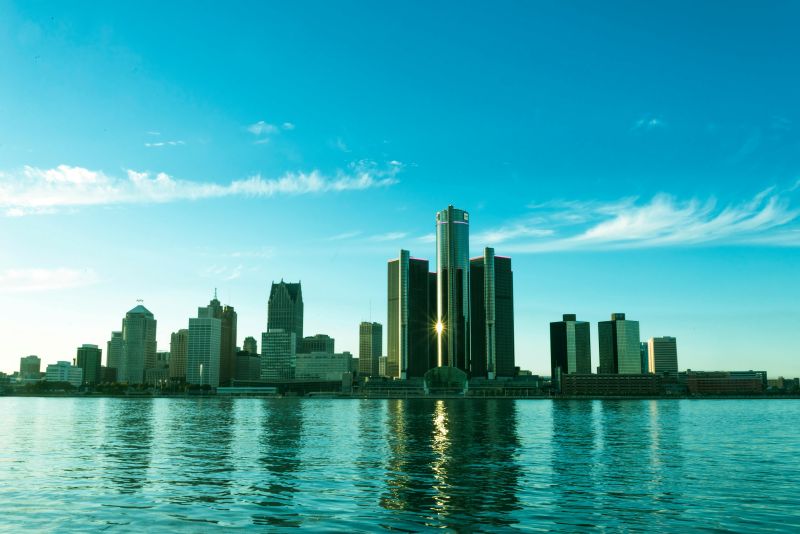
Investors didn’t flood the market for office properties during the first quarter of the year in the Detroit market. But the investors who did show up? They came with purpose.
That’s one of the main takeaways from Colliers‘ first quarter 2026 Detroit metro office report, released earlier this month.
According to Colliers’ report, a smaller, more deliberate pool of buyers emerged in the Detroit office market, targeting assets that offer either immediate stability or long-term upside. Flashy, speculative sales took a back seat as investors instead focused on location, architectural character and the potential to reposition properties over time.
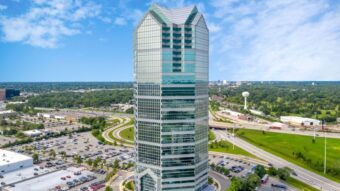
Nothing illustrated that dynamic better than the first-quarter sale of Huntington Tower in downtown Detroit.
As Colliers reports, the 422,437-square-foot office building at 2025 Woodward Ave. traded for $156 million, making it one of the largest office transactions in the city’s history. More importantly, the deal sent a clear message: Investors are still willing to bet big on Detroit’s urban core, especially along the resurgent Woodward Avenue corridor.
Beyond this headline-grabbing deal, office investment activity across the region remained steady. Total transaction volume for the quarter reached about $297.1 million. On average, properties traded for $56.05 a square foot, a figure that reflects both the diversity of assets changing hands and the cautious underwriting that defines today’s market.
Look closer at the smaller deals, and a pattern emerges.
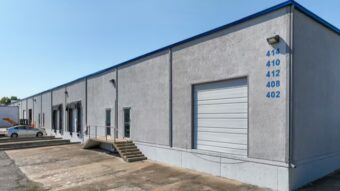
In Ann Arbor, buyers showed a clear appetite for office properties tied to strong economic anchors. Two buildings on Ranchero Drive—3923 and 3980—sold for $2.81 million and $2.36 million, respectively. That works out to $145.14 and $158.12 per square foot, significantly higher than the market average.
That premium isn’t surprising. Ann Arbor benefits from its proximity to the University of Michigan and a steady base of research, technology and healthcare tenants. For investors, that translates to durability, an increasingly valuable trait in today’s office sector.
The same theme played out in the suburbs.
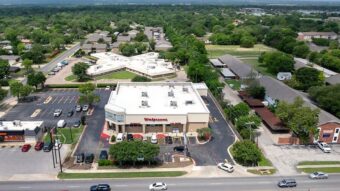
In Warren, the 14,500-square-foot building at 31200 Mound Road traded for $1.9 million, or $131.03 per square foot. While smaller in scale, deals like this highlight continued demand for properties in established employment corridors, where tenants still value accessibility and convenience.
A Detroit office market in transition
Other highlights of Colliers’ first-quarter Detroit office report showed that the region’s office sector remains in a period of transition.
The region’s office vacancy rate rose to 12.4% in the first quarter, up from 11.6% at the end of 2025. Even with that increase, the metro Detroit market remains in a stronger position than many U.S. markets, where vacancy averages closer to 14.1%.
The bigger number might be net absorption: negative 1.4 million square feet.
At first glance, that signals trouble. Look closer, though, and the decline is tied less to widespread weakness and more to a handful of major corporate moves that temporarily flooded the market with space.
The most notable example? Ford Motor Company.
Ford vacated its longtime offices at The Glass House in the West Wayne/I-275 corridor, consolidating operations at its nearby, expanded Ford World Headquarters. The move returned a significant block of older office space to the market, driving much of the quarter’s negative absorption.
Leasing activity told a more stable story.
Tenants signed roughly 692,000 square feet of deals across 160 transactions during the quarter, a steady pace that points to ongoing demand. Many companies chose to renew existing leases or “right-size” their footprints rather than relocate entirely. Suburban Class B buildings, in particular, continued to attract professional services firms, healthcare users and cost-conscious tenants.
Certain submarkets stood out. Ann Arbor/Washtenaw remained a bright spot, fueled by its connection to the University of Michigan and a deep base of research and technology tenants. Southfield and Troy also posted consistent leasing activity, even as they navigate higher vacancy in older office inventory.
Other markets showed more of a struggle. Southfield’s vacancy rate climbed to 25.2%, one of the highest in the region, reflecting ongoing challenges for aging high-rise buildings. At the other end of the spectrum, Monroe remained tight, with vacancy just above 5%, supported by a smaller but stable tenant base.
Average asking rents in Metro Detroit reached $21.87 per square foot on a full-service gross basis in the first quarter, according to Colliers. That is a significant discount from the national average of $35.96.
Ann Arbor/Washtenaw commanded the highest rents at $28.21 per square foot, while Flint remained the most affordable at $16.04. Across the board, landlords largely resisted lowering rents on well-located, higher-quality properties.
New construction, meanwhile, remained measured and highly concentrated. About 1.19 million square feet of office space was under construction during the first quarter, with more than 1 million square feet located in Detroit and the Pointes. Suburban development activity was minimal.