The Omaha commercial real estate market continues to post solid performances across several property sectors, with industrial, retail and healthcare leading the way.
According to Mike Homa, president of the Nebraska division for R&R Realty Group, the city’s steady growth, available land and business-friendly environment are helping keep development activity moving despite higher construction costs and lingering uncertainty in parts of the economy.
“Omaha remains a very attractive market for both developers and companies looking to expand,” Homa said. “There are opportunities across multiple sectors, and the fundamentals remain very strong.”
Industrial real estate, in particular, continues to stand out.
Homa said Omaha’s industrial market has been defined by a shortage of available space for several years. Vacancy rates have hovered at roughly 2%, making Omaha one of the tightest industrial markets among metropolitan areas with populations exceeding 1 million residents.
“There continues to be a lack of supply to meet demand,” Homa said.
Even as developers have steadily delivered new industrial facilities each year, demand has continued to outpace supply. That has left room for additional construction and created opportunities for both developers and investors.
The strength of Omaha’s industrial market reflects broader economic trends in the region. The metro area’s central location and transportation advantages continue to attract manufacturers, distributors and logistics companies looking for efficient access to markets throughout the Midwest and beyond.
Retail and healthcare properties are also performing well. One of the most notable examples of Omaha’s retail momentum can be found at Avenue One, located at the intersection of 192nd Street and West Dodge Road.
Homa said retail and restaurant development activity at Avenue One has accelerated significantly during the last several months, with several retailers and restaurants either new to the market or relocating to the development.
“This is the most significant new retail development in the past 20 years since Village Pointe opened,” Homa said.
The project also complements the adjacent Fountain Ridge office park, where R&R Realty has completed significant Class-A office and medical office developments.
The activity at Avenue One illustrates a broader trend occurring in Omaha: retailers and restaurants continue to see opportunities in the market, particularly in fast-growing western portions of the metro area where population growth is driving consumer demand.
Construction activity throughout Omaha also remains healthy. Homa said nearly every commercial property sector, with the exception of office, continues to see robust levels of new construction.
While construction costs remain elevated compared to pre-pandemic levels, developers are benefiting from a more stable pricing environment.
“Costs of construction continue to increase,” Homa said, “but the pace of increases has moderated from the years following COVID when double-digit increases in materials, labor and other costs were the norm.”
That moderation has made it easier for developers to underwrite new projects and move developments from the planning stages into construction.
Another factor contributing to Omaha’s development pipeline is the availability of land.
Unlike many larger metropolitan areas, Omaha still offers developers access to reasonably priced sites suitable for commercial projects.
“Land is readily available and reasonably priced,” Homa said.
He also credited local municipalities for maintaining a pro-development approach.
“The local jurisdictions are good to work with and encourage development, which keeps all parties aligned in creating projects that make sense,” Homa said.
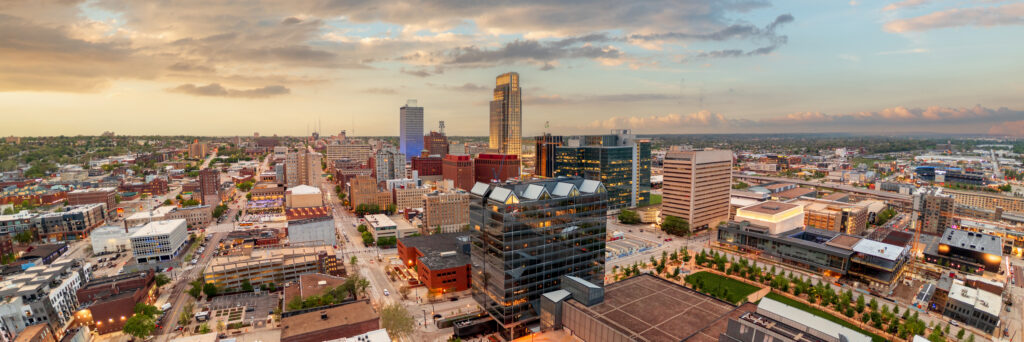
Office market still faces challenges
The office market, meanwhile, continues to navigate post-pandemic changes but is showing encouraging signs.
As has been the case in many markets nationwide, Omaha is experiencing an ongoing flight to quality. Companies are seeking higher-quality offices with strong amenity packages and are becoming increasingly selective about the space they occupy.
“Tenants today are choosing quality of space over quantity,” Homa said.
At the same time, businesses appear more willing to make long-term commitments to office space.
Homa said companies are again signing longer leases and investing in office buildouts designed to create environments where employees want to work and collaborate. That willingness to commit capital and sign long-term leases suggests a growing confidence in the role that office space will continue to play, even as workplace strategies evolve.
Taken together, the trends in industrial, retail and office real estate point to a market that continues to build momentum.
Plenty of momentum
From healthcare providers opening new facilities to retailers expanding into the market and mixed-use developments reshaping key corridors, Omaha continues to attract investment across multiple property sectors.
Trey MacKnight, senior associate and retail specialist with Omaha’s Cushman & Wakefield | The Lund Company, said that the city’s diverse economy and favorable business environment are helping fuel activity throughout the metro.
“Overall, Omaha continues to experience healthy growth across most commercial property types,” MacKnight said.
Among the strongest performers today are the healthcare and retail sectors.
Healthcare providers are investing heavily throughout the metro as they seek to meet growing demand from an expanding population. MacKnight pointed to Bryan Health’s entry into the Omaha market at Privada, OrthoNebraska’s continued growth and the ongoing expansion of the University of Nebraska Medical Center and the EDGE District as examples of healthcare providers’ confidence in the market.
The investments are creating not only new medical facilities but also jobs and additional development opportunities around these healthcare hubs.
Retail is also thriving. Omaha’s combination of strong household incomes, consistent population growth and expanding suburban communities continues to attract both national and regional retailers. New concepts are entering the market while local and regional operators continue to expand their footprints.
“We’re seeing new-to-market concepts such as Flower Child and Culinary Dropout enter the market while established local and regional operators continue to expand throughout the metro,” MacKnight said.
The healthy demand is helping spur new development across the city.
Construction costs remain significantly higher than they were before the COVID-19 pandemic, a challenge that has slowed projects in some markets around the country. Omaha, however, has largely continued to move forward.
“In fact, most residents will see multiple projects under construction during their daily commute, which is a testament to the overall health of the market,” MacKnight said.
Developers and tenants have adapted to the new economics of construction by underwriting projects differently, adjusting rental rates and modifying tenant improvement packages. The result is that projects in desirable locations continue to break ground.
One development that particularly excites MacKnight is Heartwood Preserve at 144th and West Dodge Road.
The mixed-use project has successfully created a destination where people can live, work, shop, dine and gather. The development has attracted an impressive range of tenants, including new-to-market restaurant concepts such as 30hop, established retailers including Gunderson’s and Mahogany Prime and office users such as Union Bank & Trust and Fidelity Investments.
“As additional tenants open and future phases are completed, I believe Heartwood Preserve will become one of the premier mixed-use destinations in the region,” MacKnight said.
Developments such as Heartwood Preserve highlight one of Omaha’s biggest strengths: its ability to attract both developers and expanding companies.
MacKnight said the metro offers a combination of economic stability, affordability and workforce quality that is increasingly attractive in today’s business environment.
The region benefits from steady population growth, a highly educated workforce and a business-friendly climate. Compared to many larger markets, companies can achieve lower occupancy costs while still having access to skilled workers.
“The collaborative business community and the reputation of ‘Nebraska Nice’ create an environment where companies feel welcomed and supported as they grow,” MacKnight said.
Mixed-use developments are another area of growing demand throughout Omaha.
Consumers increasingly want environments that allow them to live, work, dine, shop and access entertainment in a single location. Housing demand is playing a major role in this trend as developers seek to provide a wider range of residential options, including single-family homes, duplexes, apartments and build-to-rent communities. When those housing options are combined with retail, office and hospitality uses, they create destinations that appeal to both residents and businesses.
Projects such as Heartwood Preserve, the EDGE District and several emerging developments throughout the metro demonstrate that Omaha continues to embrace the mixed-use model, MacKnight said.
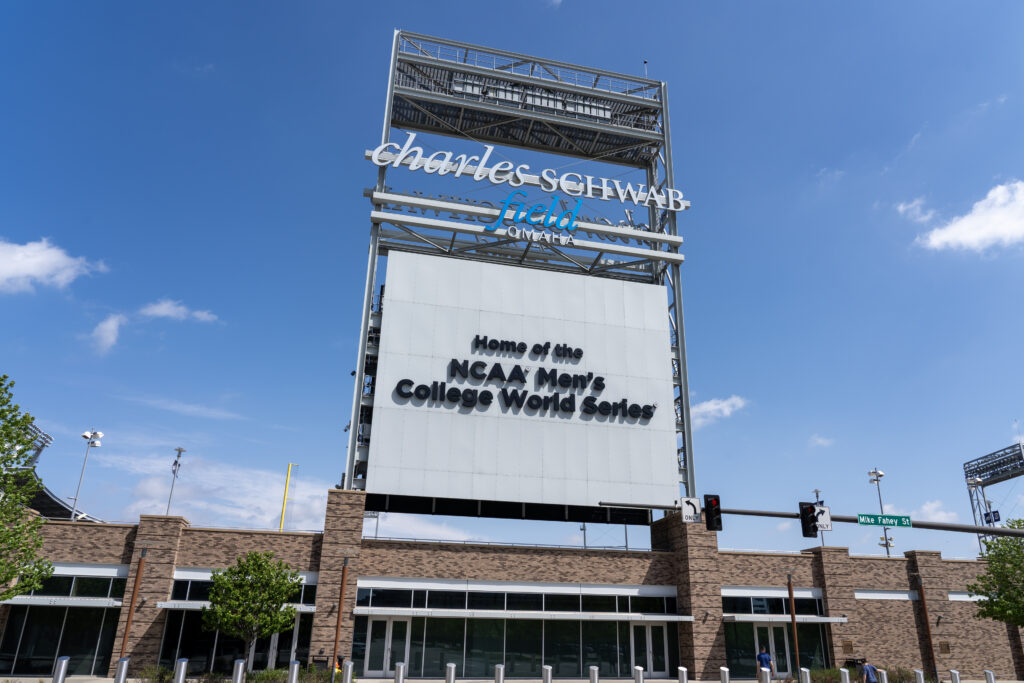
A retail surge
Samantha Estivo, associate broker with Omaha-based The Lerner Company, said that the city’s retail sector remains one of the market’s top performers.
As of the second quarter of 2026, Omaha’s retail vacancy rate stood at about 4.4%, a sign that demand for well-positioned space remains robust, especially along the metro area’s strongest retail corridors.
The market’s low vacancy rate is particularly notable because developers are continuing to add new retail projects. However, today’s economic conditions have changed the way these projects move from concept to reality.
“Higher construction and financing costs have made developers more selective,” Estivo said.
Instead of building speculative projects, many developers are moving forward only after securing tenants. Build-to-suit projects and developments with significant pre-leasing commitments are becoming increasingly common.
That measured approach has prevented a flood of new supply from entering the market and has helped maintain strong demand and low vacancies.
Even with higher costs, Omaha’s development pipeline remains healthy.
“We’re still seeing a healthy amount of commercial development across the metro,” Estivo said. “Projects continue to move forward when there’s strong demand, significant pre-leasing commitments, or public incentives that help bridge financing gaps.”
Several large projects underway across the metro demonstrate the confidence developers have in Omaha’s long-term prospects.
Among the most anticipated is the Crossroads development, a 40-acre mixed-use project rising at 72nd and Dodge Streets. Another is Avenue One, a 200-acre mixed-use development at 192nd Street and West Dodge Road. Also drawing attention is Gretna Crossing, a 70-acre mixed-use project at the intersection of 192nd Street and Highway 370 that is helping support growth in one of the metro area’s fastest-growing communities.
Estivo said these developments represent only a portion of the projects currently underway across the Omaha market.
The continued flow of development activity stems in large part from Omaha’s economic fundamentals.
“I think Omaha offers a combination of economic stability, affordability and steady growth that’s hard to find in other markets,” Estivo said.
The city benefits from a diverse employment base anchored by several major corporations, including Berkshire Hathaway, Union Pacific, Kiewit and Mutual of Omaha. These employers provide economic stability and have helped create a business environment that attracts companies looking to expand.
Omaha also benefits from nationally recognized healthcare and educational institutions such as the University of Nebraska Medical Center and Nebraska Medicine. These institutions continue to attract investment, generate jobs and bring new talent to the region.
Another advantage for Omaha is its relative stability during economic downturns. The market has historically experienced less severe economic swings than many larger metropolitan areas, according to Estivo. Combined with a lower cost of living than many competing markets, that stability has made Omaha an increasingly attractive destination for businesses, developers and residents alike.
One trend that continues to gain momentum throughout the metro is the rise of mixed-use developments.
“Demand for mixed-use developments remains strong,” Estivo said.
The popularity of these projects reflects changing preferences among both consumers and businesses. Residents increasingly want neighborhoods where they can live, work, shop and dine without traveling long distances. Businesses, meanwhile, appreciate the built-in customer base and increased activity that mixed-use environments create.
The prominence of projects such as Crossroads, Avenue One and Gretna Crossing highlights just how important mixed-use development has become to Omaha’s future growth strategy.
A stable, diverse market
Omaha’s commercial real estate market isn’t defined by one hot sector or one dominant employer. Instead, the Nebraska city benefits from something that many markets envy: stability.
That stability is helping drive robust activity in industrial and multifamily development while also supporting growth in retail, healthcare and mixed-use projects across the metro area, said Patrick Bartman, attorney with Omaha law firm McGrath North.
“Stability is the name of the game,” Bartman said. “Developers see Omaha as a less risky option than many other areas of the country.”
Omaha’s relatively affordable cost of living has made it an attractive destination for families and young professionals. At the same time, ongoing redevelopment projects in midtown and downtown Omaha and significant investments in the city’s urban core are encouraging apartment development throughout the market.
The industrial sector is equally strong. Omaha’s central location in the United States has turned the city into an attractive destination for logistics and distribution operations.
“New industrial construction is routinely leased or sold before breaking ground,” Bartman said.
Healthcare and retail properties are also performing well. Major healthcare institutions, including the University of Nebraska Medical Center, Nebraska Medicine and CHI Health, continue to drive development activity.
Those investments often spur mixed-use developments that then attract retail tenants. Bartman points to projects such as the Catalyst Building as examples of healthcare-related investments helping create broader commercial growth.
Retail, meanwhile, continues to benefit from population growth, particularly in west Omaha, and historically low vacancy rates.
Construction costs remain elevated nationally, but Bartman said they have done little to slow development activity in Omaha.
New projects continue to emerge throughout the city, ranging from multifamily developments to large mixed-use projects and new office headquarters that are reshaping Omaha’s skyline.
Among the projects Bartman highlighted are Heartwood Preserve, the Catalyst Building and the Builder’s District.
Part of the reason development has remained active despite higher construction costs is the variety of financing tools available to developers in Omaha.
Public-private partnerships, tax increment financing, Qualified Opportunity Zones, Sanitary and Improvement Districts and institutional investment all help developers assemble the capital necessary to move projects forward.
Mixed-use development has become one of Omaha’s defining trends.
“Omaha is having a bit of a mixed-use moment,” Bartman said.
For decades, Omaha’s growth focused primarily on westward expansion. More recently, however, attention has shifted toward urban neighborhoods as residents increasingly seek walkable communities and shorter commute times.
Fifteen years ago, Omaha’s entertainment districts were largely limited to the Old Market and Benson. Today, neighborhoods such as Aksarben, Midtown Crossing, Blackstone, Dundee, Little Bohemia, Millwork Commons and Heartwood Preserve have emerged as vibrant mixed-use destinations.
Demand from residents and favorable financing opportunities are combining to fuel additional mixed-use development across the city.
Bartman is especially excited about one project in North Omaha: the development of Omaha North High School’s new football stadium and the construction of a new Butler-Gast YMCA near 34th and Ames Avenue.
The area has historically been underserved and underinvested, making the project especially meaningful.
“It’s refreshing to see such a strong philanthropic commitment to this community,” Bartman said. “I’m optimistic it will be a catalyst for future growth.”
The office sector continues to face challenges, mirroring trends seen in many markets across the country. Even so, developers continue to pursue opportunities in emerging districts.
Heartwood Preserve, Builder’s District and Regency Landing all feature either speculative or build-to-suit office developments. And the under-construction Mutual of Omaha Tower will become the largest office building in Omaha’s history.
Taken together, the activity across Omaha’s commercial sectors reflects a market that continues to evolve while remaining grounded in its long-standing strengths.
Low unemployment, strong housing demand, a diverse economic base and access to capital have allowed Omaha to weather economic shifts better than many metropolitan areas. Those characteristics continue to attract companies and developers looking for a market that offers both opportunity and resilience.
Industrial momentum not fading
Omaha’s commercial real estate market isn’t immune to the challenges facing the industry nationally. High construction costs continue to make developers cautious, and office tenants are still rethinking how much space they need.
But according to Amy Lawrenson, partner with Omaha law firm Baird Holm, the market’s fundamentals remain strong, with industrial properties leading the way and mixed-use developments reshaping neighborhoods throughout the city.
“The industrial sector is clearly the standout performer in today’s Omaha market,” Lawrenson said.
Industrial vacancy rates remain well below national averages, and available space is increasingly difficult to find. As a result, landlords have gained considerable leverage, with rents continuing to climb year over year.
Several factors are driving this sustained demand. Omaha’s central location at the crossroads of Interstates 80 and 29 makes it a natural distribution hub. The city is also benefiting from steady population growth and major supply-chain investments from companies including FedEx, Amazon, Meta and Google.
“There just isn’t much available to lease,” Lawrenson said.
Construction activity, meanwhile, continues in Omaha, though at a more measured pace than during the development boom of 2022 and 2023.
Lawrenson said new projects are moving forward, but developers are being more selective about where and how they invest.
“For the right project in the right location, capital and construction activity are still flowing,” she said.
High construction costs remain a significant obstacle, particularly for speculative multi-tenant office and multifamily developments. Elevated material prices and longer lead times have pushed many retailers and office users to seek existing space rather than pursue ground-up construction.
Despite those headwinds, Lawrenson sees considerable opportunity in several high-profile projects transforming Omaha’s urban landscape.
She points specifically to North Downtown Omaha, where years of investment have dramatically altered what was once a heavily industrial and blighted section of the city.
Continued development in the Millwork Commons and the Builder’s District has helped create a walkable mixed-use neighborhood that connects directly to the campus of Creighton University.
Even more changes are coming. A planned stadium for Union Omaha and an accompanying 20-acre mixed-use district are expected to further transform the area. The partnership between Union Omaha and the city is scheduled to break ground in 2026, with the stadium expected to open in 2028.
Lawrenson said Omaha continues to attract developers and expanding companies because it offers a combination of advantages that are difficult to find elsewhere.
The city provides central geographic positioning, extensive interstate access and relatively low operating costs. Omaha also benefits from a concentration of major corporate headquarters and a diversified economy that has historically weathered economic downturns well.
“Omaha consistently ranks among the most affordable large metros in the country for operating costs, including real estate, labor and taxes,” Lawrenson said. “When a company looks at what they get here versus what they pay, the math works.”
The office sector, often viewed as the industry’s biggest challenge nationally, is showing encouraging signs in Omaha, too.
Omaha is experiencing the same flight-to-quality trend seen throughout much of the country. Companies are frequently reducing their overall footprints while upgrading the quality of the space they occupy.
That trend has allowed Class-A buildings to command higher rents. Owners of Class-B and Class-C properties, meanwhile, increasingly must offer generous tenant-improvement packages to remain competitive.
Another area generating significant excitement is mixed-use development.
Lawrenson said demand for projects that combine residential, retail, entertainment and dining components continues to grow. Developments including the Builder’s District, Heartwood Preserve and Gretna Landing illustrate that momentum.
Much of the demand is being fueled by changing consumer preferences. Residents increasingly want walkable environments that allow them to live, work, dine and socialize in one place.
Omaha’s under-construction streetcar line is also helping stimulate development activity along its planned route.
For Lawrenson, these trends point to a market that remains well positioned for future growth.
Industrial demand remains robust, mixed-use projects continue to gain momentum and even the office sector is showing resilience — all signs that Omaha’s commercial real estate market continues to build on a strong foundation.