The outlook for healthcare real estate in 2026 and beyond is broadly optimistic, with high occupancy, increasing rents and a positive capital markets trajectory shaping decision-making, according to a Q1 2026 Market Review by Davis, a national healthcare real estate firm.
Despite the healthcare industry’s persistent headwinds caused by policy uncertainty and rising operational costs, this real estate sector benefits from strong demand and supply constraints.
“Nationally and throughout many regions of the country, the healthcare real estate sector emerged from 2025 with occupancy rates approaching 93% and rent growth exceeding inflation,” said Mark Davis, President and Founder, Davis. “With that as a backdrop, we see capital markets activity accelerating in 2026 as interest rates are expected to trend downward and construction activity remains below historical norms.”
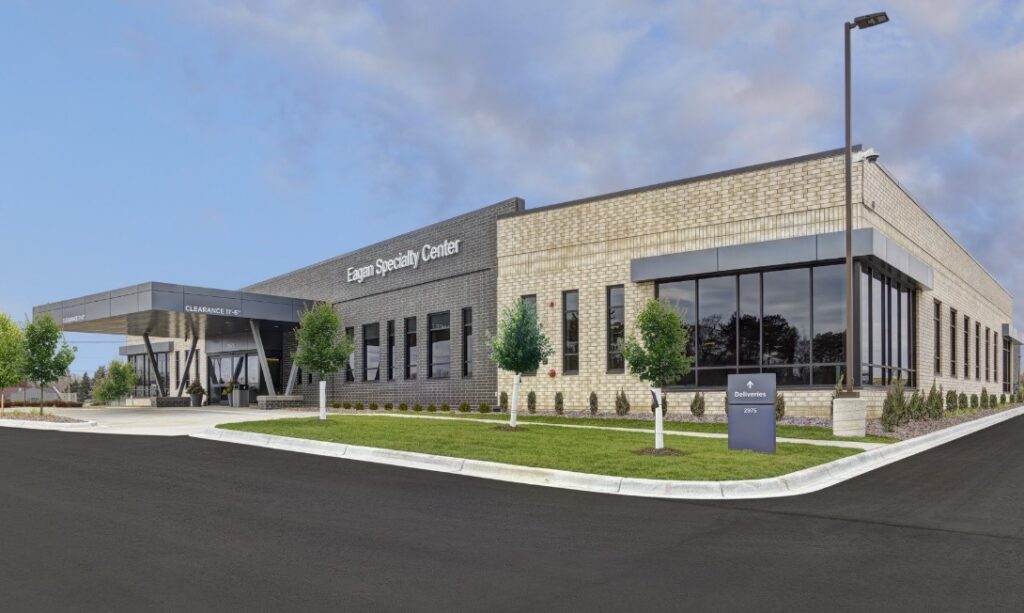
Eagan Specialty Center in Eagan, Minnesota. (All photos courtesy of Davis.)
Reimbursement Policies and Labor Issues Produce Rising Spending
Healthcare spending continues to grow at record levels, with total U.S. expenditures reaching approximately $5.3 trillion in 2024—reflecting 7.2% annual growth rate—well above GDP. Spending in this sector now accounts for approximately 18% of GDP (up from 17.7% one year ago) and is projected to exceed 20% by 2033. Growth is driven by increased utilization, technological advancements (including AI), and inelastic demand from an aging population.
“As impressive as those statistics may be, rising costs are intensifying healthcare provider concerns around affordability and long-term sustainability,” Davis noted.
Labor remains the industry’s largest and most volatile expense, accounting for 50–60% of provider costs. Workforce shortages and intense competition have driven higher wages, signing bonuses, and enhanced benefits. While automation and AI offer long-term potential, the capital required for implementation restrains near-term adoption.
“Balancing labor costs with quality care will remain one of the industry’s most complex challenges,” he added.
Mounting operational pressures and policy uncertainty, which directly impact decision-making, are top concerns for the industry. Despite historic spending levels, reimbursement uncertainty persists as hospitals face evolving government policies, shifting payer mixes, value-based care transitions, and rising technology costs.
“Given these factors, healthcare systems across the country are taking a conservative approach to real estate decisions, including consolidating into owned facilities, reducing space commitments, or delaying actions altogether,” Davis said. “Like everyone, they are waiting until greater clarity emerges.”
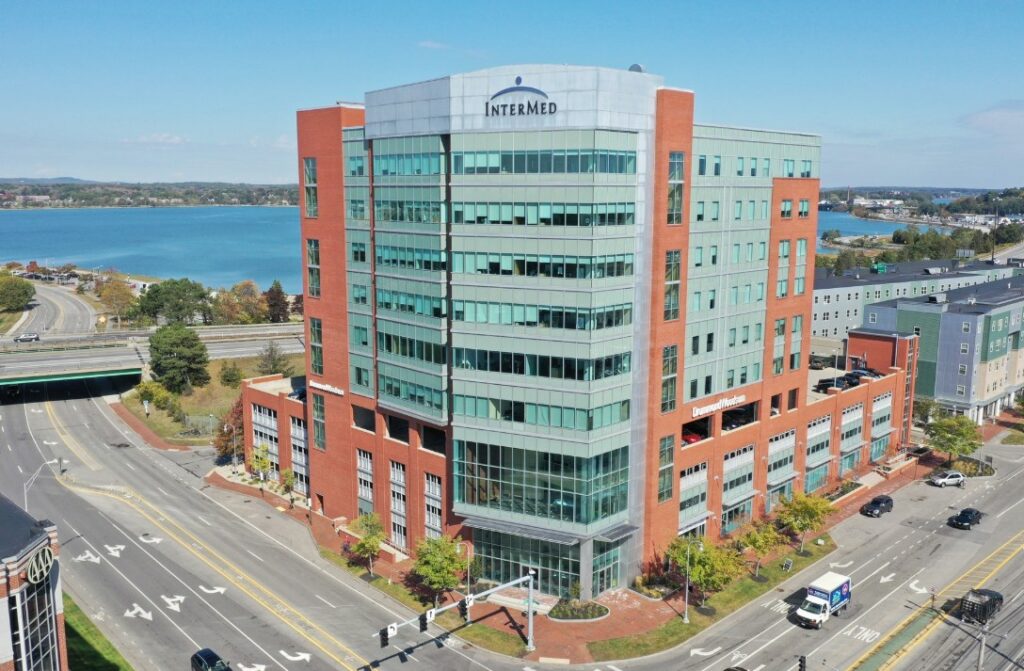
InterMed Medical Office Building in Portland, Maine. (Photo courtesy of Davis.)
Five Predictions for Healthcare Real Estate
1. Limited availability will constrain expansion — National healthcare real estate occupancy is expected to rise further in 2026 to between 93% and 94%. Expansion and relocation options, if available, are limited and typically more costly.
2. Supply constraints will drive healthcare rental growth — Strong demand and modest new deliveries will push rents higher. Annual rent growth has moved above 3% and is expected to track inflation. New clinical developments in markets such as Minneapolis are expected to command $35–$40/SF NNN, with surgical space exceeding $40/SF NNN. Tenant improvement allowances for full buildouts now range from $80–$100/SF, an increase of $10–$15/SF above pre-pandemic levels.
3. Cost pressures will force users to reconsider strategy — Healthcare users are increasingly experiencing sticker shock as development, leasing, and property tax costs rise. In high-tax markets, occupancy costs can squeeze operating margins, prompting users to reassess expansion plans and explore other strategies.
4. Capital Markets Strengthen as Interest Rates Decline — The Federal Reserve’s 2026 target rate stands at 3.50%–3.75%, with expectations for one to two additional cuts in 2026. Cap rates are already compressing: trophy assets are trading in the high-5% range and stabilized outpatient facilities generally between 6% and 8%, depending on asset quality and tenant credit. Further rate cuts would accelerate cap rate compression, particularly for high-quality, credit-backed assets. Credit STNL transactions are expected to trade in the mid-6% cap range, while large portfolio sales could reach the high-5% cap range for the first time since early 2022.
5. Construction Costs Expected to Remain Elevated — Healthcare construction costs continue to outpace other sectors, driven by sustained demand for modern facilities and lingering supply-chain constraints. Absent broader economic forces, material reductions in construction costs appear unlikely. Long-term tariff risks could further pressure pricing.
“Healthcare real estate remains a fundamentally “need-based” asset class, supported by demographic trends, inelastic demand, and the ongoing shift toward outpatient and community-based care,” Davis said. “While the industry faces meaningful operational challenges, these dynamics have not diminished the long-term demand for well-located, high-quality medical facilities.”
Minneapolis-based Davis specializes in healthcare real estate development.