For industrial and manufacturing companies deciding where to expand, the building is only part of the equation. Transportation access, available labor and quality real estate all matter, but so do the policies, processes and people behind a community.
In Liberty, Missouri, those factors are working together to create an environment that encourages businesses to invest and grow.
The Kansas City suburb has made economic development a priority, actively pursuing private investment and quality jobs while using tax incentives and other programs to compete for targeted industries. Currently, projects totaling approximately $650 million are bringing more than 6 million square feet of industrial space to Liberty and adding more than 4,000 jobs to the area.

Mike Stromberg, Opus
“Liberty is the most aggressive city in the region when it comes to incentives,” said Liberty Mayor Greg Canuteson. “We want to attract and retain businesses and jobs, and we’re proud of the tools we have to make that happen.”
Just as important, Canuteson said, is the certainty those tools provide. Liberty has established programs with defined criteria and thresholds, giving businesses and developers a clearer understanding of what is available rather than negotiating incentives from scratch for every project. For companies evaluating multiple locations, knowing what a community can offer – and knowing that the process will be straightforward – can make a meaningful difference.
Incentives and the certainty they provide are particularly valuable in today’s industrial market, where tenants have more leverage and companies can evaluate opportunities across markets and even across states. Developers are competing for fewer deals, while tenants can be more deliberate about location, cost and incentives. For communities trying to attract investment, having tools that can directly affect the economics of a project can help level the playing field.
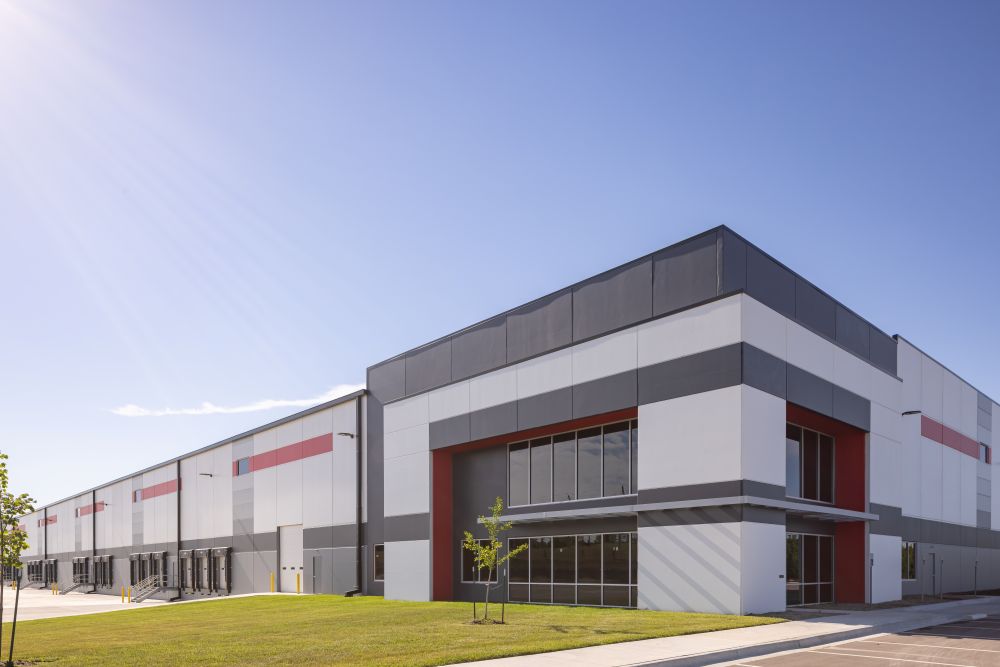
Liberty Heartland Logistics Center, a three-building, nearly 1.7-million-square-foot development just off Interstate-35, provides a real-world example. Developed and built by Opus, the project is now fully leased. Four of its five tenants were already operating in Liberty or the Kansas City area, while the fifth was establishing its first U.S. operation.
The companies had options. Animal Health International was considering locations outside Liberty but wanted to remain in the community. Dakota Bodies was weighing Liberty against an opportunity in Texas. TAB Batteries was evaluating locations nationally. The city’s incentives helped make Liberty competitive in each case.
“Incentives played a factor in all of them,” said Canuteson. “For us, it’s about knowing what types of businesses we want to attract and having the tools to compete for them.”
Those incentives mattered because Liberty Heartland gave businesses a quality, flexible Class-A option within the community. The development offers both cross-dock and single-load configurations, allowing it to accommodate different operational requirements while giving existing Liberty businesses an opportunity to grow without leaving the market.
That combination of product and community also shaped how Liberty Heartland was marketed. Scott Bluhm, executive managing director of Newmark Zimmer’s Kansas City, Missouri, office, and his team led the leasing efforts for the project. He said the pitch to prospective tenants focused on the quality construction and building attributes as well as transportation access, an educated labor pool, continued population growth, new residential development and a business-friendly environment, along with the incentives available to qualifying companies.
Just as important, Bluhm added, was the city’s willingness to engage in the process.
“Liberty knows what they need to do, and they can be trusted to do it. That’s one less hand to hold. It makes the whole process more agile and nimble,” Bluhm said.
For Opus, that collaborative environment was an important part of developing and leasing Liberty Heartland. The company’s integrated development, design and construction model allowed the team to respond to tenant requirements while working closely with the city and brokerage team. Opus’ experience working in Liberty also gave the team confidence in bringing prospective tenants to the community and discussing the incentives available to them.
That relationship is important because economic development does not end when a lease is signed. Developers and tenants still need a community that can work through permitting, construction and operational issues. At Liberty Heartland, Opus’ construction team worked with city and fire officials to accommodate early occupancy for Dakota Bodies, bringing the necessary parties together to find a solution and keep the tenant’s plans moving.
“The full lease-up of Liberty Heartland Logistics Center demonstrates the strength of Liberty as a place where businesses can invest, expand and create jobs,” Canuteson said.
Liberty Heartland also illustrates a broader point about economic development. Incentives can get a company’s attention, but certainty, responsiveness and collaboration can help turn an opportunity into an investment. By understanding the industries it wants to attract, providing the tools to compete for them and working closely with businesses and developers, Liberty is creating opportunities for both existing companies to grow and new businesses to establish a presence.
For developers and tenants, that approach offers something increasingly valuable in a competitive industrial market – confidence that the community is prepared to help make an investment work. For Liberty, the payoff is private investment, new jobs and businesses that have a reason to keep growing in the community.
Mike Stromberg is director of real estate development with Opus and was responsible for developing Liberty Heartland Logistics. He can be reached at [email protected].