Omaha’s commercial real estate market has long been a consistent, resilient one. That hasn’t changed, even as 2025 has brought a host of economic challenges and uncertainty.
The professionals working in this market don’t expect this to change, with many of them predicting an even stronger 2026 when it comes to new construction and leasing activity in Omaha’s CRE market.
Consider Jeanette Weber, broker with Omaha’s Investors Realty. She says that she still sees demand for new commercial construction in the Omaha market. That demand, though, is not equally strong for all sectors.
“Demand is sector-specific,” Weber said. “Industrial and logistics remain exceptionally strong, with historically low vacancy, steady absorption and continued construction activity, much of it pre-leased.”
Demand for new office space in the market is more mixed, Weber said. Even though office vacancy rates here, as they are across the country, are elevated, about 1 million to 1.6 million square feet of office remains under construction in the Omaha market, Weber said.
“That shows that high-quality, well-located office projects are still feasible,” Weber said.
And in the multifamily sector? Weber said that demand for new apartment construction has softened, with rising vacancy and slower leasing velocity for this product type.
Even though demand for new commercial properties might be slower than in the past, the Omaha market is still home to several big developments that are either in the planning or development stage.
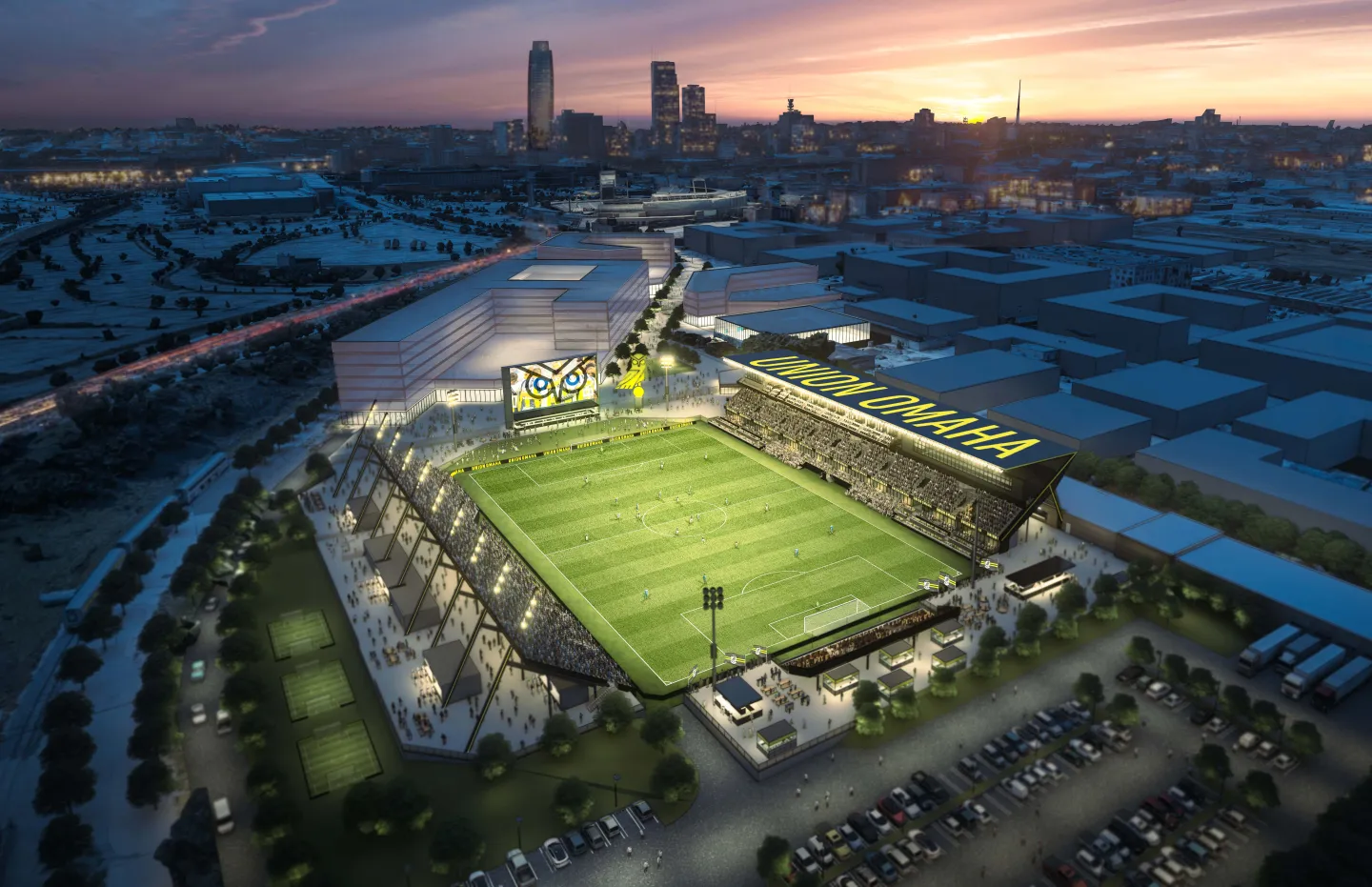
One such project is the development of a professional soccer stadium and mixed-use district in north downtown Omaha. Union Omaha Soccer is partnering with the city of Omaha on the development of the stadium. If approved, the project would break ground in 2026 with the stadium’s opening planned for 2028. The new stadium would serve as an anchor for a new transit-oriented neighborhood.
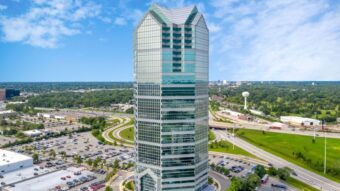
That’s just one big project. Mutual of Omaha’s new headquarters tower continues to energize downtown redevelopment, Weber said. At the same time, the Mercantile Project lead by Hines has been a positive for Omaha’s historic Old Market district. This project features Brickline at the Mercantile, a luxury apartment complex with retail space and a parking garage. Future plans for the conversion of the old Conagra campus call for more apartment units, offices and a boutique hotel.
Weber said that Omaha continues to push for new developments to enhance the area’s quality of life.
“Airport improvements, planning by the Omaha Inland Port Authority and north Omaha business park initiatives are positioning the region for expanded industrial, logistics and advanced manufacturing activity,” Weber said. “Collectively, these projects reflect strong public–private investment and ongoing confidence in the market.”
Why has demand for new commercial space remained solid in the Omaha market, even during challenging times? And why has leasing activity remained consistent here while vacancy rates stay relatively low?
Weber said that it’s all about the discipline shown by developers and city officials.
“A measured, disciplined development approach has helped Omaha avoid the boom-and-bust cycles seen in more volatile markets,” she said. “Developers and lenders typically resist oversupply, which stabilizes vacancy and rent levels during downturns.”
Another positive is Omaha’s diverse employer base, one that includes insurance, healthcare, logistics, defense, tech and corporate services. Such a diverse employment base provides resilience, reducing the local market’s dependence on any single industry.
When one industry might be struggling, others are doing well. That provides Omaha with a cushion to survive economic downturns.
This doesn’t mean that all commercial sectors are performing equally well in the Omaha market. Weber said taht industrial, logistics and distribution continue to be the strongest-performing sectors, supported by Omaha’s central location, limited availability of modern industrial space, supply-chain shifts and increased public and private investment in infrastructure.
Weber said, too, that some office activity, particularly build-to-suit and headquarters projects, remains healthy. Healthcare, medical office and institutional facilities also show steady demand, driven by the region’s major health systems and universities.
Weber said that multifamily has shown signs of cooling, with higher vacancy levels and slower leasing activity than in previous years. Certain traditional retail categories, especially non-experiential strip centers in weaker trade areas, are facing challenges as consumer habits evolve, Weber said. And older office products continue to see high vacancy rates.
Weber, though, said that she expects the commercial real estate market in the Omaha area to remain strong. The city just offers too many positives to see a major slowdown in activity.
“Omaha offers a combination of lower operating costs, a business-friendly climate and a central U.S. location that is ideal for distribution, logistics and regional operations,” Weber said. “The market also benefits from a strong, stable talent pipeline supported by local universities and major employers. Omaha’s affordability, safety and overall quality of life make it attractive for both companies and employees, encouraging relocations and expansions.”
Weber said that she expects the market’s industrial market to remain strong in 2026. She even expects to see carefully planned speculative construction in this sector. She added that downtown catalysts such as the proposed soccer stadium, new Mutual of Omaha tower and airport upgrades might spur additional mixed-use, retail and hospitality projects.