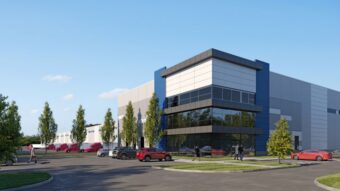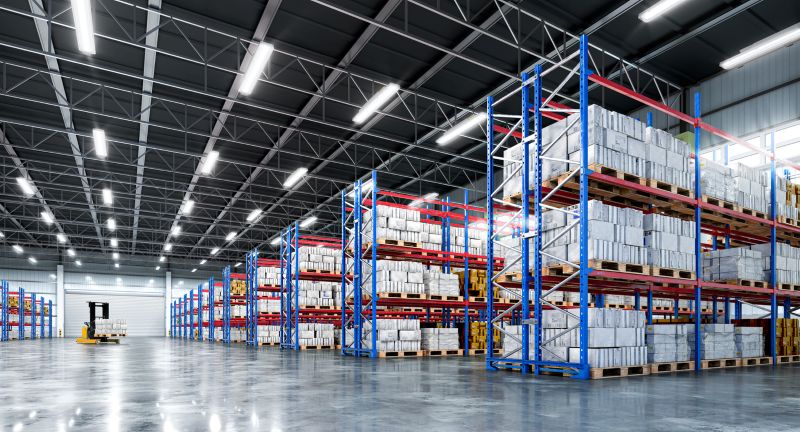
For much of the last two years, the nation’s industrial real estate market has seen the same story: Developers built warehouses at a blistering pace while tenants struggled to keep up.
That is beginning to change.
According to Colliers‘ second-quarter 2026 U.S. Industrial Outlook, the national industrial sector is showing its strongest signs yet that the post-construction-boom adjustment is nearing an end.
Occupier demand is once again outpacing new supply, vacancy has started to edge lower and the fundamentals are lining up for what Colliers says could be the beginning of the next growth cycle for industrial real estate.
Perhaps the biggest milestone came in the second quarter, when net absorption reached nearly 59 million square feet, beating the 53.4 million square feet of new industrial space delivered during the quarter. According to Colliers, it’s the first time since the construction surge began several years ago that tenant demand has exceeded new supply.
That shift is significant because it suggests that the industrial sector is working through the wave of speculative development that flooded many markets during 2023 and 2024.
In its report, Colliers said that this improving balance also helped lower the national industrial vacancy rate to 7.3%, down seven basis points from the first quarter. While vacancy remains slightly higher than it was one year ago, Colliers said that annual increases in industrial vacancy rates have slowed, and nearly two-thirds of the markets the company tracks either stabilized or posted lower vacancy during the second quarter.
The Midwest continues to stand out as one of the healthiest industrial regions in the country.
Colliers reported that the region maintained the nation’s lowest vacancy rate at 5.4%, benefiting from slower development activity and a stronger balance between supply and demand than many coastal markets. The Midwest recorded more than 13 million square feet of net absorption during the year’s second quarter while adding about 12 million square feet of new industrial space.
Nationally, the South saw the most industrial activity in the second quarter, accounting for roughly half of all net absorption recorded across the country. Houston led the nation with 7.5 million square feet of absorption, followed by Dallas-Fort Worth, Atlanta, Los Angeles and Phoenix. Manufacturing users, third-party logistics firms, retailers, food and beverage companies and businesses tied to data center development all contributed to healthy leasing activity.
This doesn’t mean that the industrial sector is in the middle of a new boom period. New deliveries have slowed considerably from the peak of the building cycle following the start of the COVID-19 pandemic. Colliers reported that new industrial deliveries reached their lowest quarterly total since 2016.
At the same time, the construction pipeline has begun expanding again, climbing to more than 314 million square feet. Colliers said that this reflects growing confidence from developers in the market but not a return to the aggressive speculative construction seen several years ago. Higher construction costs, tighter lending standards and longer development timelines are expected to keep new projects more selective.
Rental rates continue to tell a more mixed story. Average warehouse and distribution asking rents slipped 1.6% on a year-over-year basis to $10.36 a square foot nationally as landlords in overbuilt coastal markets continued adjusting pricing. Colliers said that newer industrial buildings with modern features continue to command premium rents, while tighter Midwest markets and select Southern markets have maintained stronger pricing power.
Looking ahead, Colliers predicted that industrial demand will remain healthy through the rest of 2026. As more companies move forward with expansion plans that they had delayed because of higher borrowing costs and economic uncertainty, demand should continue matching or exceeding new deliveries. If that trend holds, vacancy should gradually decline while laying the foundation for a more balanced and sustainable industrial market entering the next phase of the real estate cycle.