It’s true that investment sales and new commercial construction activity have slowed in the Kansas City market. But it’s not correct to say that the Kansas City commercial real estate market is in a slump.
It’s more like a correction, a return to normalcy.
And the CRE professionals working in this market say that demand remains high for most of Kansas City’s commercial sectors. They are also predicting better days ahead for this market as uncertainties regarding tariffs, high construction costs and still-high interest rates work themselves out.
Just ask Caleb Buland, managing partner with Exact Architects in Kansas City, Missouri. Buland said that the demand for his company’s services in the first half of 2025 remained strong. And he expected demand to only rise starting in the year’s third quarter.
One reason? Kansas City will serve as one of the host cities for the 2026 FIFA World Cup. Kansas City will host six matches, including a quarter-final game, in the summer of next year.
Buland said that this huge sporting event means plenty of growth in the restaurant, retail and personal services space in the Kansas City market. As he says, leasing activity has been soaring in these sectors.
“We have seen the opening of a number of new restaurants, coffee shops and salon concepts,” Buland said. “For a while, post-COVID, those had been softer markets. To see those rebounding strong for us has been nice.”
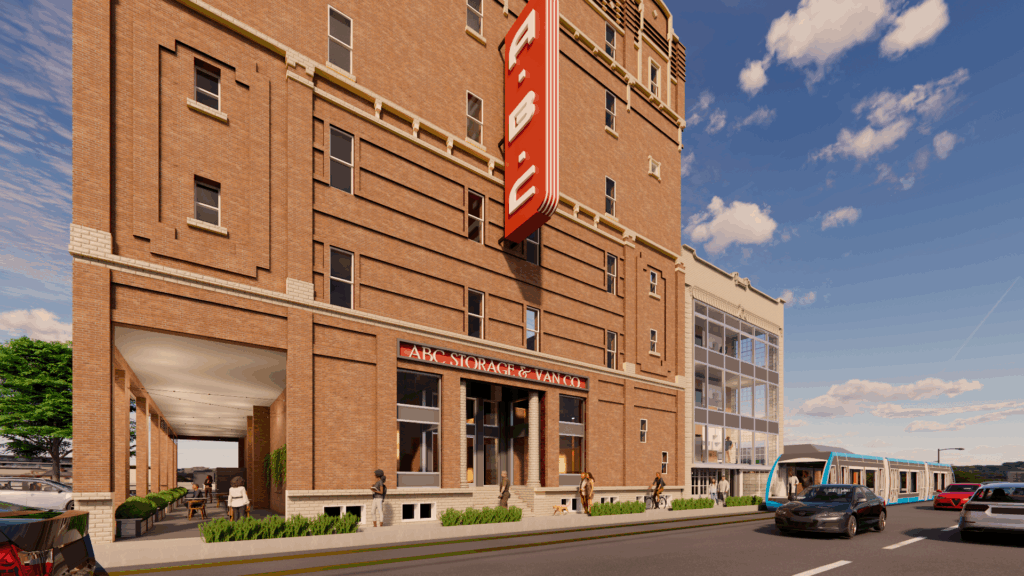
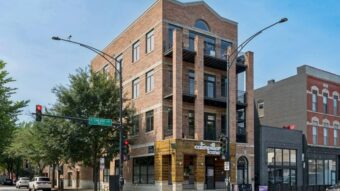
Exact Architects’ ABC at Main redevelopment will feature 50 residential lofts, a speakeasy and a coffee shop. (Photo courtesy of Exact Architects.)
Strong sectors
Buland said that the multifamily market has been a strong performer, too, especially in Kansas City’s urban core. Buland said that Exact Architects had two multifamily projects open recently. Both are already 100% occupied, he said.
“The growth of mixed-use concepts and the small format café/restaurant/retail segments has been interesting,” Buland said. “The city has seen three new spas start construction or hold grand openings. The personal services space seems to be growing.”
Small-format retail stores have also gained popularity in Kansas City, Buland said. Two of these store types have recently opened in the city, and third is under construction.
“This activity has helped take a market that had a pretty good amount of vacancy post-COVID and has given it a boost so that it doesn’t have much vacancy at all,” Buland said.
The last piece of the puzzle for Kansas City’s CRE market? Buland says it’s the office sector. As in most Midwest markets, the office sector is struggling in Kansas City with high vacancy rates. If these fall, that will provide another boost to the local commercial real estate market.
There are good signs in Kansas City, though, that the office market is slowly building momentum. Buland said that the vacancy rate in this sector is slowly moving down. It’s become difficult for tenants to find smaller office spaces of 4,000 to 8,000 square feet in the city. Most of these spaces have leased up, Buland said.
Buland pointed to the KC Streetcar extension. Beginning on Oct. 24, riders will be able to take the Streetcar from Kansas City’s River Market to the University of Missouri – Kansas City.
This extension will provide yet another boost to the city’s CRE market, Buland said.
“Every tenant has options when they are looking for somewhere to move to,” Buland said. “There isn’t always much to differentiate a location. Mass transit though, is a big differentiator, one that can move the needle for tenants.”
A big development
Providing another boon to Kansas City’s CRE market was the 2024 opening of CPKC Stadium, home of the KC Current professional women’s soccer team. CPKC Stadium is the first stadium in the world purpose-built for a women’s professional sports team.
It’s also generated plenty of leasing activity in its surrounding neighborhood, Buland said. This includes both retail development and new multifamily units.
Those multifamily additions are important. Like many Midwest cities, Kansas City is working to attract more full-time residents to its downtown areas. The addition of amenities like the soccer stadium and new apartment units is boosting this effort.
“As jobs are coming back downtown, the people are coming back to the center of the city, too,” Buland said. “We are seeing that next wave of employees get hired downtown. They are coming with strong offer letters from insurance companies and banks downtown, and we are renting them apartments. You walk around downtown, and everyone is out there walking their dogs. That’s a positive sign.”
Steady construction now. More activity in the future?
Sam Stahnke, vice president of the Kansas City office of ARCO National Construction, said that most of the commercial construction taking place in the Kansas City market today is of the build-to-suit variety, with end users already in tow.
The market is also seeing some new construction from owner-users who are seeking to expand or modernize their commercial properties, Stahnke said.
“That has been the biggest shift,” Stahnke said. “Kansas City was a spec distribution market. Now we are seeing more end-user-driven building.”
Stahnke says that 2025 so far has been a steady year for ARCO. It hasn’t been a boom year, like during the pandemic. But the slight slowdown in activity has given ARCO team members the chance to earn additional certifications, learn new skills and become better for the future, Stahnke said.
Part of what has made 2025 more of a challenge has been the threat of tariffs, Stahnke said. The fear that tariffs will cause construction costs to rise even higher has slowed new construction activity.
On the positive side, Stahnke said, ARCO is seeing an uptick in projects “that had been delayed ramping up again. Other projects are slated to start construction in early 2026 and are now going through the planning phase, he said.
“The hope is that these projects start to come out of the ground in 2026,” Stahnke said.
Much of the work that ARCO is seeing is in the manufacturing space. Demand for distribution and warehouse space remains steady, too, Stahnke said.
“More groups nationally are starting to see that if you look at UPS’ delivery map, you can get to something like 80% of the U.S. population in a 48-hour drive or less from Kansas City,” Stahnke said. “For the Amazons of the world, it’s a positive to be in the center of the nation.”
Multifamily construction demand remains strong, too, Stahnke said, with many developers looking to start construction on new apartment developments later this year or in the spring of 2026.
At the same time, a significant amount of second- and third-generation office space is becoming available in the Kansas City market. That creates tenant-improvement jobs for companies such as ARCO.
Of course, not all the submarkets in the Kansas City region are seeing as much construction activity as others. Stahnke pointed to the Northland submarket, north of the Missouri River, as being a particularly strong one for distribution projects. Southern Johnson County is also seeing plenty of demand for new distribution space, he said.
Smaller business parks are springing up in Kansas City’s East-West corridor off of Interstate-70, too. Many of the industrial properties here total 250,000 square feet or less.
Another busy real estate type for the Kansas City market? Entertainment and sports venues. Stahnke said that youth sports are popular in the market. It’s why in the last three years construction crews have been two baseball and softball complexes here and renovated a third.
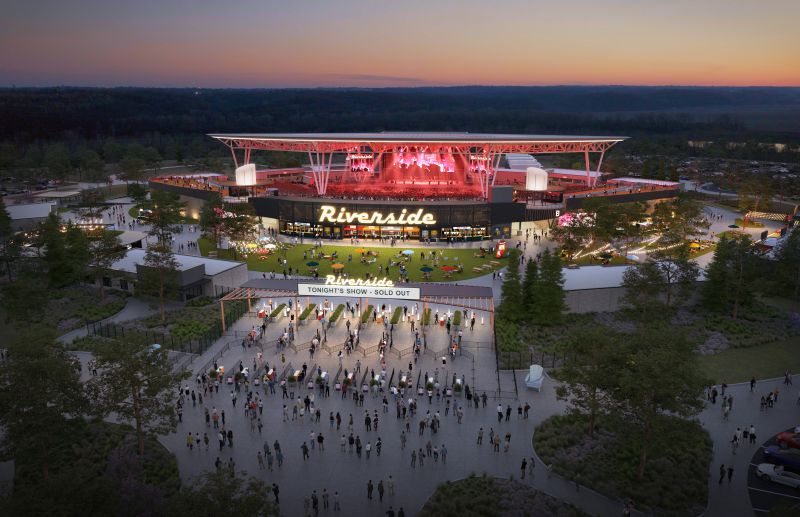
ARCO is also building Live Nation Entertainment’s Riverside Amphitheater in Kansas City, a venue slated to open for the 2026 concert season. When finished, it will seat 16,000 people.
“We’ve seen an influx of new businesses and people into the Kansas City market,” Stahnke said. “Now city officials and developers are working to boost the quality of life here. We are adding new multifamily developments. We are adding entertainment and youth sports facilities. We are creating this mecca with great businesses and a top quality of life. It’s a combination that encourages top talent to move here. It’s all about that talent attraction.”
Stahnke said that this improved qualify of life is encouraging more people to move to Kansas City. But the region is attractive to newcomers, too, because of its low cost of living.
“A lot of call centers or central offices for larger companies are moving to Kansas City,” Stahnke said. “These end users don’t need to be in San Francisco or Los Angeles or Chicago where it is more expensive for their employees to live.”