It’s a major milestone, one that few businesses reach. But St. Paul, Minnesota-based ERA Structural Engineering ranks as one of the exceptions, celebrating its 40th year in business in 2025.
What’s behind this engineering firm’s success? A pair of top officials with the company pointed to the talent of ERA’s employees, the company’s dedication to providing top service to its clients and the deep relationships that ERA has formed in the architectural engineering construction industry.
That combination has proven to be a winning formula.
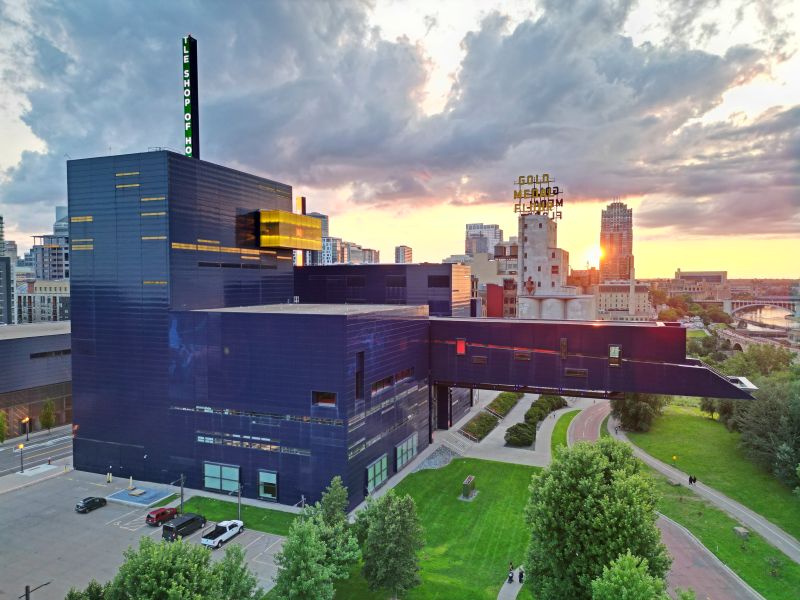
It helps, too, that ERA has worked on several noteworthy projects throughout the years, both in Minnesota and across the country, including the Guthrie Theater’s “Endless Bridge” in Minneapolis; the Mall of America’s 2016 expansion in Bloomington, Minnesota; and the University of Minnesota’s Huntington Bank Stadium.
The firm was founded in 1984 when Bud Ericksen, Jim Roed and Tom Amundson joined forces to create a structural engineering firm. After all three founders retired, the firm was renamed ERA Structural Engineering in 2020.
ERA isn’t slowing down today, with ERA still taking on major projects in the region. An example? ERA is designing the structural engineering for the new Amphitheater at Canterbury Park in Shakopee, Minnesota, a performance space that will open in 2026.
Mike Steenson, president of ERA Structural Engineering, cited the deep relationships that the company has formed with clients as the top reason for its longevity.
“It’s all about relationships,” Steenson said. “It’s about the people. We have engineers. We have modelers. Everyone has a job. But we are all human, too. We are all people. You don’t get projects without developing those human relationships. That’s what the company was founded on. You build on those relationships.
“It becomes more than work. You hang out with people outside work, whether it’s going on hunting or fishing trips or going to sporting events. It’s pretty amazing how our relationships with people in the field and the area have grown over the years. It’s a lot of fun. And that’s important: For us, work needs to be about fun.”

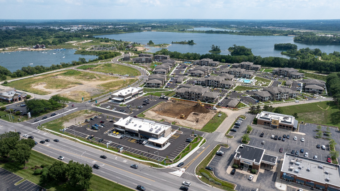
ERA has a long working relationship with Life Time Athletic Clubs nationally. The company provided structural engineering work for the 3-level luxury coworking Sport/Work facility and winter garden in Edina. (Photo courtesy of ERA Structural Engineering.)
John Madden, partner with ERA Structural Engineering, agreed that decades of building relationships with clients have paid off in the form of repeat business.
“The work that we do can be hard,” Madden said. “There are always obstacles when you are working on sites, always financial challenges. The relationships that you build in the trenches when you are working on these projects last a lifetime. That is one of our key differentiators: We have done a great job earning repeat business because of that trust we’ve earned while working through difficult jobs.”
Steenson added that ERA considers each of its employees to be salespeople, not just the company’s business development or marketing staffers. As Steenson said, ERA instructs all its employees to look for relationships to build. Over the years, these relationships will strengthen and could lead to additional streams of business.
Finding the right employees
ERA has benefited, too, from the talents of its many skilled employees. Steenson said that ERA focuses on hiring employees who share the same philosophy, a dedication to serving their clients and working hard for them.
ERA employees know that they can count on each other, too, Steenson said. ERA employees often brainstorm with each other to come up with solutions to the most complicated engineering problems. The people who work here consider themselves problem-solvers, and they enjoy tackling even the most difficult of challenges.
“It’s important to enjoy the people around you,” Steenson said. “You must trust the people around you. One of our core values is making sure that everyone works as a team. There are always so many things going on in the world. Having that teammate whom you can trust and count on is essential.”
Madden refers to ERA as having a team of “seller-doers.” ERA today boasts a team of 80 to 90 staff, all of whom are committed to delivering the best work for the company’s clients.
“The closer we get to that seller-doer model, the best outcomes we can have,” Madden said. “Ultimately, we are watching out for our clients’ bottom line. Every one of the projects we work on seems to be under some sort of financial duress. We all have to be on our A game when optimizing the process. There is an art to that. Our mission is to think beyond the beam. It’s the art of going beyond what is expected when it comes to design. If we can get involved with a project early enough, we can shape the trajectory that can yield much lower construction costs.”
This approach leads to repeat business, a key for any company hoping to last more than four decades.
“It’s hard to get new clients, so we have to take care of the ones we have,” Madden said. “Our clients trust that we are going to consistently perform. You build these relationships in the trenches.”
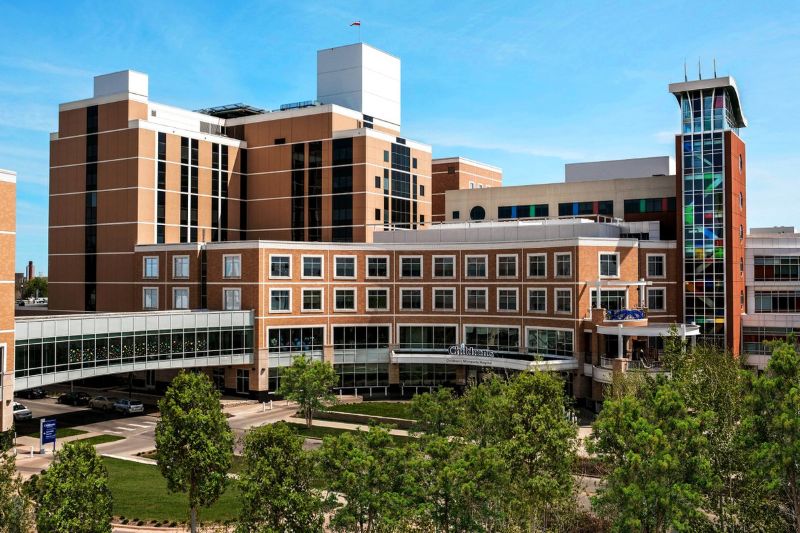
ERA worked on the large expansion of Children’s Minnesota Hospital which opened in Minneapolis in 2011, plus several other additions and remodels over the years. (Photo courtesy of ERA Structural Engineering.)
At the start of every project, ERA officials work to determine what is most important to their clients. Sometimes clients will be focused on the lowest cost, Steenson said. Others are more focused on the quality of the building they are developing. Some want to make a bold statement with their developments.
As Steenson says, understanding clients’ wants early in the process always leads to better results.
“It’s not a one-way street,” Steenson said. “We might have to make some twists and turns and provide different options for our clients. We are happy to do that. It’s how we start every project, focusing on understanding what our client wants.”
Like every company that has survived for decades, ERA has worked through difficult markets. As Madden says, some macro factors are out of a company’s control, such as the performance of the economy. The key is to build a buffer against down economies.
How to do that? ERA has responded by expanding into additional geographic locations, building a stronger national presence. If a local economy is struggling and building activity slows down in that area, ERA can focus on earning work in other locations that are enjoying a brisker economy.
Madden says that ERA has also built a blended portfolio of how projects are sourced, working on both privately and publicly funded projects. In the past, ERA was heavily invested in the private sector. Today, the company has worked to land more government work, projects that aren’t as tied to the performance of the economy.
Steenson said that ERA relies on a three-pronged approach to weather tough times: client diversity, market diversity and geographic diversity.
During the last 40 years, ERA has tackled several big projects in the Twin Cities and across the country. Highlights include engineering work on:
- The Guthrie Theater in Minneapolis and its famed Endless Bridge, a cantilever that extends 178 feet from the face of the building 55 feet above the ground
- Mall of America’s 2016 expansion project in Bloomington, Minnesota
- The Target Center Arena in downtown Minneapolis
- Minnesota Children’s Hospital
- Minneapolis’ U.S. Federal Courthouse
- Huntington Bank Stadium, home of University of Minnesota football
- Target stores across the country
- Life Time Athletic Clubs across the country
- CHS Field, the home of the St. Paul Saints minor league baseball team
- Bookmen Stacks, a condominium project in downtown Minneapolis and the first residential building to use ERA’s ER-POST system, allowing for column-free design
Steenson said that all the projects that ERA takes on are special. But he cited the work the Guthrie Theater’s Endless Bridge work as a highlight. Steenson said that he also holds fond memories of working on the U.S. Federal Courthouse in downtown Minneapolis.
“I saw how a building goes together,” he said. “That made a big impression on me.”
Madden pointed to the work ERA has done while working for Life Time Athletic Clubs. Madden formerly worked closely with Life Time as it opened new facilities across the country. He saw how the client’s spaces have evolved over time, and learned just how complicated it can be to design a well-functioning athletic club.
“Those fitness clubs are some of the most complicated structures,” Madden said. “They have so many uses. They are mixed-use buildings with pools, saunas, gyms and weights. There are so many things to deal with. They are putting pools on roofs. They are building in tight spaces. They might be opening a club in a multifamily building where they are combining the club with parking and have a residential component on top of the gym space. They are a super dynamic client.”