In most markets, time is the most expensive line item in an industrial deal even if it never appears on a balance sheet. Months stretch into years as projects move through permitting, zoning reviews and public approvals, each step adding friction to what is already a capital-intensive process. But at TexAmericas Center, that timeline is the problem they’ve built their entire model to solve.
“Time is the most powerful incentive we can offer,” said Eric Voyles, the center’s Executive Vice President and Chief Economic Development Officer.
That philosophy has shaped an operation that doesn’t fit neatly into the traditional definitions of either an economic development organization or a private developer. TexAmericas operates in the space between those models.
“We’re an amalgamation of a municipality, an economic development organization and a private-sector industrial developer and operator,” Voyles said.
As a state-designated local redevelopment authority, TexAmericas functions much like a municipality, overseeing land use, permitting and infrastructure across its 12,000-acre footprint near Texarkana. At the same time, it operates without taxing authority, generating revenue through land sales, leases and service offerings. That structure demands operational efficiency more commonly associated with the private sector while maintaining the authority typically reserved for local government.
“Our focus is speed to occupancy,” Voyles said. “Everything we do is designed to help companies become operational faster, generate revenue sooner and reach profitability more quickly at TexAmericas than they could anywhere else.”
In a traditional municipality, a project might move through multiple layers of review including planning departments, zoning committees, public hearings and city council approvals, each introducing the potential for delays or revisions. At TexAmericas, those processes are consolidated under a single authority, eliminating the need for external approvals. In that context, TexAmericas is less an alternative and more a workaround.
“We can eliminate six to 18 months, or more, from a typical site selection timeline,” Voyles said.
The impact is immediate and measurable. Earlier occupancy means earlier production, earlier revenue and, ultimately, a faster path to profitability. For companies navigating rising construction costs and economic uncertainty, that kind of time savings translates directly to financial certainty.
Speed, however, is only part of the equation. TexAmericas has also built a model that allows companies to test a market before committing long-term capital. Through its third-party logistics capabilities, TexAmericas can effectively stand up operations on behalf of a tenant, handling inventory, shipping and even light manufacturing on a contract basis.
“That model allows companies to enter the market, become operational, understand their true cost structure and then decide whether to scale,” Voyles said. “In that case, they chose to expand.”
In one instance, a pipe manufacturing company used that structure to establish a foothold in Texas, ultimately deciding to expand its presence after validating the economics of the market. Often structured with flexible terms, the arrangement removes a layer of uncertainty that can otherwise delay expansion decisions.
Taken together, the combination of speed and flexibility creates a different kind of value proposition. It shifts the conversation away from traditional incentives and toward reducing both time risk and capital risk.
Momentum is already building at scale. TexAmericas recently became home to what is described as the world’s largest daily lithium processing facility, operated by EnergyX. The company has additional acreage under option and the potential to expand into a project valued between $500 million and $1 billion, depending on future phases of development. Projects at that scale signal more than growth and validate the model.
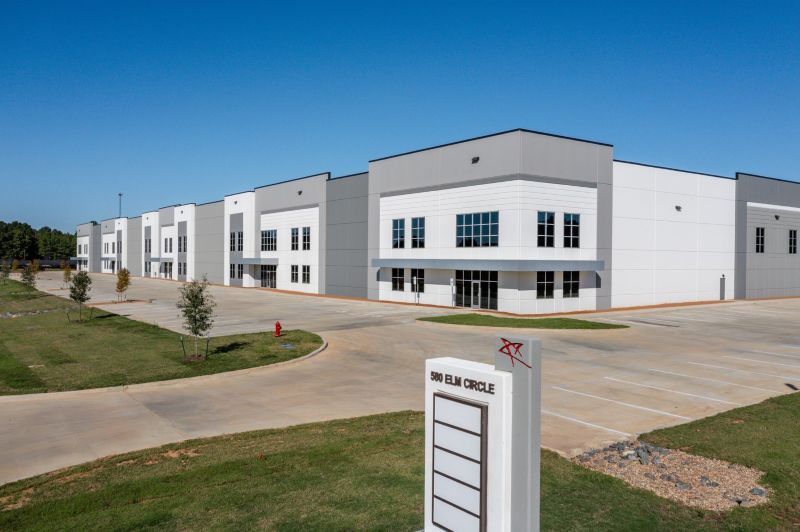
The site’s infrastructure plays a critical role in supporting that kind of growth. With millions of square feet of existing industrial space, rail service spanning dozens of miles and integrated logistics capabilities, TexAmericas offers a level of operational readiness that aligns with its speed-to-market approach.
The organization is also addressing one of the most pressing constraints facing industrial users today: power. Through partnerships that enable behind-the-meter energy solutions, TexAmericas can support large-scale users requiring significant capacity, while operating within a regulated power market known for reliability.
Water infrastructure is also expanding, with a new system expected to deliver tens of millions of gallons of capacity in the coming years, further positioning the site for high-demand industrial uses.
Still, one of the most compelling aspects of the TexAmericas story isn’t physical infrastructure. It’s labor. While many markets are grappling with workforce shortages, TexAmericas is making a markedly different claim.
“We believe this is one of the last true labor-surplus markets in the country,” Voyles said.
The data behind that assertion points to a broad labor shed extending roughly 75 miles, encompassing more than a million people. Within that radius are tens of thousands of individuals who are either unemployed, underemployed or commuting long distances to jobs in larger metro areas such as Dallas, Little Rock and Shreveport. The takeaway is clear: jobs created in the region are not only filling existing gaps but drawing workers back closer to home.
That dynamic is reinforced by a steady pipeline of graduates from nearby higher education institutions, many of whom currently leave the region in search of opportunity elsewhere. For employers, that combination offers something increasingly rare — both available labor and a renewable talent pipeline.
For developers and investors, the broader message is less about any single advantage and more about how those advantages intersect. Speed reduces time to revenue. Flexibility reduces upfront risk. Infrastructure supports scale. Labor sustains growth. Individually, those elements are not unique. In combination, they form a model that challenges how economic development is typically structured.
At TexAmericas Center, the pitch isn’t built around incentives packages or tax abatements. It’s built around removing friction. In a market where delays have become standard, that shift may be the advantage that matters most.