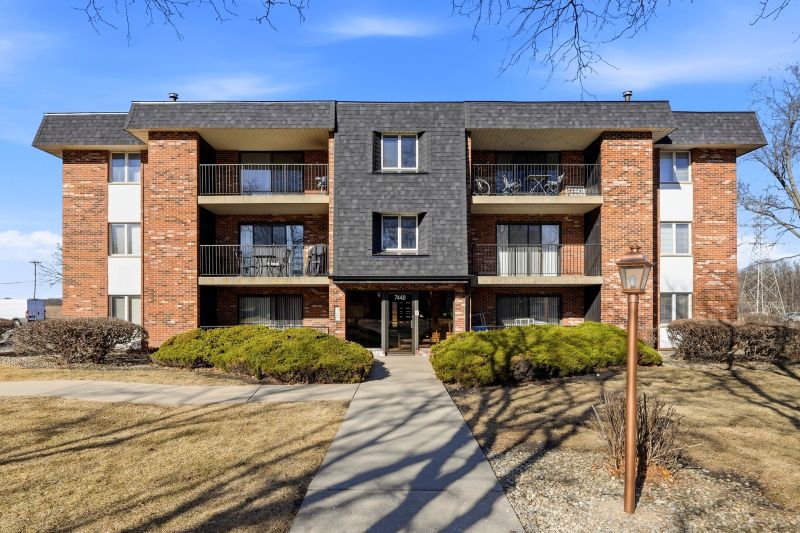
When Essex Realty Group listed a 14-unit building in Downers Grove and a 20-unit building in Villa Park this year, each drew more than 25 tours and at least nine offers. The 84-unit Heritage Manor under contract in Orland Park is generating the same intensity, according to Jimmy Donahue, Director at Essex Realty Group.
“It’s a strong sign that smaller and mid-size suburban assets are drawing just as much conviction from buyers as the bigger deals, which speaks well for where pricing and investor confidence are headed,” Donahue said.
Investors are chasing the same math that renters confront every day. Demand for Chicago-area apartments keeps climbing while new supply trails far behind and brokers across the market describe a supply-demand imbalance with no near-term fix.
“Given the lack of new product coming to market and a tightening supply, demand has never been higher,” said Aaron Sklar, Partner at Kiser Group and Co-Leader of the firm’s Birk/Sklar team. “And that’s across the board.”
Jon Morgan, Co-Founder and Managing Principal of Interra Realty, traces much of that demand to would-be buyers stuck renting. Mortgage rates and home prices have kept a meaningful share of first-time buyers on the sidelines, he said, driving renewals and lease-up activity in Interra’s core Chicago neighborhoods even as job growth cools. Citywide vacancy still sits below 5%, a figure Morgan calls resilient given the broader economic noise.
The suburbs tell a similar story. Suburban occupancy running near 97% might suggest renters are abandoning the city in droves. Donahue sees a supply problem instead.
“It’s less a story of renters fleeing the city and more one of the suburbs simply not having enough new units to meet demand that was already there,” Donahue said.
Suburban Chicago has delivered new supply equal to roughly 1% of existing inventory in each of the past couple of years, he said, well short of what population and household formation trends would support.
James Love, Vice President of Marketing and Brand at Draper and Kramer, sees the same balance across his firm’s portfolio: healthy demand in both the city and the suburbs with no significant migration in either direction. The more notable trend, according to Love, is retention with renters renewing their leases and staying in place longer, particularly in urban communities.
Where renters are competing hardest depends on which side of the city line you stand. Andrew Friedman, Partner at Kiser Group, describes rental demand in Old Town and Lincoln Park as off-the-charts strong and said major price increases there have pushed renters north to Edgewater and Uptown and west to Logan Square and Wicker Park, fueling rent growth in those neighborhoods in turn.
Morgan’s list overlaps. Logan Square, Avondale and Pilsen lead Interra’s listings on rent growth and absorption, he said, while the North Side lakefront is regaining strength and Bronzeville and Hyde Park continue to improve behind university and hospital employment anchors.
“What ties these together is proximity to transit and a walkable commercial corridor,” Morgan said. “That combination is driving the leasing velocity we’re tracking in our listings.”
In the suburbs, Donahue points to DuPage County, which captured roughly a third of suburban multifamily sales activity in the first quarter of 2026, along with northwest Cook County, where demand has absorbed new deliveries, and Orland Park and Tinley Park, where downtown reinvestment is pulling in renters seeking value without giving up walkability.
“On the ground, it shows up the same way across all of these: units leasing within days, minimal concessions and renters who know they need to move fast on anything well-priced,” Donahue said.
New deliveries remain concentrated in luxury product, but the biggest beneficiaries may be the buildings that luxury never touches. With new construction almost entirely Class A and clustered downtown, Morgan said, the vintage two- and three-flats and courtyard buildings that make up most of the city’s rental stock face no new competitive supply. He reports 4% to 7% rent growth on turnover units in well-located Class B and C assets, outpacing many new luxury towers still working through concessions.
“In today’s market, renters are ultimately prioritizing value and location,” Love said. “Once a community meets their needs, competitive pricing often has a greater influence on leasing decisions than an extensive list of amenities.”
Donahue sees both ends performing in the suburbs with Class A commanding a premium against limited competition while owners of older product win rent growth through targeted capital improvements rather than full repositioning.
“Well-managed buildings that are in physically ‘good’ condition will be occupied,” said Noah Birk, Partner at Kiser Group and Co-Leader of the Birk/Sklar team. “Vacancy will remain low, and rents should continue to trend up. It all goes back to supply and demand, and that equation heavily favors home providers in Chicago.”
If the fundamentals are so favorable, why isn’t more getting built? Birk said many Kiser clients simply refuse to jump through the hoops a major Chicago project requires. Morgan points to hard costs, insurance and higher-for-longer interest rates that demand rents achievable only in a handful of premium submarkets and notes that when construction does pencil, developers are building less dense product, typically five stories or under. Friedman sees the same pattern with robust appetite for development sites that avoid a zoning change and its accompanying 20% affordable requirement, plus multiple office-to-residential conversions underway on the North Side. In the suburbs, Donahue adds entitlement timelines that can stretch a year or more, keeping any real supply relief a couple of years out.
Capital has noticed the imbalance. The more significant trend, Birk said, is the continued influx of investor money into Chicago from across the country.
“Chicago continues to offer higher yields than most major markets worldwide and the limited supply of multifamily housing creates a strong foundation for long-term appreciation,” Birk said.
Much of that money is arriving without an institutional badge. Morgan sees private local buyers, many using 1031 exchange or family-office capital, stepping in where institutional players have pulled back, chasing workforce and value-add product in the city and suburbs alike.
“We’re a renter-majority city with limited new supply outside of luxury towers and that combination continues to support steady, sustainable rent growth rather than the boom-bust swings you see in some Sun Belt markets,” Morgan said.
Friedman is watching one submarket to see how long the scarcity story holds. Fulton Market carries roughly 10,000 entitled units, he said, yet few buildings are capitalized and under construction.
“As rents continue to climb those deals will pencil out better, but if they all get capitalized will the submarket become oversupplied and ruin its own party so to speak,” Friedman said.