For most of 2025, multifamily owners across Texas told themselves the same story: hold on, ride it out, refinance when rates ease. The Fed cut three times. Construction starts fell roughly 75 percent nationally. The math should have rewarded their patience. Instead, inflation crept back, treasury yields drifted higher and the phrase echoing through capital markets shifted to “higher for longer.”
“Owners and investors would like to kick the can down the road again, but the can has gotten a lot heavier,” said Patton Jones, Vice Chairman of Multifamily Capital Markets at Newmark.
That weight is showing up in the listings pipeline. More owners are choosing or being forced to sell while the supply picture they were waiting on finally arrives. Dallas-Fort Worth delivered a record 44,218 units in 2024 before stepping down to 30,868 in 2025 with deliveries projected at 23,091 in 2026, a 48 percent drop from the peak, according to Newmark research. Austin reported its first quarter of rent growth since the second quarter of 2023. San Antonio’s annual absorption has outpaced deliveries for two straight years.
What’s emerging is not a uniform recovery, but a capital-driven reset where operating fundamentals are improving unevenly while refinancing pressure is dictating when assets actually trade.
“We have seen very few distressed asset sales that are suffering from vacancy, high collection loss and physical capital needs,” Jones said. “Most sales have been smoothly operating properties with a distressed capital stack.”
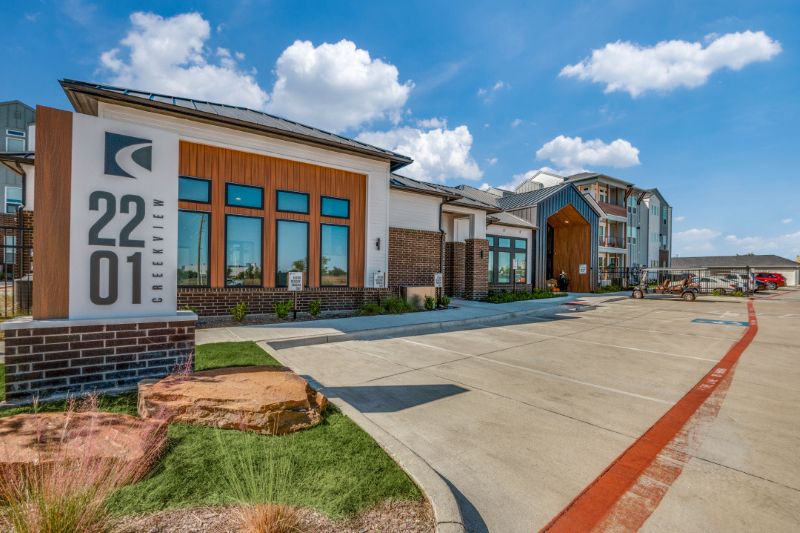
Many of those stacks were assembled between 2021 and 2023 when floating-rate debt looked cheap and rents looked unstoppable. As rates climbed and rents softened, refinancing became a problem to solve. Lenders granted extensions early. Mezzanine providers and preferred-equity holders bought owners more time at a higher price. In 2026, that patience is running out. Paydowns and payoffs are being demanded, and owners without fresh equity to inject are listing. At the same time, assumable low-rate debt has become its own selling point. 2201 Creekview, a 300-unit 2024-built property in Waco that Cushman & Wakefield is currently marketing, carries an assumable HUD loan at 67 percent leverage and an all-in fixed rate of 4.14 percent, well below where new financing prices today.
On the buy side, capital has been waiting. Jones said there are plenty of buyers in Central Texas and not enough sellers with most investors underwriting conservatively in years one and two and aggressively in years three through five. The expectation, he said, is a hockey-stick recovery with year-one pro forma cap rates trending to 5 percent or higher and exit caps around 5 percent.
“Buyers have moved away from headline cap rate pricing toward more yield-on-cost frameworks and underwriting what the asset can produce today, not as much as what it is theoretically worth at stabilization,” said Grant Raymond, Senior Director with Cushman & Wakefield’s Texas Multifamily Advisory Group.
The shift matters because of what is sitting on rent rolls. In DFW, the gap between asking and effective rent widened to $38 per unit per month in the first quarter, nearly five times the 2022 normalized level of $7 with about 35 percent of the market still offering concessions, per Newmark data.
“Submarket divergence is the defining characteristic of this cycle,” said Asher Hall, Senior Director with Cushman & Wakefield’s Texas Multifamily Advisory Group.
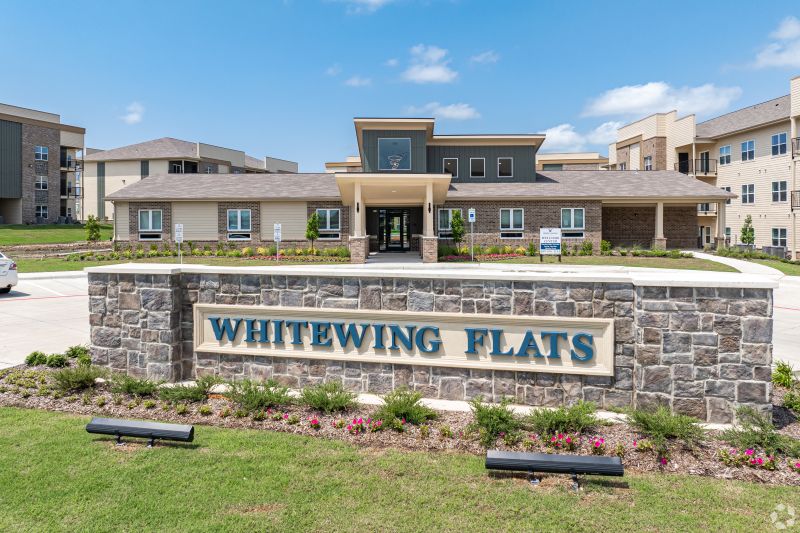
Northwest Dallas posted approximately 5.7 percent effective rent growth in 2025 and Southeast Dallas about 5 percent, according to Cushman & Wakefield’s tracking, both outperforming a metro that posted slightly negative annual rent change overall. High-growth suburbs including Frisco/Prosper, Allen/McKinney and Northwest Fort Worth continued absorbing supply on the strength of school quality, employer proximity and household formation. Cushman & Wakefield recently closed the sale of Whitewing Flats, a 192-unit 2024-built property in Princeton, just east of McKinney, the type of newer suburban asset finding buyers even as the broader recovery remains uneven. North Dallas, which alone accounted for roughly half of the DFW units under construction, has six to eight weeks of free rent quoted as standard across northern Collin County and North Fort Worth.
The same divergence exists between metros. Austin and San Antonio are moving through the same cycle phase but trading at meaningfully different prices with San Antonio cap rates running roughly 25 basis points higher than Austin.
“Investors are split: some like the Ferrari (Austin), and some like the Toyota Camry (San Antonio),” Jones said.
The Ferrari draws institutional and fund capital betting on Austin’s long-run trajectory. The Camry draws private investors who prefer San Antonio’s slower, steadier rhythm and the spread that comes with it. Both metros are transitioning from oversupply to undersupply, but the buyer pool, hold strategy and pricing math diverge from the moment underwriting begins.
“Retrading is most prevalent on value-add and workforce deals where due diligence surfaces bad debt, deferred maintenance or occupancy issues, and that level of buyer scrutiny isn’t going away soon,” Raymond said.
Class B vacancies have been running around 12.5 percent metro-wide in DFW, with mid-tier rents off 0.7 percent year-over-year, while immigration policy has introduced fresh uncertainty around Class C and workforce renter demand that few sponsors had modeled. The deals getting done at the top of the market look nothing like the deals struggling at the bottom.
“Owners of older suburban product are effectively competing against near-new Class A on concession-adjusted terms, which is an increasingly difficult position to hold,” Hall said.
Houston offers a parallel data point. Occupancy across all classes climbed 2 percent in 2025 to reach 90.4 percent in December, the highest mark since June 2022, with Class A absorbing more than 16,000 units against a 10-year average closer to 13,900, per Apartment Data Services. Total transaction volume rose 4 percent over 2024 and transaction count climbed nearly 15 percent, signs that buyers and sellers are starting to find each other.
The cleanest signal of when the broader Texas market turns is the supply chart. DFW deliveries are forecast at roughly 17,000 units in 2026, the lowest in more than a decade. By the back half of 2026, deliveries are expected to drop further while demand stabilizes near 24,000 units annually, the first year of supply-demand balance since 2021. Class A infill, where vacancies were already near 5 percent entering this year, likely moves first. Workforce and Class B will take longer, on Raymond’s read, with concessions persisting through mid-to-late 2026.
Texas multifamily is being governed by the timing of refinancing and the repricing of exit expectations as much as by the speed of rent growth. The narrative has changed faster than the operating numbers. The operating numbers are starting to follow. The owners still waiting are running out of room.