The recent International Association of Amusement Parks and Attractions (IAAPA) Expo marked the five-year anniversary of the Covid-19 shutdown – which had a significant impact on the themed entertainment industry. However, there are numerous signs the industry is well on its way to recovery and beyond, even surpassing the attendance numbers and revenue of 2019 – the highest year on record.
Entertainment giants like Universal and Disney have announced new attractions as well as expansions of existing parks, while Mattel is set to open its first ever themed adventure park in Glendale, Ariz., as part of the 60-acre VAI Resort complex, for which Baker Barrios is the architect of record. Also, notable is that this year’s IAAPA Expo had the highest number of registrants ever, highlighting the interest in and optimism for the industry.

Mike Frohnappel, director of hospitality and entertainment design, Baker Barrios Architects
My colleagues at Baker Barrios and I were among the more than 40,000 registered attendees at the IAAPA conference, and here are four key take-aways for those invested in hospitality real estate:
- All in on AI.
From shortening guest wait times to streamlining operations, AI and similar technologies are creating both cost savings as well as new revenue opportunities in the themed entertainment industry. Predictive modeling can better anticipate where to increase or reduce staffing, more accurately inform guests of wait times, forecast what attractions will drive attendance and plan ahead for maintenance to reduce downtime.
Similar technology is being used to continually update and enhance various attractions and character interactions, offering a unique guest experience that can be highly personalized to encourage repeat visits.
From a design standpoint, it’s imperative that this tech is integrated from the onset of planning – whether that’s a brand new built or updating an existing park. The data supplied by this technology also highlights the need for flexible space as part of the design, to allow for the ever-evolving guest experience.
- Doing more with less.
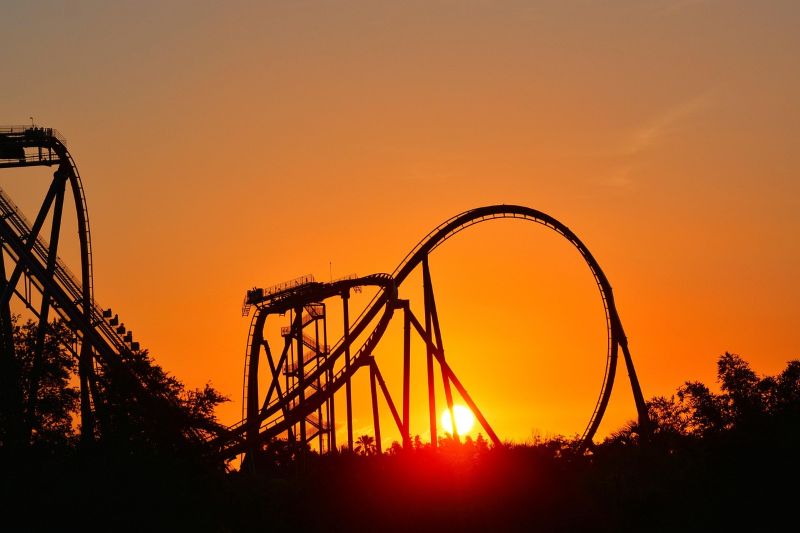
Not every theme park has hundreds of acres to build on or adjacent land for expansion potential, so theme park design is focusing on ways to maintain an engaging guest experience within a smaller footprint. Engineering advancements are allowing for even taller, yet more compact rides that focus on speed and abrupt movements – which maintain the thrill without requiring as much space. AR and VR have also taken hold in themed entertainment, and will be increasingly utilized to offer continually evolving, immersive guest experiences without major space requirements.
Another important piece of designing a theme park within a limited footprint is the master plan of the space. Baker Barrios taps into data points and behavior modeling when creating a master plan, regardless of product type, to ensure efficient use of space and pathways that encourage organic pedestrian traffic flow. That’s especially important in places where there will sometimes be a large volume of people, like at a theme park. The design also needs to make sense from a wayfinding standpoint, to reduce crowding and bottlenecks, and provide a safe environment.
- Accessibility will equal attendance.
According to the Southeast ADA Center, disabled Americans and their families spend around $50 billion on travel and tourism annually, making them a significant target market for those in entertainment. Creating inclusionary spaces is more than a legal requirement – it’s smart economics.
Although all theme parks have always been required to comply with ADA regulations, there is certainly a difference between complying with and designing a truly accessible and enjoyable guest experience. Beyond physical accessibility, the trend is moving toward accommodations for a broader range of physical and mental disabilities. These can include sensory spaces and light- and noise-reduction options, expanded dietary offerings and areas within a park especially created for guests and their families to have a safe and restorative place to rest while enjoying their visit.
As designers, that means considering every aspect of a guests visit – not just the rides and attractions, dining, etc. – but also how they spend their downtime, too.
- Global inspiration, regional locations.
Historically, theme parks have been concentrated in Florida and California, followed by Japan and China. However, there is a trend toward expanding into regional areas with an established hospitality market, such as Glendale, Ariz., noted above as the home of Mattel’s first theme park, as well as places like metro Nashville, Tenn., where former execs with Pixar and Legoland are planning a literary-focused children’s theme park.
Driving this regional trend is data showing that not only are Americans preferring road trips over air travel, but there is also a significant rise in what is being dubbed “microtravel,” which means a get-away of less than a week. This MSN News article has the stats. So, for companies looking to invest in themed entertainment facilities, these more inland/centralized locations are attractive.
While conversations around commercial real estate rarely include theme parks, there is no denying the economic impact of this business. Generating billions of dollars in the U.S. annually, this is a growth market with excellent potential to owners and investors alike, and these emerging trends will continue to strengthen this hospitality sector.
Mike Frohnappel is Director of Hospitality and Entertainment Design with Baker Barrios Architects.