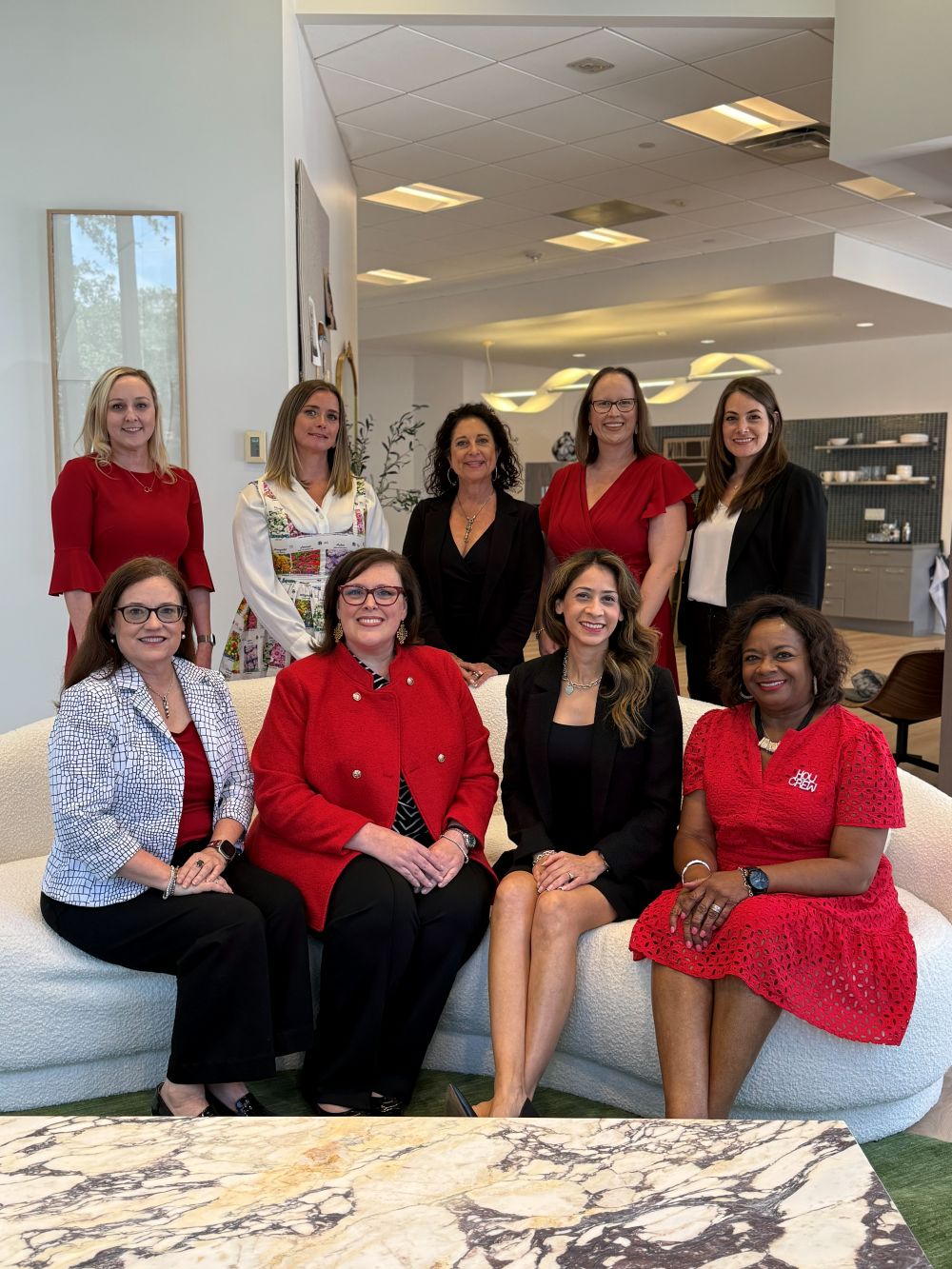
Commercial real estate has always run on relationships. Deals get done because someone makes an introduction, vouches for a colleague or remembers who followed up. For many women across the industry, those connections have been more than career boosters. They’ve been lifelines, confidence builders and turning points.
Across Texas, leaders from CREW chapters in Fort Worth, Houston and San Antonio describe the same truth: networking and mentorship aren’t extras. They are the engines that move women forward, especially in an industry where influence is built in hallways long before it’s reflected in a title.
For Cassie Walker, President of CREW Fort Worth, it started with a single conversation that changed everything. She had been trying to break into commercial banking without a business degree and kept running into closed doors. At an event, a recruiter from TCU’s Neeley School of Business listened to her story and named the potential she hadn’t yet seen in herself.
“It was the first time I truly understood my worth and what my career could become,” said Walker, who is now Vice President of Middle Market Banking at JPMorgan Chase.
That encouragement led her to enroll in TCU’s EMBA program, a decision she credits with shifting the entire arc of her career.
CREW Houston’s past president Geri Pacheco, CEO of BGL Advisors, can pinpoint her inflection point just as clearly. She was a young mother working in human resources when the owners of her company asked if she would consider switching to accounting and offered to help pay for her degree.
“As a young mother of two sons, that support meant everything,” Pacheco said. “Once I made the switch, I never looked back.”
She earned a master’s degree, then her CPA license, setting her on a path that would eventually take her to leadership roles in CRE and to the presidency of CREW Houston.
In San Antonio, Emily Brown, President of CREW San Antonio, didn’t have a single turning point. Hers was the slow, steady shift that came from joining CREW as an introvert more than a decade ago. Networking events felt intimidating to her, yet she showed up anyway. Committee work followed and so did leadership roles.
“CREW provided a space for me to grow as a leader both through formal training opportunities, but also organically through committee involvement,” said Brown, Senior Vice President of First National Bank. “The CREW experience is really like no other — it’s a supportive community with outsized impacts both professionally and personally.”
What ties these stories together is how personal and practical their breakthroughs were. None of these women waited for someone to hand them a roadmap. Instead, they found people who reflected something back to them: capability, courage, the permission to pursue something bigger.
Mentorship plays a central role in that growth, but only when it’s rooted in real engagement. Walker is blunt about what actually makes the relationship work: consistency and follow-through.
“You’re not too busy,” Walker said. “It’s up to YOU to make time to nurture that relationship and to execute the advice given, listen respectively and generate the time in your day.”
Pacheco has benefited from both formal and organic mentorships, including one through CREW Houston that pushed her into leadership. Another came through a national CFMA program where she connected immediately with a mentor who had also served as a CFO. Her through line is simple: mentors appeared because she stayed active in organizations that aligned with her work, not because she waited for them to find her.
Brown takes it a step further. She believes women should be open to wide-ranging mentorships, whether a one-time exchange or a yearslong relationship.
“If there is someone you’d like to learn from, just ask,” Brown said. “But as a mentee you should take the initiative, understand what your responsibility is in the program and follow through. Don’t expect your mentor to keep you on track. It’s really up to you!”
Where these leaders really converge is in naming the common pitfalls that slow women down. Walker sees many trying to accelerate credibility before they’ve put in the years of groundwork that make someone a trusted connector. Pacheco sees the opposite problem: women overcommitting themselves in an effort to be helpful, only to stretch themselves thin across too many committees. Brown sees the expectation gap. Attending events isn’t enough. Showing up consistently and working alongside others is what builds trust.
Brown also points out the simplest habit that pays long-term dividends: following up. A short note creates recognition, builds warmth and often keeps a relationship alive long after an initial introduction.
These women also mentor emerging leaders and the patterns they see repeat. Walker notices how many women underestimate their own worth or feel uncertain about which direction they want to pursue. Pacheco sees imposter syndrome surface at every level, even in leaders who appear confident and accomplished. Brown sees women fall into comparison traps, forgetting that careers don’t follow a single timeline.
Their own “if I’d known earlier” lessons are equally telling. Walker wishes she had joined CREW Fort Worth sooner.
“I began a new career and joined the chapter in the very same week, not knowing just how much it would shape my path,” Walker said. “From the beginning, I soaked up everything I could, every connection, every lesson, every opportunity and I put it to use right away. CREW Fort Worth became my foundation, my community, and ultimately the reason I am where I am today.”
Pacheco learned to stop tying her identity to her employer and instead build influence through her own value and contributions. Brown learned that real influence takes years and that authenticity creates connection far more than any attempt to perform a version of leadership.
For women in commercial real estate, connection isn’t just part of the job. It’s the key to belonging, visibility and momentum. CREW chapters across Texas remain some of the most powerful places to find that support, not because of the events themselves but because of the women who show up, open doors and bring others with them.
“Let’s be intentional about elevating each other, brag about the great work your friends are doing and deals they are closing, nominate them for awards, get their stories out there,” Brown said. “Their success is our success, so let’s celebrate it together!”