St. Louis-based general contractor Alberici Constructors recently made eight promotions in its executive leadership team. The reason for this expansion? The firm expects business to continue to boom, spurred in part by the renewed focus in the United States on infrastructure spending and the country’s steady transition to electric vehicles and the manufacturing facilities that this transition will require.
Greg Hesser, president and chief executive officer of Alberici Constructors, and Aaron Walsh, Alberici market leader for automotive, discussed the impact of these two factors on the construction industry, and how the push for infrastructure spending will benefit their company.
Why was this the right time to make so many promotions?
Greg Hesser: We are in a transformative era for the type of complex construction projects Alberici has delivered for decades. Our executive leadership promotions position Alberici to fully leverage our experience and core knowledge for the next generation of projects, fueled by unprecedented infrastructure spending. Recruiting and retaining talent is critical to our business, and we need talented leaders to deliver these projects and build strong teams. We hired more than 50 new employees last year and continue to hire at all levels from project engineer to vice president of construction.
We serve a diverse set of markets and industries and have considerable flexibility in our financial, engineering and skilled workforce resources to serve emerging markets.
Why does Alberici expect so much growth in infrastructure jobs? What are the trends behind this?
Hesser: Overall, nearly 75 percent of our work nationally is industrial and infrastructure-related with a focus on water/wastewater treatment, manufacturing and heavy civil/marine work. Looking at our pipeline and capacity, our revenues from our infrastructure business could double in the coming years.
The infrastructure bill passed last November will accelerate the procurement of many projects. We’ll likely see 10 to 12 years’ worth of work put into place in five to six years. For example, Lock and Dam 25 located in Winfield, Missouri, is a U.S. Army Corps of Engineers project that we have been tracking for several years. With the passage of the infrastructure bill, what was initially expected to be procured five to seven years from now is now being procured in 2022.
More importantly, infrastructure spending supports more than just a building project. In our 104-year-old history, we have found that increased infrastructure spending energizes innovation not only in what we build, but how we build it. We’re repairing, rebuilding and replacing infrastructure that is nearly 100 years old. We expect to innovate as always to deliver greater value in how we build. Developments in technology will provide more robust, longer-lasting and more functional infrastructure while keeping our workforce safer than they’ve ever been.
We’ve developed a deep bench of resources and a roster of traveling talent that we can deploy anywhere to serve existing and new markets.
What impact is the auto industry’s move to electric vehicles having on the construction industry, and what impact does Alberici expect it to have on its business in the coming years?
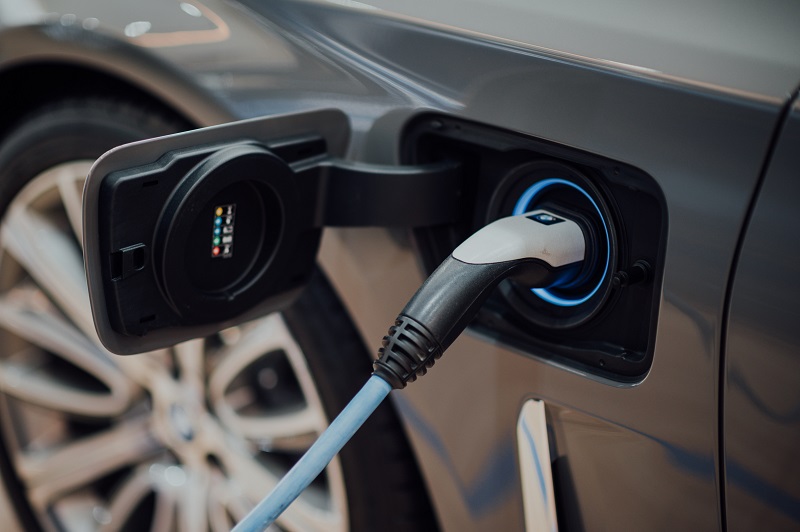
Aaron Walsh: It is more than just building new plants or retrofitting plants to build electric vehicles. It is also the ancillary industries that serve the production of electric vehicles, such as battery plants. Our automotive clients are partnering with technology companies to provide the process systems and technology to manufacture batteries in multi-billion-dollar facilities. The scale, speed, and complexity of these projects require significant resources, expertise and financial stability to deliver. As a result, many clients have engaged contractors in unique partnerships to deliver these projects on time and at good value. Alberici is in an excellent position to serve.
I’ll ask the same question about the increase in environmental projects: Does Alberici expect that to boost its business over the coming years, too?
Walsh: Industries are responding to accelerating customer and regulatory demands to protect our environment, and our work and processes are responding to those demands. In the automotive sector, for example, Canada is looking to ban combustion engines by 2035, several international governments are looking to ban gasoline-powered vehicles by 2040 and companies like Ford, GM and Mercedes have agreed to work towards a zero-emissions fleet by 2040. There has always been a sustainable component to the work we do in auto manufacturing, but the move to electric vehicles and the investment in EV battery manufacturing is advancing at an unprecedented pace.
Hesser: The definition of an ‘environmental project’ has also expanded in ways not imagined 20 years ago. We are seeing some projects that are related to climate change. One of our projects, the Mid-Barataria Sediment Diversion project, will divert 10 percent of the Mississippi River to reverse coastal erosion and begin to build back land mass for the state of Louisiana. Our $494.2 million Wichita Northwest Water Treatment Facility project is a new state-of-the-art, fully redundant, drought-resistant treatment facility that will be able to deliver 120 million gallons per day to residents and businesses in Wichita, Kansas.
How is Alberici working around the challenges facing the construction industry today, everything from labor shortages to increased supply costs to supply delays?
Hesser: We’ve always innovated because we perform enormously complex projects that integrate many moving parts. Our construction workforce is obviously a big part of that. We are driven to develop the highest-skilled and safest workforce by broadening the pool of talent. That includes a more inclusive workforce, specifically recruiting and developing more women and minorities into the trades.
Our large self-perform crews allow us to optimize workforce productivity while maintaining quality, schedule and safety. Last December, our peak workforce for directly employed craft labor was more than 460 people. We’ve also deployed our extensive pre-fabrication capabilities and those of our subcontractors to effectively manage labor. It allows us to produce precision modular components off site for safer and more cost-efficient installation on projects.
Supply chain challenges continue, but we’ve adapted by creating an internal task force that monitors a wide variety of industries and supply chains to understand what may drive future impacts. Once we identify concerns, we focus on strong communication and collaboration with our clients to provide solutions to mitigate impacts to their projects and ongoing operations. This includes substitute products, refining the timing of procurement, engaging trade partners early in project planning and creating short windows to make decisions while bid pricing is still valid and locking in material production schedule and budget.
One of Alberici’s more significant advantages is our steel fabrication subsidiary, Hillsdale Fabricators. Steel has become a major issue in the supply chain and is a critical path item that has significant schedule and cost implications. Engaging our own steel fabrication shop allows us more control over pricing and delivery, giving our clients more certainty in an unstable market. On one of our recent projects, our early involvement with the owner and designer allowed us to lock in our steel mill order early and saved nearly $600,000.