Chicago’s multifamily market enters 2026 with strong operating fundamentals and a restrained development pipeline. Marcus & Millichap’s 2026 Chicago Multifamily Investment Forecast projects deliveries to fall below 4,000 units this year, the lowest level since 2012, with vacancy expected to end the year at 3.8%. Stabilized occupancy is hovering around 96% and rents are up approximately 3-4% year over year depending on the dataset and time frame.
“Fundamentals are strong, capital markets are plentiful,” said Kyle Stengle, Senior Managing Director with Marcus & Millichap. “Chicago is experiencing high occupancy with a rent-growth story with limited new supply. Because of the strong fundamentals in the market, buyer demand is very strong.”
Strong demand is not the constraint. Capital confidence is.
“Current owners are realizing the benefits of minimal supply being delivered with increasing rents and high occupancy, but they are not seeing the increased rates and low supply translating into higher valuations,” said Thomas Shanabruch, vice president of residential investments and capital markets at CRG. “Institutional investors continue to shy away from Chicago, primarily due to uncertainty around real estate taxes and the financial health of the state, county and city. Investors see the robust fundamentals but cannot justify risk around uncertain expenses in the future.”
Pricing behavior reflects that tension.
“Cap rates in the market should be lower due to investors being able to underwrite strong rent growth, but remain elevated because of real estate tax uncertainty,” Shanabruch said. “These elevated cap rates make exit prices nearly equal to or below replacement cost.”
In most markets, high occupancy and limited supply would compress cap rates and accelerate development. In Chicago, uncertainty around long-term real estate taxes is tempering that response.
“Land costs, hard cost and insurance have all settled since the early days post pandemic. We see a very stable environment (outside of tariff risk),” Shanabruch said. “Financing remains the biggest challenge to new development.”
CRG’s Stead 220 illustrates how projects are advancing under those conditions. The 308-unit development in Fulton Market includes 62 units affordable to households earning 60% or less of area median income.
“We have over 30 investors in the project because there were no institutional investors willing to take on the risk of real estate tax uncertainty,” Shanabruch said. “Stead 220 is the largest project delivering in Chicago this year and we are very excited about the rents we will be able to achieve knowing we have very limited competition from new development.”
Projects can move forward, but the capital structures required to do so are more fragmented and risk-sensitive than in prior cycles.
“The cost structure makes new development hard to work unless you model Class A rents,” Shanabruch said. “With minimal new supply due to lack of traditional financing options, this leaves middle income renters with limited options and facing rising rents. Without a change in policy, middle income renters will continue to be squeezed and see more and more of their income going towards housing.”
As new development remains constrained, attention has increasingly turned to the city’s existing stock.
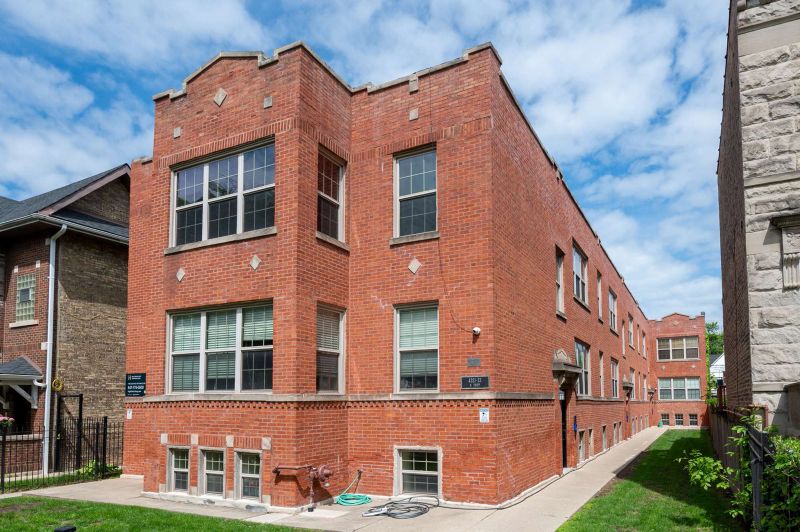
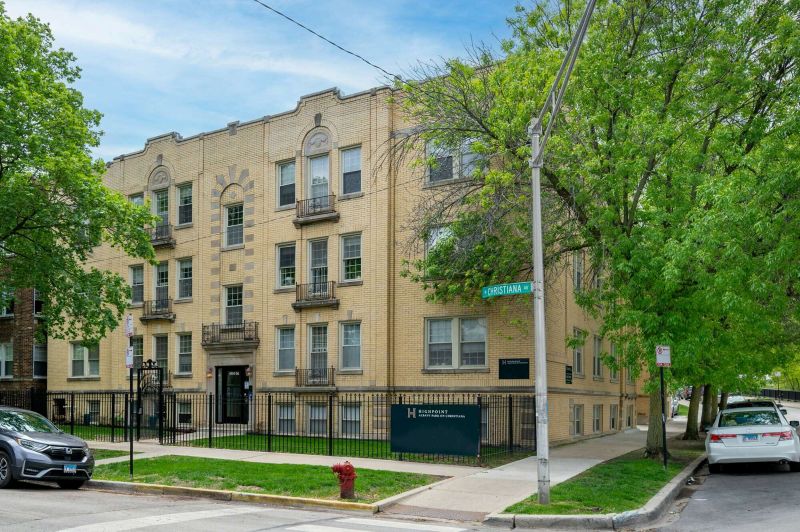
“In practical terms, vintage neighborhood multifamily properties fill the missing middle gap by delivering stable, naturally occurring affordable housing without the cost structure of new development,” said Craig Martin, Managing Partner at Interra Realty. “They are typically well-maintained, locally managed buildings that provide attainable rents in exchange for extensive amenity packages.”
He contrasted that profile with ground-up construction.
“In general, interest rates to build ground-up are slightly more expensive than financing to acquire existing mid-market assets,” Martin said. “However, the main financing variable is time. Ground-up projects can take 24 months or more from acquisition to stabilized occupancy, and throughout that period there is no operating income to help cover debt service.”
The result is a market in which preservation is carrying the load that new development historically would have absorbed. Recent transaction activity reflects sustained demand for stabilized assets. Interra brokered the sale of two North Side properties totaling 34 units for $6.7 million. Both were fully occupied at the time of sale and generated nearly 60 tours and 15 competitive offers in the few weeks they were on the market.
“Local and private owners are still dominating the mid-market,” Stengle said. “Institutions are active, but measured, and usually not the ones chasing true mom-and-pop deal sizes.”
Maxwell Jacobson, Chicago Market Principal at S.R. Jacobson Development, described how existing assets are functioning in the current supply cycle.
“From a market perspective, this existing inventory is absorbing demand because new supply has been limited compared to other major metros,” Jacobson said. “These older assets serve as workforce housing because they are below replacement cost, allowing owners to keep rents affordable while still investing in basic upgrades and operations.”
He said capital allocation differs between stabilized acquisitions and ground-up projects.
“Mid-market acquisitions with in-place or near-term cash flow are easier to raise equity for because investors can underwrite current performance and see a clearer downside case,” Jacobson said. “Ground-up development equity is still being underwritten far more cautiously.”
Even with significant dry powder on the sidelines, he said equity groups are prioritizing lower basis, strong submarkets and projects with clear absorption and exit visibility.
“That said, capital groups that slowed or paused new commitments over the past couple of years are selectively re-engaging, particularly in strong suburban markets with constrained supply and strong renter demand,” Jacobson said. “There is more constructive dialogue today than there was a year ago. I do feel we’re coming out of the tightest part of the capital markets environment we’ve been in over the last couple of years.”
He added that if capital markets remain stable and transaction activity continues to pick up, the equity environment for suburban ground-up development could become more workable by 2027 or early 2028. Jacobson also pointed to entitlement and zoning dynamics, as material factors influencing feasibility.
“Outdated municipal master plans and codes can really impact your costs, density, and yield,” Jacobson said. “When you mix those with lengthy entitlement processes, downzoning, and unpredictable approvals it can add even more real cost and risk.”
On the renter side, demand remains supported by long-standing lifestyle and financial considerations. Diana Pittro, Executive Vice President of RMK Management Corp., said motivations to rent have remained consistent for decades, ranging from personal finances to career mobility and preference for maintenance-free living.
“I have found that a lot more people, even those with children, are choosing to stay in an apartment today,” Pittro said. “Whereas four decades ago, most young families would almost certainly have bought a house once they began having kids.”
The fundamentals suggest the region could support more development than it is currently delivering. If long-term expense visibility improves, particularly around real estate taxes, developers may once again find conditions supportive of large-scale production. Until long-term expense predictability improves, the gap between operational strength and development activity is likely to persist.