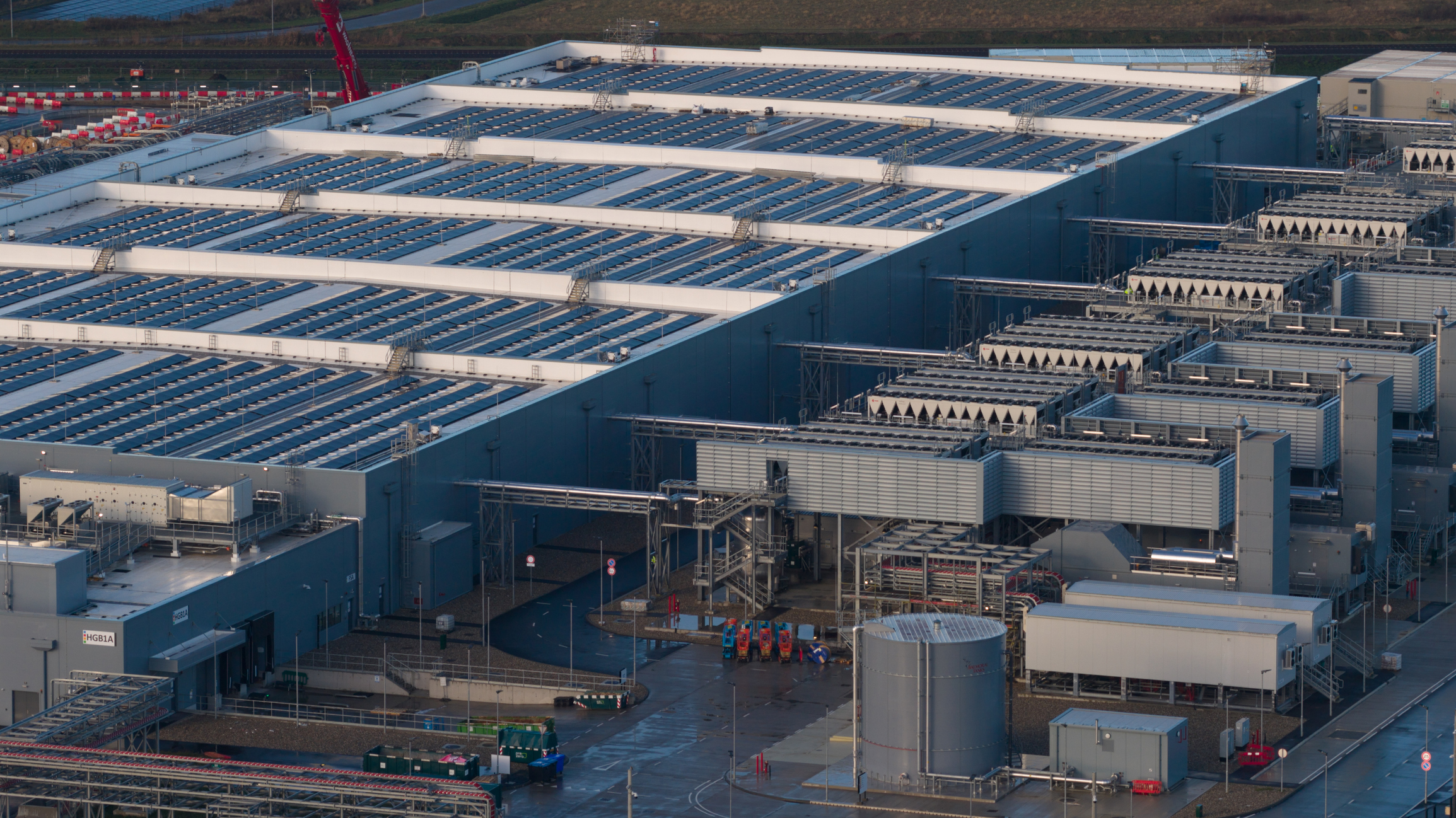
Wisconsin is in the middle of a data center gold rush — and the State Capitol is struggling to keep up.
Dozens of facilities already dot the state. Billions more in investment are in the pipeline, driven by the insatiable energy demands of artificial intelligence. The state has long offered a generous sales and use tax exemption to attract these projects, and by most measures, the strategy has worked. Wisconsin has quietly become one of the most attractive data center markets in the Midwest.
But a series of bruising controversies over secret deals between data center developers and local governments — and the Legislature’s scrambling response — have put the entire policy framework up for grabs. Four competing legislative proposals were before the Wisconsin Legislature this session, each reflecting a fundamentally different vision of how Wisconsin should manage one of its fastest-growing industries. The session has now ended without resolution on any of them. The outcome will shape where billions of dollars in data center investment flows — and whether Wisconsin keeps its competitive edge.

Rod Carter, partner at Husch Blackwell.
The NDA Problem That Started It All
It began with secrecy. In communities across Wisconsin — Beaver Dam, Kenosha, Janesville, Menomonie, and the town of Beloit — nondisclosure agreements were quietly signed between data center developers and local government officials, keeping residents in the dark about projects that would dramatically affect their communities’ land, water, and power supply.
When those deals came to light, the backlash was swift. In Menomonie, community opposition was so intense that the city council passed an ordinance blocking a proposed $1.6 billion data center project entirely. The image of elected officials signing secrecy deals with billion-dollar corporations — and keeping their own constituents in the dark — became politically toxic almost overnight.
The Legislature’s response was bipartisan and fast in committee. Assembly Bill 1036 and its Senate companion, SB-969, would prohibit data centers and local governments alike from entering into nondisclosure agreements intended to conceal the details of data center development from the public. A permit issued to a data center whose developer signed a prohibited NDA would be void. SB-969 advanced out of its Senate committee on a 4-1 vote — a strong bipartisan signal of where legislative sentiment stood on the NDA issue.
But the session ended before either bill received a full floor vote. Despite the broad consensus on the underlying problem, the NDA legislation died with the close of the session. It will need to be reintroduced.
A trade secret carve-out in the bills preserves the ability of companies to protect genuinely proprietary information. The legislative intent was clear: the era of secret data center deals in Wisconsin should be over. Whether that intent becomes law remains an open question.
The Big Regulatory Fight: Who Pays for the Power?
While the NDA bill moved with relative consensus in committee, the Legislature’s broader regulatory effort became one of the most contentious debates of the session — and ultimately collapsed without a resolution.
AB-840 and its Senate companion SB-843, authored by Rep. Shannon Zimmerman (R-River Falls) and Sen. Romaine Quinn (R-Birchwood), are designed to ensure that the massive energy and water infrastructure demands of data centers are paid for by the facilities themselves — not passed along to Wisconsin homes and small businesses through higher utility bills.
On paper, it sounds straightforward. In practice, it managed to unite an unlikely coalition of critics.
The bill’s most controversial provision would require that renewable energy facilities primarily serving a data center be located on the data center’s own site. The intent was to prevent developers from benefiting from broader grid-wide renewable energy investments made at other customers’ expense. But critics — including Democrats, environmental groups, and the data center industry itself — argued that the provision effectively makes it economically and logistically impossible for large data centers to meet meaningful renewable energy goals, and that it would push facilities toward natural gas instead.
“A non-starter for many of the companies seeking to locate in our state,” said Rep. Angela Stroud (D-Ashland). The River Alliance of Wisconsin argued the provision would “likely have the effect of discouraging renewable energy use entirely.”
The bill passed the Assembly 53-44, and cleared its Senate committee 3-2. But it never received a Senate floor vote. The Wisconsin Senate adjourned without taking up AB-840 — or any data center regulation bill — on the floor. Assembly Speaker Robin Vos publicly expressed his frustration at the Senate’s inaction, but the session ended regardless.
The result is not a veto, a negotiated compromise, or even a clean defeat on the merits. It is a policy vacuum. The core questions AB-840 raised — who pays for data center energy infrastructure, on what terms, and with what environmental conditions attached — remain entirely unresolved. They will return next session, in a political environment shaped by everything that happened this one.
The Democratic Vision: Tie Tax Breaks to Green Energy and Labor
While AB-840 is the Republican vehicle, Democrats have their own proposal. AB-722 and SB-729, authored by Sen. Jodi Habush Sinykin (D-Whitefish Bay) and Rep. Angela Stroud, would create a new “very large customer” utility rate class for data centers and — crucially — condition eligibility for Wisconsin’s existing data center tax exemptions on meeting labor standards and sourcing at least 70% of energy from renewable sources.
With Republicans controlling both chambers, this bill was unlikely to pass in the current session, and it did not. But the collapse of AB-840 — and the broad criticism it attracted from environmentalists, labor, utilities, and the data center industry alike — suggests that any bill that does reach a Governor’s desk in a future session will likely need to address the clean energy concerns that Democrats have been raising. Developers planning long-term projects in Wisconsin should be paying attention.
The Moratorium: A Warning Shot from the Left
And then there is AB-1099 — the most aggressive proposal of them all. Introduced by a group of Democratic lawmakers including Rep. Madison and Sen. Larson, the moratorium bill would prohibit anyone from operating a data center in Wisconsin until the Legislature enacts a comprehensive statutory framework covering everything from energy and water standards to community referendums and reclamation bonds.
The bill faced long odds in a Republican-controlled Legislature, and it did not pass. But its introduction reflects real anxiety — in communities, in environmental advocacy groups, and increasingly in the press — about whether Wisconsin is moving too fast to adequately assess the costs of large-scale data center development.
The River Alliance of Wisconsin has put it plainly: “Our preference in this moment of uncertainty would be to pause all new data center construction until we can develop appropriate legislative mechanisms for managing its downsides.”
That sentiment did not command a majority in the Capitol — but the session’s failure to produce any legislative resolution on data center regulation has given it new resonance. It is shaping the political environment in which every data center bill will need to survive when the Legislature returns.
What It All Means for Wisconsin Business
For the real estate developers, investors, utilities, municipalities, and businesses involved in Wisconsin’s data center economy, the legislative moment is genuinely consequential — and the stakes of getting it wrong are high.
The primary regulatory framework for data centers in Wisconsin was not rejected by a Governor — it was never even voted on by the full Senate. The underlying pressures that drove AB-840 remain entirely live: ratepayer protection, renewable energy sourcing, water usage, and reclamation obligations are unresolved issues that will return in renegotiated or successor bills. The NDA legislation, despite broad bipartisan support in committee, also failed to reach the floor — meaning the legal framework governing pre-development secrecy agreements remains unchanged for now. If the Democratic alternative’s vision of tying tax incentives to renewable energy benchmarks gains traction in future sessions, the economic calculus for new projects will shift significantly.
And if the Legislature again fails to act coherently — if the next session ends without a clear regulatory framework — it creates a compounding risk: the uncertainty that comes from operating in a prolonged policy vacuum, where the rules governing billions of dollars in investment remain undefined from one session to the next.
Wisconsin has a genuine opportunity to lead. It has the assets, the incentives, and the growing reputation as a serious data center market. But that position is not guaranteed. The decisions that will unfold in Madison next session will either reinforce Wisconsin’s competitive standing or erode it — and the data center industry, the communities hosting these projects, and the ratepayers powering them all have a stake in the outcome.
Rod Carter is a partner at Husch Blackwell, where he advises clients on data center development, permitting, utility and energy contracting, and regulatory compliance. Husch Blackwell is a founding member of the Wisconsin Data Center Coalition.