After several years of rising vacancy rates and companies seeking smaller footprints, metropolitan Chicago’s office market finally delivered some good news for the sector during the second quarter of this year, according to the latest research from NAI Hiffman.
Both the Chicago downtown and suburban office market posted strong positive absorption during the quarter, a hopeful sign that tenant demand is beginning to stabilize even as employers continue adjusting to hybrid work schedules and a slower economy.
The second-quarter Metropolitan Chicago Office Market Report from NAI Hiffman found that the downtown Chicago office market recorded more than 1.08 million square feet of positive net absorption, one of the strongest quarterly performances the city’s central business district has seen since the start of the COVID-19 pandemic.
And in the suburban Chicago office market? NAI Hiffman reported that suburban areas added another 605,806 square feet of positive absorption, giving the metropolitan area nearly 1.7 million square feet of occupancy gains during the quarter.
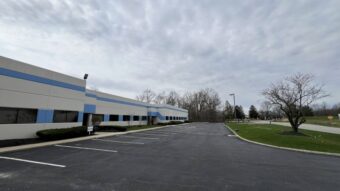
The suburban market especially continued building on the momentum it generated in 2025. The office vacancy rate in the Chicago suburbs fell to 26.1%, down from 26.6% a year ago, as companies leased more space and expanded in higher-quality buildings. Class-A properties accounted for nearly three-quarters of the quarter’s positive absorption, though Class-B buildings continued attracting tenants looking for more affordable options.
Leasing activity also remained steady in the suburbs, topping 1.05 million square feet during the quarter. While Class-B buildings remained popular among cost-conscious tenants, Class-A properties still captured 55% of all leasing activity, a sign that companies willing to make long-term commitments continue to seek space in newer, upgraded office buildings.
NAI Hiffman said that mid-sized suburban office buildings, especially those ranging from 20,000 to 100,000 square feet, continue to outperform the rest of the sector. Consistent leasing activity and below-average vacancy rates have helped these properties stay resilient while many larger office buildings continue facing challenges. NAI Hiffman also said that a softer labor market could encourage more employers to bring workers back to the office, slowing the pace of future space reductions. Many companies might require more in-office work as a requirement for employment.
Several large leases in the Chicago-area market closed during the second quarter. AbbVie renewed nearly 198,000 square feet across two office buildings on South Lakeside Drive in Waukegan, while office products supplier Quill signed a new 61,518-square-foot lease at 300 Tri State International in Lincolnshire.
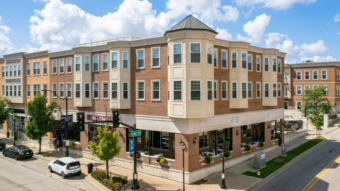
Downtown Chicago, though, may have delivered the quarter’s most unexpected bit of positive news. The city’s central business district posted more than 1 million square feet of positive absorption, only the third quarter of positive occupancy growth since early 2021, according to NAI Hiffman. Vacancy fell to 24.9% after reaching a record high during the first quarter, another indication that the market may finally be finding its footing.
The improvement came even though leasing activity slowed from a year earlier. Downtown tenants signed 1.31 million square feet of office leases during the second quarter, a 41% decline from the same period in 2025, NAI Hiffman reported.
Much of that activity took place in Class-A buildings, which accounted for nearly three-fourths of all leasing volume. At the same time, the amount of sublease space continued to drop, falling to its lowest level since the pandemic began as fewer companies put excess office space back on the market.
Among the quarter’s largest transactions in the Chicago central business district in the quarter, law firm Vedder renewed its 163,000-square-foot lease at 222 N. LaSalle St., while Loeb & Loeb signed the largest new downtown lease, taking 53,134 square feet at 151 N. Franklin St.
Office investment sales activity remained slower. NAI Hiffman said that 11 suburban office properties traded during the second quarter for a combined $72.08 million as investors continued focusing on value-add opportunities and redevelopment candidates instead of large portfolio acquisitions.
The largest transaction was the $16.1 million sale of the 207,714-square-foot office building at 55 Shuman Blvd. in Naperville, while another significant deal involved the purchase of a 140,122-square-foot office property in Addison that is slated for demolition and redevelopment.