Chicago’s industrial real estate market stands at a fascinating crossroads in 2025, defined by a paradox that presents both challenges and opportunities for developers and investors.
“We’re seeing very strong absorption rates in Chicago with vacancy rates under 5%,” said Matt Goode, Managing Partner of Acquisitions with Venture One. “Despite this, institutional capital hasn’t been as aggressive here compared to coastal markets.
This unique dynamic underscores Chicago’s dual identity: a logistics powerhouse delivering robust demand and an investment opportunity waiting to be fully realized.
At the same time, economic headwinds, client demands and sustainability imperatives are reshaping the industrial landscape, pushing industry leaders to adapt and innovate. From embracing clean energy solutions to capitalizing on Chicago’s strategic location as a logistics hub, the market is evolving to meet the challenges of the year ahead.
Perhaps the source of the most concern is the financial markets. The interplay of tariffs, treasuries and interest rates will remain central to industrial development this year.
“The industry will continue to be cautious and see what direction markets head under the new administration and the absorption of new deliveries,” said Michael Brazeal, Manager of Development Transactions with CenterPoint Properties.
“We’re still seeing the risk-averse nature of institutional capital at play, with many groups appearing to be waiting for some further clarity regarding interest rates and potential tariffs in Q1 and Q2 before aggressively deploying capital again,” said Matthias Trizna, Vice President of Development and Sales at Northern Builders. “It’s difficult to optimistically trend underwriting assumptions when there is an elevated level of uncertainty in the capital markets.”
Economic uncertainty is further compounded by inflation and the cost of capital.
“Interest rates have a direct impact on how real estate assets are priced. While rates are rising, rent growth in Chicago has often outpaced the impact of increased rates, which keeps us optimistic about long-term value,” Goode said, while also highlighting the dual dynamic of economic growth and inflation. “If the economy charges forward, we might continue to see inflation and rising interest rates, but that could also drive higher demand for industrial space.”
Conversely, an economic slowdown might lead to rate cuts but temper demand. Despite these challenges, several submarkets continue to show resilience and opportunity.
“Demand has remained strong in the I-80 corridor, where we concentrate our development efforts in the Chicagoland market,” said Brazeal.
He and Robin Stolberg, Executive Director and Head of Acquisitions with Clear Height Properties, both emphasized the enduring strength of the I-55 corridor and areas around O’Hare as well.
“O’Hare and Central DuPage are poised to continue their trend of near-record demand and low vacancy,” shared Vince Pergande, Vice President of Project Management for Logistics Property Company. “Both submarkets have exhibited significant rent growth, demonstrating occupiers’ willingness to pay a premium for prime, infill locations near the airport.”
Venture One is also making waves with acquisitions like a 224,000-square-foot building in Joliet’s Cherry Hill Industrial Park. Goode described it as “a unique asset with a secured, paved, lit yard for outside storage and significant power capacity.” The firm also recently purchased land in Crown Point, Indiana, to accommodate over two million square feet of industrial development.
Stolberg emphasized the value of multi-tenant, shallow-bay industrial properties in these areas.
“These properties continue to provide a strategic and valuable niche in the industrial landscape, particularly as their supply remains tight due to limited new construction and redevelopment trends,” he said.
“The lack of speculative product coming online poses a competitive advantage for developers that can break ground in the next 12-24 months,” Pergande explained.
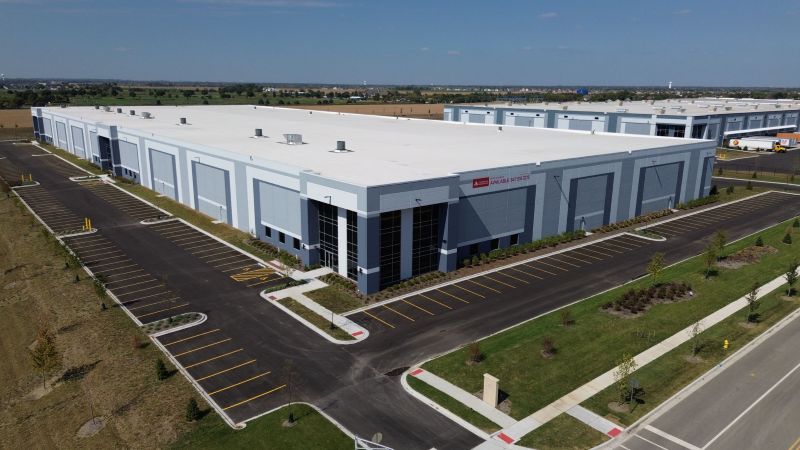
Northern Builders just completed a speculative 221,000 square foot development in Bolingbrook and is advancing on two speculative projects in Joliet, consisting of an 802,000-square-foot facility (expandable to 1.2MSF) and a 183,000-square-foot building.
“While I-80 and I-55 remain clear leaders from a demand and leasing standpoint, we are seeing an increase in businesses, specifically out of South Cook County, inquire about lower tax alternatives in the I-57 Corridor and Northwest Indiana submarkets” Trizna said, adding that 35 cent taxes at their forthcoming Monee Corporate Center, for example, has been a major attraction for prospective tenants.
With clients increasingly seeking specialized facilities, elasticity in land use has also become a priority.
“Land inventory is integral when it comes to maintaining the flexibility to chase these specialized manufacturing, processing and cold storage requirements while concurrently developing speculative product,” said Trizna. “We are continuing to double down.”
As e-commerce and supply chain evolution reshape industrial needs, Brazeal emphasized the importance of staying close to clients.
“The rapid e-commerce growth in today’s world has been and will continue to fuel the rapid growth of the industrial footprint in Chicago and throughout the nation,” he said. “Our buildings will continue to evolve along with our clients.”
Pergande, meanwhile, shared that clients are focused on getting as close to their consumers or critical logistics infrastructure as possible to minimize delivery times and costs.
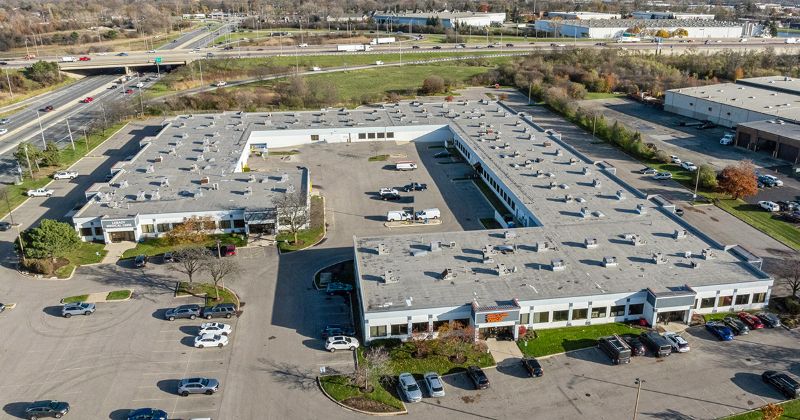
“This is driving infill redevelopments of older non-functional industrial assets,” he said. “Further, with the demand for class B suburban office space continuing to fall, this provides another source for redevelopment opportunities to fulfill user demand.”
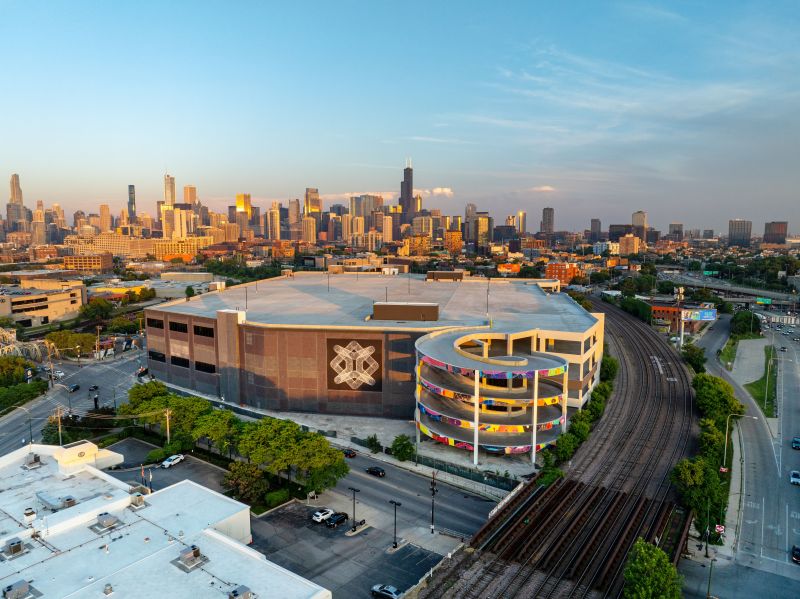
A prime example is Logistics Property Company’s 1237 W. Division project, the region’s first multistory logistics facility. Located in downtown Chicago’s Goose Island neighborhood, the 1.2 million SF facility is within 5 miles of approximately $2 billion in e-commerce customers.
Evolving supply chain demands also favor specific asset classes.
“We’re seeing increased interest in cold storage facilities and data center space, reflecting broader trends in industrial land use,” Goode said.
These specialized assets often attract high-credit, low-risk tenants, which are particularly appealing to investors.
Chicago’s industrial real estate market is attracting institutional capital, albeit with some unique challenges and opportunities. Stolberg emphasized the importance of fundamentals.
“Our focus remains on what we can control: adhering to core fundamentals like well-located, high-quality real estate, ensuring comfort with our basis through replacement cost analysis, and delivering highly functional, efficient industrial units that meet the needs of our tenant base,” he said.
Chicago’s central location also plays a vital role in its investment appeal.
“Its position as a transportation and logistics hub makes it ideal for businesses requiring efficient distribution and supply chain operations,” Stolberg added. “The market’s accessibility, combined with its vibrant economy, sustains long-term institutional interest.”
Technological advancements and sustainability initiatives are shaping industrial development strategies.
“Solar is the renewable energy technology that everyone is talking about in the commercial real estate space,” said Trizna. “I think we will see more solar projects announced in Illinois within the next ten years than we have seen in all the previous years combined. Between federal and corporate sustainability initiatives and the explosive growth trajectory of data centers and the EV market, why would anyone not take advantage of utilizing and/or monetizing vacant rooftop real estate if it is a net positive?”
Brazeal noted that sustainable construction is a core pillar of CenterPoint Properties
“Our developments in Chicagoland achieve LEED certifications and offer users renewable energy options, energy-efficient HVAC and lighting, and water-saving landscaping,” he said.
Pergande observed that sustainability will continue to integrate with industrial projects.
“We expect to see continued integration of sustainable design and construction standards and energy-efficient technologies in 2025,” he said.
Stolberg added that sustainable construction aligns with both regulatory needs and tenant preferences.
“Sustainable construction ensures our developments are ready for future regulatory and environmental conditions. It is also high on users’ lists of needs when evaluating development opportunities,” he said.
Goode emphasized the role of alternative energy and data centers in driving absorption within the industrial market.
“The production of clean energy and batteries along with the growth of data centers is contributing significantly,” he said. “These trends reflect broader shifts in industrial demand.”
While 2025 brings uncertainty, industrial developers and investors are positioning themselves to adapt and succeed.
“Many developers are in a wait-and-see mode right now, but they’re positioning themselves to hit the ground running when favorable news hits and underwriting metrics improve,” said Trizna.