Hot take: Art and artists have never been more relevant to successful real estate development. Now more than ever, authentic experiences are essential in attracting tenants, and that makes partnering with artists a newly powerful tool in commercial and multifamily marketing.
To create a symbiosis of landlord, community and artist, creative owners and their marketing leaders are now shaping spaces where artists can not only display their work but also actively create or perform.
From hosting intentionally thought-provoking works of art in indoor and outdoor spaces, to providing performance-ready stages and large canvases for future murals, engagement with art and artists can form a lasting bond between a property and its community.
Case in point: Incorporating art into CRE has been top-of-mind at several recent Urban Land Institute meetings. So, what can property owners, developers and property managers do to tap into this fresh value proposition?
Start here, by understanding the current landscape and opportunity.
The Artists Way…to activate spaces across CRE asset classes
Curated, highly personalized art has the power to enliven space across multiple asset classes, particularly where people live, work, shop or play.
“The next generation of malls cannot be an island, physically or culturally,” observed Sean Slater, AIA, Senior Principal of RDC and Vice Chair of the Urban Land Institute’s Entertainment Development Council at the Spring 2024 meeting.
“Not only should the new development reconnect physically with the neighborhood, but its offerings must connect on a deeper level. We envision re-invigorated mixed-use developments that include spaces for musical performances and canvases for artists, manifesting artwork and performances that in turn serve as a magnet for members of the surrounding community.”
Following are just some examples of how art is bringing new life across the CRE landscape.
- Activating public spaces. Harnessing the connective power of artwork can begin in the earliest stages of development. ASPIRE, a recently unveiled, 25-foot-tall public monument in Chicago’s Englewood neighborhood, was backed by developer Sterling Bay, Skender and others, exemplifying the power of corporate-community partnerships in supporting local arts and culture. Public art can also express community pride in a less permanent way. As part of the San Diego-Tijuana region’s celebration of its distinction as the 2024 World Design Capital, the city’s Park Boulevard is being transformed into The Bay to Park Paseo, an outdoor gallery.
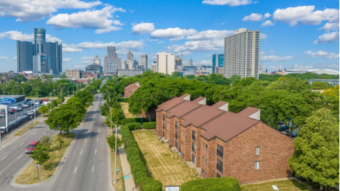
- Delivering affordable housing for creative professionals. Consider the Pullman Artspace Lofts on Chicago’s south side, an affordable housing development envisioned by local non-profit the Pullman Arts Foundation and developed for local artists. The project restored two historic structures and replaced vacant lots with newly constructed apartments and gallery space for local artists; it was the subject of a recent ULI Chicago Housing Council tour.
3) Infusing vibrant energy at work. For corporate tenants, displaying inspiring visual art that tells a local story, hosting artists-in-residence or offering actual studio space can help energize their workforce. A property’s marketing to those users must show how a tenant space can come to life within a building.
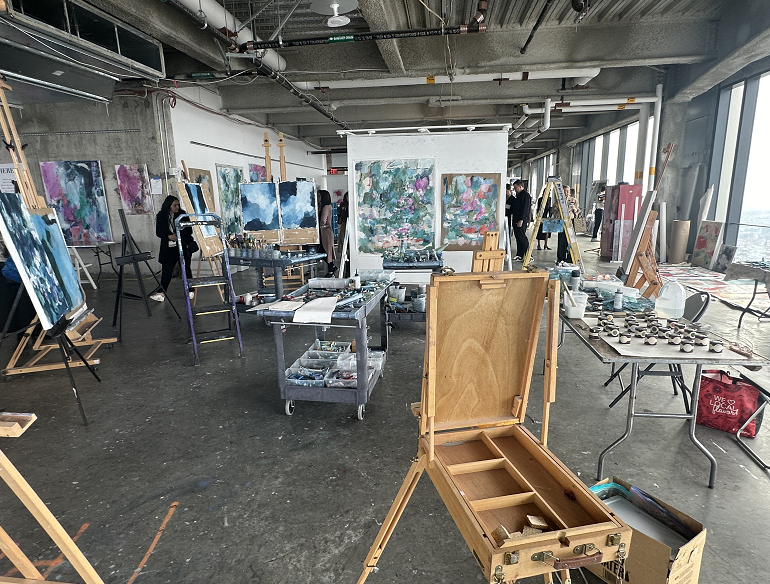
At the ULI Spring 2024 Meeting, a tour of the 80-story 3 World Trade Center in Manhattan revealed that one of the building’s future anchor tenants, a tech company, was originally headed for a more traditional brick/loft type of space—until they toured the 79th floor. That floor happens to be raw space, but with walls covered almost completely by murals and street art, from its elevator lobby to the sun-drenched area that hosts multiple working artists in an ad hoc studio. Walking through this art-activated environment helped the tenant envision how they could build out a creative space, and they signed a multi-floor lease soon after.
From decoration to activation
Art has moved from mere decoration to become an activation tool. One example: real estate investment firm BGO supports artists by collaborating with them to curate active programming in its spaces, from hosting exhibitions and films to hosting special events. Upon renovation, the dramatic lobby at 685 Third Avenue in Midtown was transformed into an inclusive space via working artists and exhibitions.
Meanwhile Orrick’s Los Angeles office doubled down on integrating art into its law firm space by partnering with Art for Impact (AFI).
“AFI is our way of helping our clients express who they are in terms of culture, diversity, equity, inclusion and belonging in the physical space,” explained Chely Wright, Chief Diversity Officer, Unispace, Orrick’s design build partner. “We are intentionally using artwork to capture Orrick’s commitment to diversity and inclusion as a primary component of design — not as an afterthought.”
How do you start?
In most cases, connecting with the right non-profit is a strategic place to start.
“Our goal with AFI is to create a sustainable ecosystem of engagement between non-profits, artists and corporations,” observed Wright.
Non-profits can connect local artists with the corporations and building owners that would like to surround their tenants and neighborhood with locally meaningful art—and provide a structure for that relationship. Chicago’s Wabash Arts Corridor, a “living urban campus,” is one example of a non-profit that bridges the artist-corporation gap.
The bottom line: Art is playing a larger role driving real estate ROI
Authenticity and genuine community partnerships with art and artists show tenants that landlords are active members of the community. With local and culturally relevant works of art, you can create a destination that tenants, shoppers, residents and neighbors can be proud to support with their hearts and minds—and also foot traffic, and, not incidentally, long-term rental revenue.
Margy Sweeney is the Founder and CEO of Akrete, the nation’s #2 independent public relations firm for real estate finance and development and is passionate about expanding economic opportunity for women and minority-owned businesses. Based in Chicago, she leads a national team and has been in commercial real estate marketing and public relations since 1995. She is also the Chairman of the Board of Directors of SomerCor, a leading SBA Certified Development Company lender based in Chicago.